The flower language of the gardenia bonsai is strength, eternal love, and a lifetime of waiting.
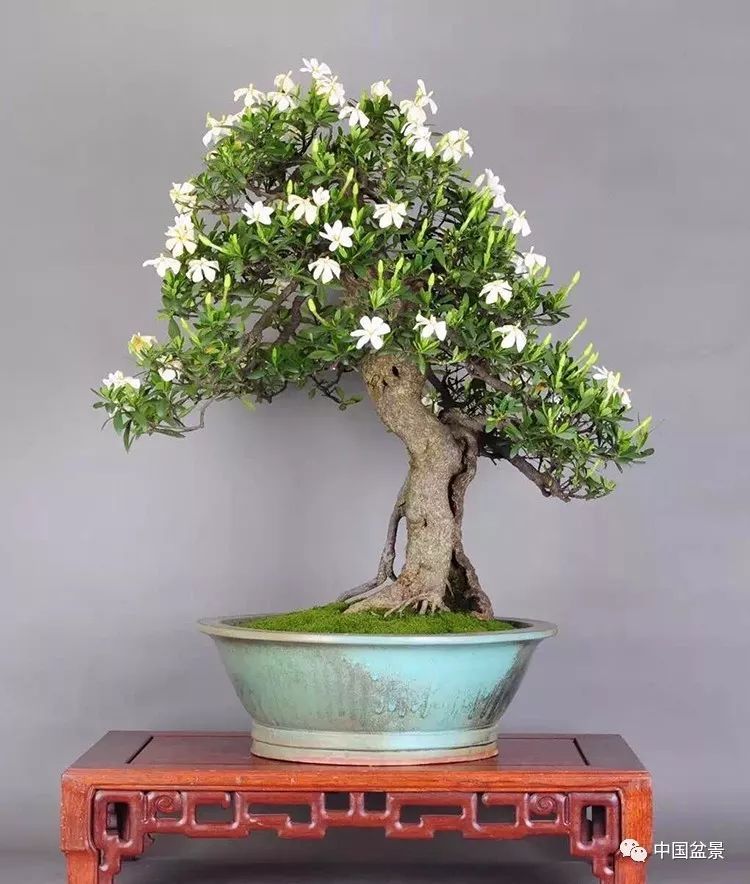
Gardenia
Lost In Love
Chen Xiaoming
00:00/03:20
Gardenia flower language:
Strength, eternal love, a lifetime of waiting!
[Bonsai enthusiast's reflections]
Text | Xiamen, Fujian @Zhou Yingzhi
On the journey of life, the most beautiful scenery blooms in the heart, and the most beautiful heart is hidden in the most sincere feelings. People and nature each keep their own nature and depend on each other; scenery and heart fulfill each other and bring out the best in each other. The spring breeze may not understand the ways of the world, yet autumn charm has always intoxicated both past and present. Scenery is shaped by circumstance, and circumstance is born of the heart; whatever mood you have, that is the scenery you will see.
Gardenia
Gardenia (scientific name: Gardenia jasminoides), also known as zhizi or huangzhizi. It belongs to the Rubiaceae family and is an evergreen shrub with luxuriant branches and leaves, foliage that stays green all year round, and fragrant flowers, making it an important ornamental garden plant. The leaves are simple, opposite or in whorls of three, obovate, leathery, emerald green and glossy. The berry is ovate, yellow or orange.
Besides being ornamental, its flowers, fruit, leaves and roots can be used as medicine, with effects of clearing fire and relieving restlessness, clearing heat and promoting diuresis, and cooling blood and detoxifying. The flowers can be used as a spice for tea, and the fruit can reduce inflammation and dispel heat, making it an excellent fragrant flowering plant.
Gardenia prefers an environment with ample light and good ventilation, but avoids harsh direct sunlight. It is best planted in loose, fertile, well-drained acidic soil. It can be propagated by cuttings, layering, division or sowing.
It is mainly distributed in Guizhou, Sichuan, Jiangsu, Zhejiang, Anhui, Jiangxi, Guangdong, Yunnan, Fujian, Taiwan, China, Hunan, Hubei and other places. It likes warmth and humidity, faces the sun, is relatively cold-tolerant, tolerates partial shade, fears waterlogging, and requires loose, fertile and acidic sandy loam. It is prone to chlorosis with yellowing leaves, and is native to China.
What is usually called gardenia refers to the ornamental double-petaled variety, the large-flowered gardenia. The leaves are leathery, long elliptic and glossy. The flowers are axillary, with short stalks and fleshy texture. The fruit is ovate to long elliptic, with 5-9 winged longitudinal ridges, one locule, and many seeds embedded in a fleshy placenta. It blooms from May to July, and the flowers, leaves and fruit are all beautiful, with the flowers overflowing with fragrance. The roots, leaves and fruit can all be used as medicine, with effects of clearing fire and relieving restlessness, clearing heat and promoting diuresis, and cooling blood and detoxifying. Its fruit can be used to make paint for painting.
Shanghai@Yu GongRecommending a new bonsai work, "A Sage in the Bamboo Grove", as follows:
Chengdu, Sichuan bonsai friend@Tang JunkaiRecommending a crabapple bonsai as follows:
Highlights replay:
Chinese bonsai welcomes you!
Enjoy at any timeadmirethe bonsai exhibition hall
Promote bonsai culture, exchange bonsai skills!
Appreciate bonsai art, share a happy life!