Rain on roses is a good thing, but it can also cause big trouble
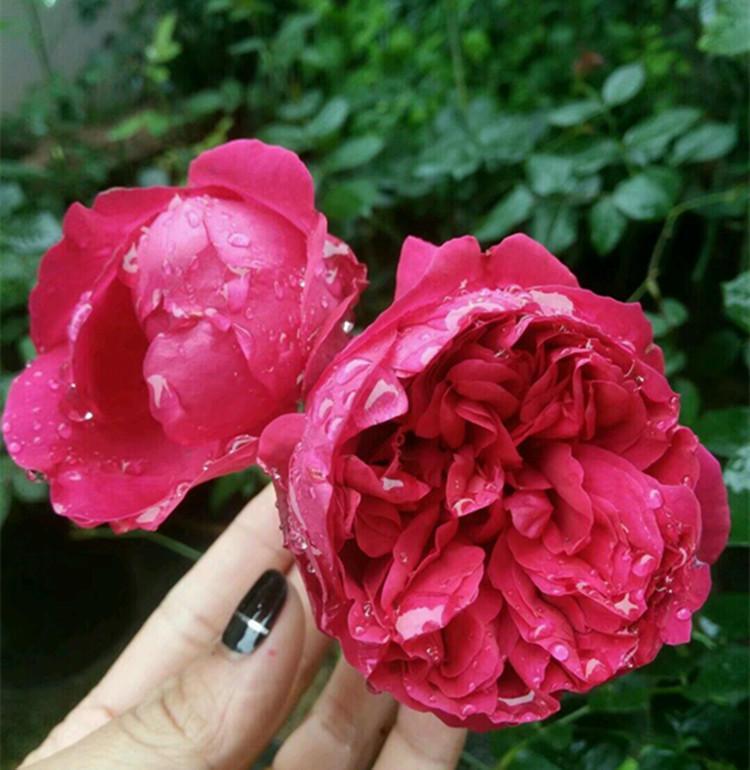
Recently, various places have already entered high temperatures, but at the same time, quite a few areas are still submerged in water, and social media has been flooded with heavy rain. When growing roses at this stage, many flower growers let their guard down, thinking that rain on roses is a good thing, little knowing that without paying attention, it can also cause "big trouble."
In areas where it has been raining recently, many flower growers' roses are being battered by wind and rain. The weather does not just damage the branches; what follows is also various pests and diseases. The first to bear the brunt is not spider mites, nor black canes, but yellow leaves. Seeing this, many flower growers are left with question-mark faces. Isn't this normal? Right, too much water does cause yellow leaves, but what if wilting is added on top of that? This is the "big trouble" that comes with growing roses on rainy days.
Many flower growers think that in this environment, the roses wilting and turning yellow is caused by too much rain. Actually, rain on roses is not a big deal. Many ground-planted and outdoor roses are out in the rain, yet that does not mean all these growers' roses wilt. Some even grow quite well.
Moreover, abundant rainwater is also very beneficial for roses sending up shoot buds, so we can see that ground-planted roses often send up many shoot buds during the rainy season. Some indoor growers specifically move their roses outside on cloudy and rainy days, letting the roses receive the baptism of wind and rain, and then right after the rain, quickly use a rose-specific organic liquid fertilizer, diluted 500 times, and water the roots once. First, it strengthens disease resistance; second, it increases the ability to burst with shoot buds.
Back to our question above, why do potted roses turn yellow and wilt after just a few days of rain? When problems appear after roses are rained on, the most common cause is water accumulation in the potting soil, which leads to root rot. Either it is a problem with the pot, where the pot's drainage capacity is insufficient, causing water to collect, or the water-shedding work is not done well, and you did not promptly remove the rainwater remaining on the potting soil, letting the drainage system do its work, so even good drainage holes cannot keep up. Therefore, if you want to alleviate this kind of wilting and yellowing caused by water accumulation, it is best to solve the root cause first. As long as the water drains out, everything is easily resolved.
As for the potting soil issue, many flower growers use coconut coir brick soil to cultivate roses, or use general-purpose nutrient soil to grow roses. Both of these soils are very water-retentive. Ordinarily, they are naturally excellent tools for care, but in this kind of weather, after prolonged rain, the potting soil accumulates too much moisture and is not easy to dry, causing the root system to be stifled in a hot and humid environment, resulting in root suffocation.
For this kind of situation, I generally mix my own soil, with granular material accounting for 1/3 of the total volume, ensuring water permeability and air permeability, so that even in the rainy season, water accumulation will not occur.
Besides the soil issue, naturally there is the pot. Clogged drainage holes in flower pots are something I believe many flower growers have experienced. Some flower pots have relatively small drainage holes that clog easily, so water accumulation on rainy days is commonplace. We need to promptly clear the drainage holes to ensure water flow drains out. You can poke them with a wooden stick and loosen the soil around the holes to ensure good water permeability.
Flower pots also have an accessory, the saucer, and improper use of the saucer can likewise cause water accumulation. Indoor flower growers use saucers more often. When watering indoors, to prevent water from flowing everywhere, most people choose to use a saucer to catch the water.
But outdoors under prolonged heavy rain, doing this is simply asking for death. Keeping the pot on the saucer the whole time will cause the water that flows out to flow back into the pot, resulting in poor drainage, and there is always water in the saucer, so the potting soil cannot undergo a wet-dry cycle. Therefore, after several consecutive days of rain during the rainy season, yellow leaves and wilting problems will appear.
Rain on roses on rainy days is a small matter, but water accumulation will cause "big trouble." If the place where you are is also raining, then hurry and go check how your flower pots are draining!