The king of July wild foods was once thought to be poisonous, now it has become a rare commodity at 75 yuan per jin
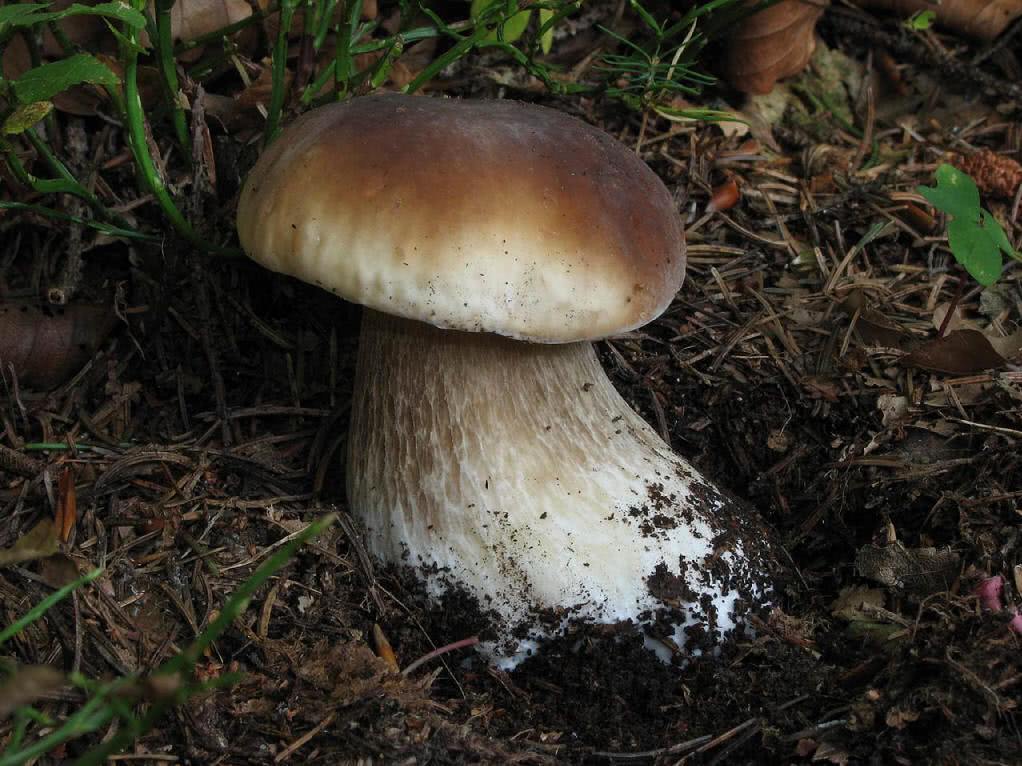
It is now mid-July, and yesterday we entered the sanfu period of this summer. For people, the current summer is very hard to endure. After all, the weather is really too hot, and going out once means getting sunburned badly, so it is better to stay in an air-conditioned room enjoying the air conditioning and eating watermelon. However, for many farmer friends, summer is a very good season. Not only are many crops about to mature, but many wild fruits in the mountains have also ripened. More importantly, July is also a season for wild mushrooms to grow. Many farmer friends, in their spare time, invite friends to go into the mountains to dig wild mushrooms to eat.
Speaking of wild mushrooms, I have to introduce a very delicious wild mushroom. In my hometown, it is also called the "king of July wild foods." This wild mushroom is the "dajiaogu," named this way because its mushroom stem is very large. Of course, this is only what we call it here. In other places, it is also called "delicious bolete" or "bolete."
Dajiaogu generally produces more mushrooms and has a larger growth volume in years with alternating sunny and rainy weather in July and August. It mainly grows in mixed forests of coniferous and broad-leaved trees at high altitude. It is also relatively widely distributed in China, mainly in Henan, Taiwan, China, Heilongjiang, Jilin, Sichuan, Hubei, Hunan, Guizhou, Yunnan, Xizang, Inner Mongolia, Fujian and other provinces and cities.
In the afternoon, my friend and I went into the mountains to dig this dajiaogu. Speaking of it, many farmer friends in my hometown have only eaten dajiaogu in the last 10-plus years. Earlier, no one dared to eat it, because older farmer friends in the village once said that in the past people thought this wild mushroom looked very strange, and everyone assumed it was poisonous, so they did not dare to eat it.
But now that people know this dajiaogu is edible, even though the sanfu period in July is hot, they still go into the mountains once or twice every year to dig dajiaogu and bring it back to eat.
Although this dajiaogu can often be dug up in rural areas, in the city it is a rare commodity. Some farmer friends in the village dig some dajiaogu to sell in the city, and it is said that it can now sell for about 75 yuan per jin.
The reason is not only that there is no dajiaogu in the city, but also that dajiaogu is not only rich in nutrients, but most importantly, after cooking, its flavor is exceptionally delicious. According to records, every 100 grams of edible dajiaogu contains 21.5 grams of dietary fiber, 18 micrograms of vitamin A, 4.4 milligrams of vitamin E, 2 milligrams of calcium, 528 milligrams of phosphorus, 758 micrograms of selenium and other nutrients.
In addition, dajiaogu also has the effects of dispelling wind and dispersing cold, and soothing the sinews and activating the collaterals. It has certain effects on anemia, physical weakness, dizziness and tinnitus.
So how is dajiaogu eaten?
Dajiaogu can be stir-fried or used in soup. The most common way to eat it is to stir-fry dajiaogu over high heat. When eaten this way, it is like eating meat, and the taste is exceptionally beautiful.
Of course, if we are talking about where this wild mushroom is most abundant, naturally it is none other than Yunnan in China, so I will not show off anymore. I hope friends who have eaten "dajiaogu" or "delicious bolete" can share together!