Do these 10 things for orchids and they will bloom more
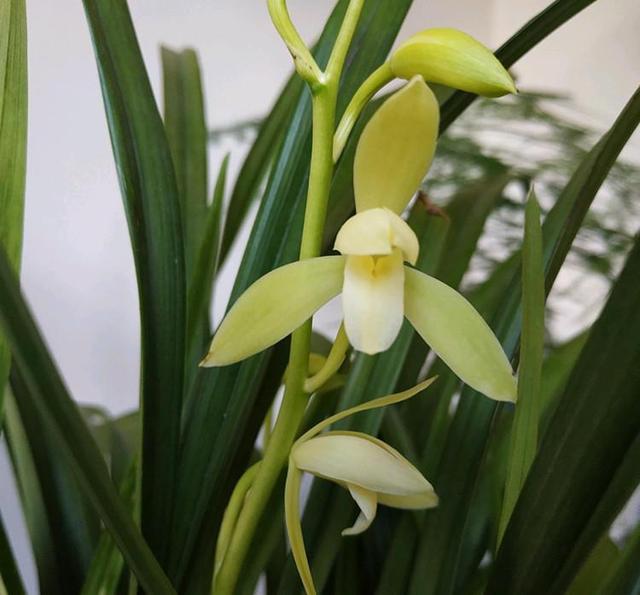
Many people think orchids are hard to grow, and always feel that orchids are very elegant and difficult flowering plants to care for. In fact, people who know how to grow orchids all have their own set of care techniques, but when it comes to growing orchids, techniques are techniques, and if these 10 actions "go without error" during the care process, they will bloom more.
1. Cultivation
Potted orchids have a limited nutritional area, so they need to be repotted once every 2~3 years, with repotting combined with division. First take them out of the pot, wash them clean with water, then use a sharp knife to cut off the secondary roots, keep the strong root system, and plant them in a seedbed or greenhouse, strengthening fertilizer and water management, for half a year
2. Choosing pots
Clay-fired pots have good water permeability. New pots should first be soaked in water, and the pot walls smeared with horse manure and fertile soil, so that moss grows after planting. Old pots should be washed inside and out before use. Each pot can hold one clump, and each clump should have 20 buds, with each bud producing 5-6 leaves.
3. Repotting
Repot once every year in early spring or late autumn. Turn the pot by hand, lay it on its side on the ground and shake gently, take it out with the roots and the old soil, wash clean with water, cut the roots open with scissors, divide into several clumps, and cut off rotten roots, broken roots and dead roots, then wash again, place in a cool place to dry in the shade, and plant again after half a day.
4. Soil
Orchids like acidic soil. After mixing, it can be tested with universal test paper, and a pH value of 5~6 is suitable. The growing medium is 2 parts humus soil (leaf mold), 2 parts barnyard manure soil (manure soil), sand and superphosphate (10%), ferrous sulfate (5%), mixed with 1 part clay soil, heaped and fermented before use. If flower lovers find this troublesome, they can just use soil specially made for orchids.
5. Potting up
First check whether the drainage hole at the bottom of the pot is clear. If not, clear it and cover it with a tile or stone, then spread a layer of crushed stone, fill in the growing medium, press it down slightly, add another half inch of fine soil, and then plant in. At least three buds should be kept. When the soil has been added to more than half, gently lift the seedling so that the root mass spreads out, then shake the bottom of the pot so that the soil and roots combine closely, then add soil to half an inch from the pot rim, and press the soil firm with your fingers. For watering, use the soaking method, so that water seeps in through the drainage hole and rises to the soil surface, then place in a cool place, and move to a fixed place after a week.
6. Watering
The water temperature should preferably be slightly lower than the air temperature by 2°C. The water can first be put in a water vat a day ahead, and watered with a fine-holed watering can, but it must not be poured into the center of the leaf cluster. Urban tap water is mostly alkaline, so ferrous sulfate (black alum) should be added to the water at 2%. The amount of watering should not be too much, just enough to soak through. From November in winter to February of the following year, water less, once every 3~4 days is enough. In early spring and summer, water more, once every 1-2 days. From June to August, besides watering once in the morning every day, water once again in the evening.
7. Fertilizing
Apply base fertilizer once when repotting, mainly barnyard manure and oil residue. Normally apply a special organic liquid fertilizer for orchids once every half month; around Mid-Autumn Festival and the Spring Equinox, apply liquid fertilizer as an additional feeding once each time. Within three weeks after the flowers fade, apply fertilizer once more, diluted 500 times, and just water it onto the roots.
8. Shading
Orchids fear exposure to the sun, and even more fear being rained on, so a shade shed is needed. From May to June, every day from 10 a.m. to 2 p.m., besides setting up bamboo blinds for shade, hanging blinds should also be added around the sides. From mid-June to early July, cover with blinds every day from 10 a.m. to 5 p.m. From mid-July to early September, cover with blinds every day from 9 a.m. to 6 p.m. After late September, move them indoors for growing.
9. Removing flowers
When the flower stalks are about to emerge, remove a portion of them, keeping at most 3 stalks per pot. After the flowers open, remove more, initially keeping 2 stalks per pot, then after three days remove stalks again, leaving only one stalk. When the topmost flower has been open for 5-6 days, it should be cut off, so that nutrients are concentrated and the flowers are abundant and vivid.
10. Winter storage
In winter, the room temperature should not be too high; 8-10°C is suitable, not lower than 5°C at the lowest, and not higher than 15°C at the highest, otherwise the leaves will turn yellow or flowering will be delayed. Watering should be controlled as much as possible and kept minimal, because when orchids come indoors in winter, they need to be a bit drier than in summer and autumn.