Fertilizing is also a skill: Is fertilizing a money tree useful?
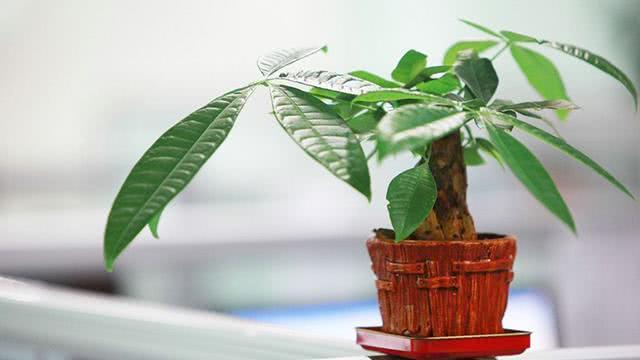
Plants with auspicious meanings are always beloved, just like the money tree. The money tree is currently a very popular indoor green plant, and gardening enthusiasts all hope that the plants they care for can grow robustly, with emerald-green leaves and thick, sturdy stems; and the money tree has relatively high nutrient requirements, so when caring for a money tree you need to add more nutrients. However, fertilizing is a skill, and improper application can cause bad situations. Today we will talk about the skill of fertilizing a money tree and see what effects it has.
The money tree is originally a foliage plant, so the growth state of the leaves is very important; after all, that is the focus of appreciation. Most money trees have thick, sturdy stems, and to achieve this effect, you first need to ensure that the money tree's root system grows well developed, with sufficient nutrients and water. The leaves of a green plant can reach an emerald-green state through the supplement of nitrogen fertilizer; the nitrogen element can make the leaves grow more densely and the gloss more beautiful. The growth of the root system should start with potassium fertilizer; a small amount of potassium fertilizer can make the money tree's root system grow thicker and sturdier, and only then will the green plant look good. Therefore, the money tree still wants fertilizer applied. Without external nutrient supplementation, it is still somewhat difficult to grow a more perfect money tree.
In fact, when it comes to fertilizer use for the money tree, besides the two types of fertilizer mentioned above, there are many fertilizers suitable for use, such as compound fertilizer, natural decomposed fertilizer, bean cake fertilizer, rice washing water, and so on, all of which can be used as auxiliary fertilizers for the money tree. As for all fertilizers, it is best to bury them deeply into the soil, so that the green plant's root system can fully absorb them, and on the other hand it will not attract some small insects.
Since fertilizing is so useful for the money tree, then you must understand what to pay attention to when fertilizing, when fertilizing is more appropriate, what care should not be done after fertilizing, and so on. If you fertilize blindly, it may induce adverse reactions, right? Wouldn't that mean the loss outweighs the gain?
First, when applying fertilizer to the money tree, the most important thing is that the fertilizer should not be too close to the green plant's root system, because once the fertilizer is too close to the root system it will cause root burn. So each time you topdress, it is best for the fertilizer to be a few cm away from the roots. Every year the money tree needs to be repotted and the soil changed, replacing the old soil and filling in new soil. The new soil must first be prepared with base fertilizer, mixed with some farmyard manure, and soil like this has very good fertilizer retention.
Second, the money tree enters a vigorous growth state starting in May, so this is the best time for topdressing, but each topdressing should not be too much. However, do not be afraid that too much fertilizer will harm the green plant and therefore supplement only a small amount; too much or too little nutrients are both unfavorable to the money tree. Too much will burn the plant, while too little will have no effect, equal to not applying any. In fact, the money tree's absorption of nutrients is very strong; after each topdressing, it is absorbed in only half a month. So during this growth period, you must grasp the interval between topdressings for the plant, and try to avoid the situation where insufficient nutrients cause growth to stop.
After reading this little lesson on fertilizing, surely everyone has a newer understanding of the effects of fertilizing a money tree, the points to note when fertilizing, and so on. Do you still have any questions now about fertilizing when caring for a money tree?