Succulent Diphysa: Crystal-Clear Leaves, How Do You Care for It?
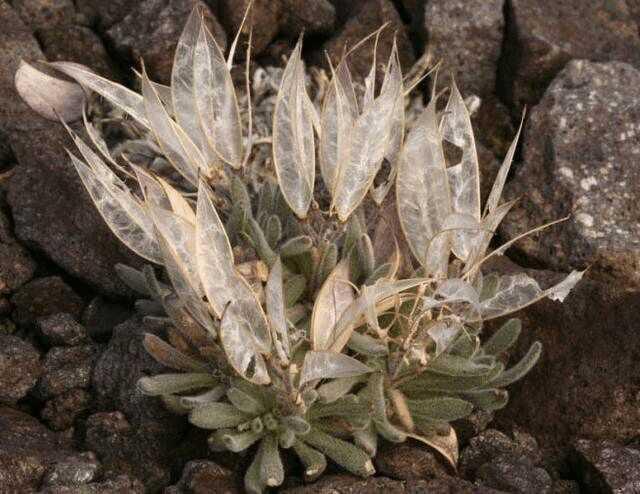
The succulent plant Diphysa really has a particularly funny name. This is not to say it is a kind of mockery of it, but in my view, it really is a name full of comic charm, and perhaps you will not be able to help laughing when you hear it too. Diphysa is also known as "Wings of the Earth", and it belongs to the Brassicaceae family. When I first heard this name, it really easily sparked associations - could it be the wings of the earth? Well, joking aside, honestly speaking, this plant is actually quite good-looking.
You can tell from its name - cicada wings, surely thin as gossamer, giving a sense of lightness and beauty. And in fact this is exactly the case. When you see it, you will not be able to help exclaiming that it truly is a masterpiece of nature. Its leaves are crystal clear, just like the wings of a cicada, with the veins clearly visible on them. The slanting, elongated stems and leaves really look as if they are about to soar into the clouds. Its body is very small and appears in a grayish-white color, but it is not a monotonous color; against the grayish-white backdrop, its white appears even more noble and elegant.
Soft, fleshy and hairy, it gives a feeling of being viewable from afar but not to be toyed with, as if it were a fairy from the ninth heaven. So how should we care for this beautiful succulent plant? In the process of growing it, as its owner, what should we pay attention to? Perhaps after reading this article you will gain some inspiration and then grow the most beautiful succulent in your heart. I think if you grow this plant, the final result will certainly not disappoint you. All right, let us take a look at the various points to note for Diphysa.
1. What temperature is suitable for growing Diphysa? You can tell from its name - as a cicada, it surely loves light and heat. Diphysa is no exception. During its growth, especially in its peak growing season, particular attention must be paid to the light factor. In this process, just like catering to its preferences, it must be given a certain amount of light. Only in this way can it grow happily and well. If the light is not sufficient enough, it will become disappointed and its leaves will curl.
I think you would not want your Diphysa's wings to be unable to soar through the sky either. Although it likes light, when we give it light, we must pay attention to the principle of moderation. Just as fish cannot eat too much food either, light for Diphysa must also follow the principle of moderation. Especially after April, when the light becomes intense, care must be taken not to expose the plant to harsh sun. Otherwise, although it likes light, it will still turn yellow due to excessively strong light.
2. What kind of moisture does Diphysa need? Diphysa likes a moist, water-rich environment. This seems somewhat in conflict with its love of light, but the sufficient water that succulents need does not mean a one-time excessive amount of water. It also pursues a principle of appropriateness, and you must ensure that water does not accumulate at the roots of the succulent, otherwise root rot will occur, and at that point it becomes very difficult to save. So as owners, in order to let our succulents suffer fewer hardships, we should take even more careful care of them. Actually, watering Diphysa is very casual - though that is not to say it is truly very casual. Under normal circumstances, you can actually spray water comprehensively over its leaves, or over the whole plant. In this situation, you must also ensure that water accumulation does not occur; controlling this point is especially important.
3. What kind of nutrients does Diphysa need? Compared with sunlight and water, the influence of fertilizer on it is relatively small. During its peak growing season, give it sufficient fertilizer to ensure its growth, and that is enough. At ordinary times, fertilizing about once every two months is sufficient.