7 great uses of baking soda in the garden, with many benefits for growing flowers
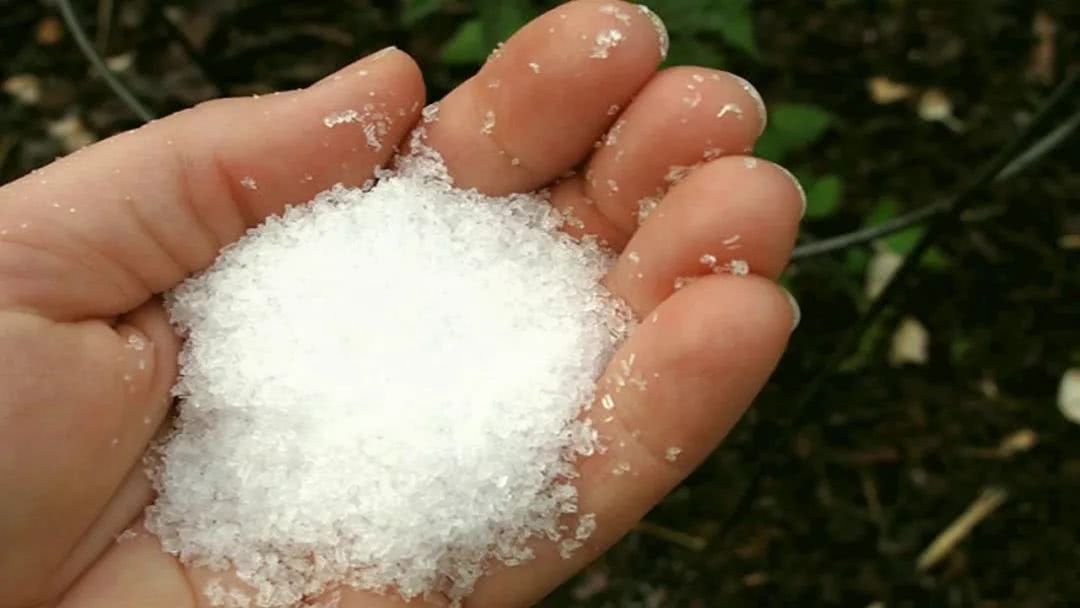
Baking soda is generally used in the kitchen, but it can also work wonders in gardening. It also has many benefits when used for growing flowers. Below, I will introduce the gardening uses of baking soda. There is no need to worry about chemical residues; it is a very healthy organic flower-growing technique.
1. Improving black spot disease
Baking soda can also become a non-toxic and harmless fungicide. You can mix 4 teaspoons of baking soda into 3~4 liters of clean water, then stir them evenly. After it is completely dissolved, you can put it into a spray bottle and spray it directly on the plants. It can be used to treat black spot disease in Chinese roses and fungal infections in various plants, especially black spot disease infecting grapes.
2. Preventing and controlling powdery mildew
When growing flowers, plants are very susceptible to powdery mildew, especially some common herbaceous plants, such as the common lilac, zinnia, cucumber, pumpkin and garden balsam, etc. Using baking soda to prevent and control powdery mildew is also very simple.
To avoid the concentration being too high and burning the plants, the correct ratio is generally 1 tablespoon of baking soda to 3~4 liters of water. To increase the effect, you can add 1 tablespoon of vegetable oil and 1 tablespoon of dish soap to the solution. Mix and stir these solutions, and after they are completely dissolved, spray them on the plants. Generally, spray once a week, and after spraying continuously four or five times, the powdery mildew can be eliminated.
3. Avoiding fungal infections
Baking soda can also very well avoid fungal infections and prevent various insects from approaching. You can mix 4 teaspoons of baking soda into 3~4 liters of clean water, add 1 small teaspoon of biological soap or soapy water, then stir it into a solution and spray it on the leaves and soil of plants that may be infected.
4. Removing weeds
Baking soda can also be used to remove weeds. This is also a relatively practical method. You can mix baking soda into clean water, stir it evenly, and then sprinkle it on some weeds growing in cracks. It can remove weeds that are about to sprout and can also prevent new weeds from growing.
5. Removing vegetable worms
Vegetables planted in the yard are very likely to attract various vegetable worms, and they will quickly eat all the plant leaves. At this time, flour and baking soda can be used. For example, the most common cabbage, broccoli, kale and Chinese cabbage, etc., are all very likely to attract vegetable worms. You can directly mix flour and baking soda and sprinkle it directly on the areas with pests. These vegetable worms will die in one to two days.
6. Removing crabgrass
Baking soda is also suitable for crabgrass. First sprinkle baking soda beside these weeds, and the crabgrass can die within two or three days. Do not apply too much, otherwise it is easy to make the soil alkaline.
7. Cleaning effect
The best use of baking soda is still for cleaning. It can be used to clean dirt on hands, and it can also be used to clean stains on gardening tools.
Use baking soda to wipe your hands, and in about one minute your hands can become soft and smooth.