Are black rot and root rot in succulents related to the soil? Take good care of them in daily maintenance
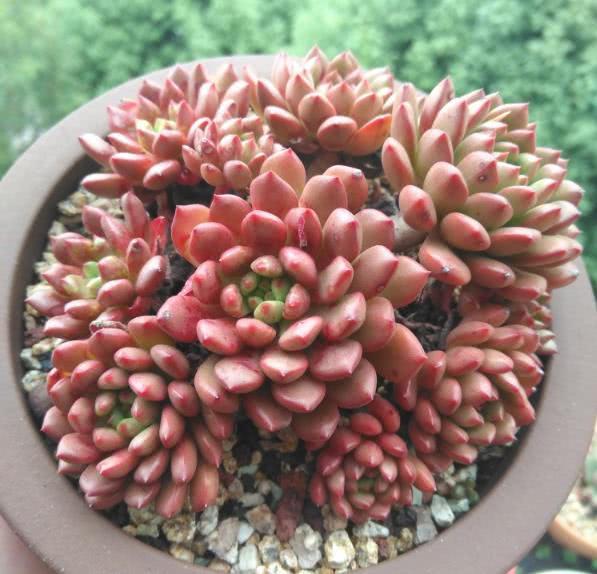
When pests are rampant in the soil, the root system may also be completely destroyed, and over time this will also cause succulents to rot. Fertilizing too heavily, or fertilizer mixed with incompletely decomposed organic matter, can cause "root burn" after application and also lead to plant rot. Continuously overly moist or waterlogged potting soil often causes root hypoxia and suffocation, quickly destroying the root system; if this is followed by overly strong light, poor ventilation and excessively high ambient temperature, the succulent may rot very quickly.
Prevention should be the main approach to controlling rot. Do not mix incompletely decomposed organic fertilizer into the growing medium, and it is better to apply fertilizer too weak than too strong. When waterlogged potting soil is found, immediately remove the pot, wash the roots clean and air-dry them; if the roots have not changed color and the root hairs of the fibrous roots are still intact, you can repot it and place it in a semi-shady spot to observe for a period; if part of the root system is bad, cut it off, let the wound dry and then replant; if the entire root system is bad, cut it all off, let the wound dry and then insert it as a cutting to grow new roots. Improve the environmental conditions of the growing site, especially for mature plants grown on their own roots: the environment should be clean, well ventilated, well lit and moderate in temperature, so that the occurrence and spread of pathogens can be greatly reduced.
To a certain extent, succulent root rot is root decay caused by too much watering or too much fertilizing. Of course, the causes of succulent root rot are many-sided; a single soil type can also cause rot. If the soil is breathable, then excess water will flow away and will not cause waterlogging, especially in the rainy summer season. If too much water is poured, it will to a certain extent cause oxygen deficiency in the plant roots and lead to succulent root rot; another cause of succulent root rot is poor ventilation after watering. In summer, you can often loosen the soil around the plants to let air in, which will help somewhat in preventing succulent root rot.
For newly potted succulents, do not rush to water after they have rooted; the soil should remain permeable. In addition, watering should be carried out according to their growth state. Whether the species is a winter dormant type or a summer dormant type, watering into the pot should be stopped during the dormant period. For the specific details of how to water succulents, succulent lovers can refer to the blog post on detailed steps for watering succulents to learn. During propagation, wounds made by humans, wounds caused by pests feeding, and the epidermis of seedlings as well as the lower part of the stems of mature plants are usually the "shortcuts" for pathogens to invade plants. When environmental conditions favor the massive reproduction of pathogens, plants, especially small seedlings, often die rapidly in batches.
If the root rot of a succulent is relatively mild, first of all, what you need to do is quickly control the water and blow air: place the flowerpot on a stand with good ventilation at the bottom so that excess water can flow out, and use an electric fan to strengthen air circulation, blowing continuously for 24 hours. If the weather is bad and the air humidity is too high, friends who have a fan heater at home can use the fan heater together with the electric fan, but when using the fan heater, remember to keep it at least 3 m away and never point it directly at the plant; use indirect airflow. The fan can be pointed directly at the plant. Also note that the fan heater should be turned on and off intermittently, otherwise the plant's water will be lost rapidly and it will turn into a specimen.
When handling a rotting plant, be sure to keep the tools clean and sterile, and be sure to wash your hands carefully before touching other plants. Use a sharp knife to cut away the infected part, then stuff crushed charcoal and sulfur powder into the wound; the wound should be completely dry. Most succulents grow in desert climates and are adapted to an extremely arid growing environment, so they must never be watered too much, and the soil should be allowed to dry out completely between two waterings. Another cause of rot is that the soil medium is not breathable, and this is especially true for milkweeds (Asclepiadaceae). Be sure to use a drainage medium to ensure that water does not accumulate at the stem for more than a few minutes (the medium I personally use is usually one where water poured in can soak through completely).
This is a gathering place for succulent lovers, sharing succulent care tips; you are welcome to follow and exchange ideas.