Use this for orchids and clivias, and the potting soil stays loose and airy; even without care for 10 years, they will burst out of the pot
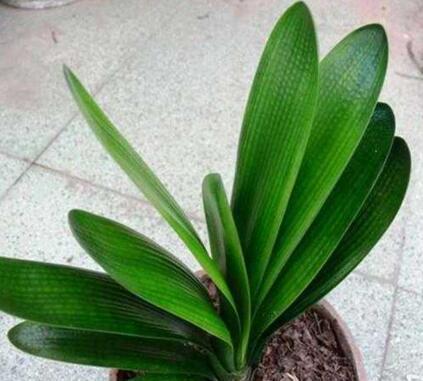
As people's living standards improve, more and more people have fallen in love with growing flowers. A pot of flowers at home can beautify the room, purify the air, and cultivate character and temperament. With so many benefits, it is truly a good thing that serves multiple purposes at once, and there are also more and more expert growers. Flower enthusiast Xiao Zhang does not love other flowers, only orchids and clivias. It is said that these two kinds of flowers are relatively difficult to grow, yet Xiao Zhang can grow them until they burst out of their pots. Truly, experts are everywhere, and each one keeps a low profile. Xiao Zhang says that if you want to grow flowers well, you must first understand their habits. Only by knowing yourself and the enemy can you succeed!
Xiao Zhang says that both orchids and clivias have fleshy roots, and if you are not careful, the roots will rot. So the potting soil used to grow them must be loose, airy, and highly nutritious. With this one thing, it is loose and airy, and even without care for 10 years, they will "burst" out of the pot!
What exactly is this one thing?
It is actually corn cobs, which flower enthusiasts in the north call bangzi cores. This kind of thing is especially suitable for growing orchids and clivias. This is mainly because corn cobs themselves are very soft, and they also have particularly good water retention. They are a pure organic material with little adverse effect on plants. Placed at the bottom of the pot, they can not only drain water, but also let the plant roots breathe smoothly and grow more vigorously. At the same time, corn cobs will slowly decompose and can also provide various nutrient elements to clivias and orchids.
The method of use is as follows:
Collect the corn cobs left after eating corn at home, then cut them into small pieces, put them in the sun to bake for about 10 days, and they need to be completely dried. After they are completely dried, the large pieces of corn cob can be placed at the bottom of the flower pot to increase drainage and permeability, so that the roots of clivias and orchids can breathe freely, are less likely to rot, and grow thicker and stronger.
So if we want to grow these two kinds of flowers well, what else do we need to pay attention to?
Now is the hottest time of summer, the temperature is very high, and temperatures across the country have basically reached above 30 degrees. Many flowers will enter a dormant period, and clivias and orchids are no exception. So pay attention to watering and fertilizing, and also pay attention to shading.
How should clivias be watered?
In summer, clivias avoid high temperatures (above 30°C) and scorching sun exposure. Cooling measures should be taken, and clivias should be placed in a cool, low-temperature, ventilated, semi-shaded place. Avoid waterlogging in the potting soil, otherwise it will cause yellow leaves and root rot.
During the flowering period, they need more water. When watering, do not pour water on the leaves to prevent the leaves from rotting. When you find dust on the leaves, gently wipe the leaf surface with a soft cloth; do not use a large amount of water to wash them.
How should orchids be watered?
Watering orchids should be based on the species, growth conditions, and local climate. It should be moist but not wet, dry but not parched. Watering should not be too much or too little. Grasp the principle of not letting them dry out in autumn and not keeping them wet in winter.
In winter, when the temperature is low, the plants are in a dormant state, so watering should be controlled. Generally, water once every 5 to 7 days. However, Cymbidium sinense, which blooms in winter, needs more water. In spring and autumn, water once every 2 to 3 days. In summer, water 1 to 2 times a day on average.
That is all for today's sharing