Throw a "core" into the snake plant's pot, and it instantly wakes up, sending out shoots all over within 30 days even if you ignore it
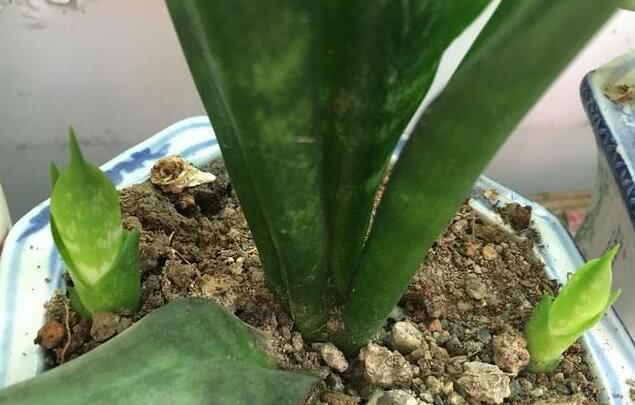
Snake plant (Sansevieria) is a very common foliage houseplant among gardening enthusiasts. Its leaves are slender and elegant, filling the pot, beautiful and lovely. Placed at home it looks refined and tasteful, and it can also purify the air, making it the top choice for indoor potted flowers. Many gardening enthusiasts keep one at home, but many have also left comments saying their snake plant grows too slowly, showing no change for a whole year, as if they were growing a fake flower. So today I'll share a little method: throw a "core" into the snake plant's pot, and it instantly "wakes up", sending out "shoots" all over within 30 days even if you ignore it!
So what exactly is this "it" mentioned here?
Snake plant is a potted plant that is especially drought-tolerant. Its root system is well developed and fleshy, and this kind of root is particularly afraid of being soaked in water. That is to say, snake plant needs to be grown in well-draining soil, with no water accumulating in the pot, or the roots will rot and the whole snake plant will die. But it is also afraid of compacted potting soil, so the soil used to grow snake plant must be loose, breathable and nutrient-rich for it to grow well. So we can use it to grow the plant.
Actually it is the corn cob commonly seen in rural areas. This thing is very common, and you can find it without going to the countryside. Most people boil corn at home, and after eating the corn, what's left is the corn cob. We can use a knife to cut the corn cob into pieces, then put them on the balcony to bake in the sun for about 10 days, and the corn cobs will all dry out, and then they can be used to grow snake plant.
These unfermented corn cobs can be used as a drainage layer, placed at the bottom of the pot, which can increase the drainage and permeability of the snake plant's soil, letting the snake plant's roots breathe freely, making them less likely to rot and grow thicker and stronger.
Moreover, after a long time, as you water, the corn cobs will slowly decompose, then provide the snake plant with very rich organic fertilizer, as well as the trace elements contained in the corn cobs, such as nitrogen fertilizer and so on. These are very beneficial to the growth of the snake plant. As long as your corn cobs start to decompose, your snake plant will grow like crazy, and as long as you keep taking good care of it, the snake plant will send out little shoots very quickly!
And they all grow very strong too.
With sufficient nutrients and loose, breathable soil, the snake plant has the strength to grow. So what else do we need to pay attention to when growing plants normally?
1. Light
Snake plant needs to be placed in a bright spot, with the temperature ideally around 25°C, and grown in a well-ventilated environment for good growth. In summer, when temperatures are high, it must not be exposed to blazing sun; at other times it can be given plenty of sunlight.
2. Watering
Snake plant is very drought-tolerant; being a bit dry is fine, but water must never accumulate in the pot, or it will cause the death of the entire snake plant. During the growing season, water appropriately and spray the leaves, keeping the soil slightly moist. After autumn, when humidity drops, water less. If the soil is too wet or too dry for a long time, it will cause the leaves to brown, the leaf tips to turn yellow, and dead spots to appear on the leaf surface.
3. Repotting
Once the snake plant is well cared for, the little shoots grow very fast. At this point we need to divide and repot it: knock the clustered mother plant out of the pot, remove some of the soil to expose the rhizome, cut the rhizome at appropriate spots, and after division each cluster should have no fewer than 4 leaves, then repot and replant them.
Snake plants over 5 years old, when fertilizer, water and light are all sufficient, can even bloom once a year, and the flowers are very beautiful too