How to cultivate the mouse melon? Detailed explanation of greenhouse planting and care techniques
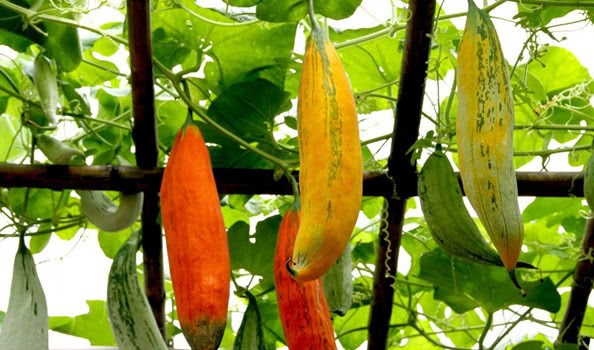
The mouse melon is a new type of melon, which can be eaten and also used for ornamental purposes. Its feature is that it looks like a mouse; the young melon is green and gradually turns red after [ripening], and it has very high ornamental value. Below, the editor will tell everyone about the planting and care techniques of the mouse melon.
Growth habits of the mouse melon
The mouse melon belongs to the tropical and subtropical melon category, and is distributed across various regions and countries in South Asia and Southeast Asia. It is understood that the mouse melon has strong adaptability, is drought-tolerant, and has low requirements for light.
Cultivating strong seedlings
Because the mouse melon can be grown year-round in a greenhouse, sowing and seedling raising can be done in advance according to exhibition needs. The mouse melon takes about 40 days from sowing to flowering, and about 90 days to reach maturity and turn red. In order to maintain a lush landscape effect, the sowing of the mouse melon and the cultivation of strong seedlings need to be completed in a dedicated seedling greenhouse.
Control of environmental conditions in the seedling shed
During the period of cultivating strong seedlings, if the indoor temperature exceeds 30°C, attention should be paid to ventilation to dehumidify and cool down; otherwise, conditions of high temperature and high humidity can easily lead to pests and diseases in mouse melon seedlings.
Seed treatment
Before sowing, the seeds need to be placed in warm water at 50~55°C for disinfection and sterilization, soaked for about 10~15 min, and stirred continuously during this period. Then place them in clean water at room temperature to soak, and then germinate them in a constant-temperature chamber. When the germination rate reaches about 80% or the sprouts grow to 2~3 mm, they can be sown. If they are coated seeds, they can be sown directly.
Sowing
To facilitate transplanting, mouse melon seeds are usually sown in nutrient pots with a diameter of 15 cm. The growing substrate can be a mixed substrate of peat : perlite at a volume ratio of 7:3, and carbendazim can be used for disinfection and sterilization.
Usually 1 seed is sown in 1 nutrient pot. Before sowing, use a finger to poke a hole in the substrate slightly larger than the seed, then place the germinated seed flat in the hole, being careful not to break the sprout, then cover with a layer of substrate and press lightly.
Transplanting
When the melon seedlings grow 6~7 true leaves, they can be transplanted into the landscape greenhouse. In order to keep the landscape greenhouse clean and tidy, swallowtail boxes can be used for cultivation. Before transplanting, put newly prepared and disinfected growing substrate (peat : garden soil : perlite at a volume ratio of 3:2:1) into the swallowtail boxes, transplant the mouse melon seedlings into the swallowtail boxes, 1 seedling per box. Then place the swallowtail boxes neatly beside the pergola or umbrella tower where landscaping is needed. Carefully guide and tie the melon seedlings onto the pergola. After that, the melon seedlings can climb freely and cover the entire pergola.
Note that the substrate used for seed sowing and melon seedling transplanting must be strictly disinfected. This can be used to cultivate healthy and strong mouse melon plants, and doing a good job in pest and disease prevention is very important.
Management and care
After the melon seedlings are transplanted, they enter the vine extension stage. At this time, the mouse melon is in a rapid growth stage and needs more water and fertilizer, so integrated water and fertilizer irrigation can be carried out by drip irrigation.
During the process of the melon seedlings climbing freely, slightly guide the seedlings that have climbed crookedly so that they evenly cover the pergola, and promptly clean up dead branches and rotten leaves during the growth of the melon seedlings. During the flowering period, artificial pollination can be used to increase the fruit-setting rate. Mouse melons in the late mature stage need to be picked promptly and the seeds collected.
Because of its unique appearance, the mouse melon has become very popular in recent years and is cultivated as an ornamental plant by many leisure farms. Moreover, it has strong vitality and is easy to grow; you only need to pay attention to creating the landscape effect and preventing and controlling pests and diseases.