Applying topdressing to corn on a rainy day: experienced old farmers save money and effort, and the fertilizer effect is even better
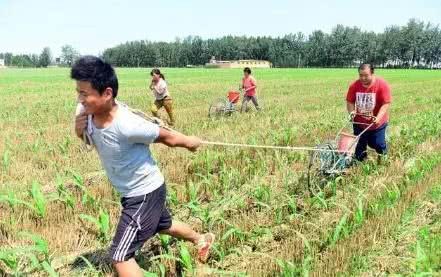
Why do farmers choose to topdress corn on rainy days? Actually, this does not mean farmers must choose rainy days to topdress corn, but choosing to topdress on rainy days has many advantages. Although many farmers today choose the so-called "one-shot" fertilization method and basically no longer fertilize after sowing, most farmers still choose to topdress at the corn eight-leaf or large trumpet stage. After all, when corn enters the reproductive growth stage, its fertilizer demand also reaches its peak.
Below are several advantages of fertilizing on rainy days.
Saves labor
Conventional fertilization basically uses the trenching method. In corn fields, everyone is certainly clear that the plants are tall, and even with fertilizer application equipment, a great deal of effort is unavoidable, and one must also endure the trouble of corn leaves rubbing against the skin. This feeling is probably something only those friends who have personally fertilized in corn fields can understand.
When fertilizing on rainy days, however, you just scatter it in directly, which to a certain extent reduces labor intensity.
Saves costs
The fertilizer effect of chemical fertilizers is relatively very fast, and for things like ammonium bicarbonate or urea, if the weather is hot after fertilization they will volatilize, so after fertilizing, farmers basically all use watering, or the method of fertilizing after watering, to help dissolve the fertilizer.
On rainy days, farmers take advantage of the rain to scatter chemical fertilizer directly into the field, thereby avoiding watering, and in terms of cost this saves at least 30 yuan per mu.
Improves fertilizer utilization rate
After fertilizing on a rainy day, the chemical fertilizer quickly dissolves into the soil. For the fertilizers currently used for corn topdressing, they are basically no more than several kinds such as ammonium bicarbonate, urea, potassium dihydrogen phosphate, and potassium chloride. These fertilizers are all easily soluble fertilizers, dissolve rapidly in rainwater, and seep deep into the soil, improving the fertilizer utilization rate.
In fact, when farmers fertilize on rainy days, it is more out of consideration for convenience and cost. Otherwise, who would be willing to risk heavy rain to go fertilize in the fields? In rural areas, it is often seen that many farmers pay attention to the weather forecast every day, and when the forecast says it will rain that day, they hurry to buy chemical fertilizer and load it onto the cart, preparing to quickly scatter it into the fields as the rain comes. This feeling is something only friends who have experienced the busy farming season can understand relatively deeply.
This is Science Agriculture, welcome to add a follow, and let us grow knowledge together.