Sweet potato vines grow like crazy but produce no tubers - where did the tubers in the soil go?
Generally speaking, sweet potatoes only gradually swell their root tubers after the Start of Autumn (Liqiu). If the sweet potato is currently growing vines without forming tubers, this is also fairly normal. Generally, when the light duration is around 13 hours, it favors the swelling of root tubers, and at this...
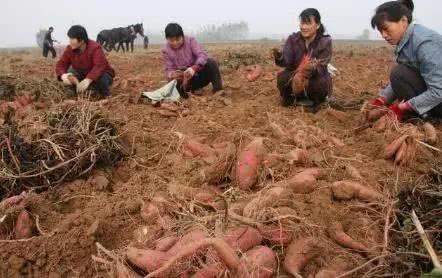
Generally speaking, sweet potatoes only gradually swell their root tubers after the Start of Autumn (Liqiu). If the sweet potato is currently growing vines without forming tubers, this is also fairly normal. Generally, when the light duration is around 13 hours, it favors the swelling of root tubers, and at this time it has basically entered the Start of Autumn season.
Some netizens also mentioned a variety of sweet potato from Taiwan, China, which belongs to the type that grows vines but not tubers, but in our country the planted area of this kind of sweet potato is still very small. Below we focus on the relationship between fertilization and tuber formation. This is also a major problem existing in the current growth.
Generally speaking, growing vines means growing leaves. Yesterday we also gave a rough answer about the fertilizers corresponding to roots, stems, leaves and fruits. "Nitrogen promotes leaves, phosphorus promotes flowers, potassium promotes fruits" - this is roughly basically so.
What appears in sweet potato growth as growing vines is the phenomenon of leaves growing excessively vigorously. In response to this situation, what we need to do is control the amount of nitrogen fertilizer. And to promote tuber swelling, we need to supplement potassium fertilizer! Everyone knows that sweet potato is the part where starch accumulates, and potassium is a key factor promoting starch synthesis.
If, when the Start of Autumn arrives, the ratio of nitrogen fertilizer to potassium fertilizer in the field is inappropriate, then it will inevitably lead to the situation of growing vines without swelling tubers. Adjusting the fertilizer ratio is a very good approach. Things like plant ash from rural households, as well as potassium fertilizer, are all options, and among them potassium dihydrogen phosphate can also be applied as a foliar spray, and it takes effect quickly.
Actually, the best choice is still to apply organic fertilizer by broadcasting, but nowadays the popularization of chemical fertilizers causes farmers to often neglect this or even not value it. Organic fertilizer has comprehensive and more lasting fertilizer effects, and can greatly improve the quality of sweet potatoes. In addition, if sweet potatoes grow strongly and vigorously, growth regulators can also be used to inhibit them, such as paclobutrazol.
This is Science Promoting Agriculture. You are welcome to add a follow, and let us grow knowledge together.