What effects does drought have on corn during its critical growth period?
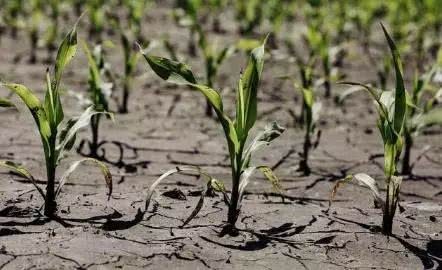
China has a vast territory, and its climate distribution shows a high degree of diversity, with rainfall varying considerably across the country. Generally speaking, in North China and the Huang-Huai-Hai region, rainfall in July and August is somewhat low, and farmland also becomes extremely dry. Drought, as one of the stress factors in plant physiology, also places major constraints on the growth, development and yield formation of corn.
Taking all factors into account, the effects of drought stress on corn physiology are mainly shown in the following aspects:
Growth period
Generally speaking, sustained drought shortens the growth cycle of corn. Drought places certain constraints on the growth and development of corn, and while development is delayed, corn also accelerates its development ahead of time in order to complete reproductive growth, thereby shortening the growth period. This is also the principle by which rapid maturity is achieved through drought measures when corn is about to be harvested.
Plant architecture
Drought directly interferes with various physiological indicators of corn. For example, it increases the ion concentration in the cytoplasm, making nutrient transport in the plant more difficult. In addition, drought stress causes leaves to lose water and wilt. This reduces the effective utilization rate of leaf area and lowers photosynthesis.
Yield impact
If drought occurs during the pollination period of corn, the vitality of corn pollen also drops greatly, resulting in incomplete fertilization and blank ears on the corn cob. Even if fertilization is completed, drought also restricts the development of the corn ear, and the kernels are usually rather shriveled. In some cases, even the tip of the ear fails to develop! This reduces the yield of the plant.
In summary, drought has a very large impact on corn yield. For example, in the early spring of this year, there was large-scale drought during the seedling stage of corn in Northeast China, and according to experts' estimates, this directly led to a reduction in corn yield per unit area this year. For arid areas, the advantages of water conservancy facilities should be fully utilized, and limited water resources should be concentrated to safeguard agricultural production. This avoids losses caused by drought. At the same time, in cases of large-scale drought, meteorological departments can also carry out artificial rainfall measures to alleviate drought conditions.