Detailed Explanation of Key Points for High-Yield Mung Bean Cultivation Techniques
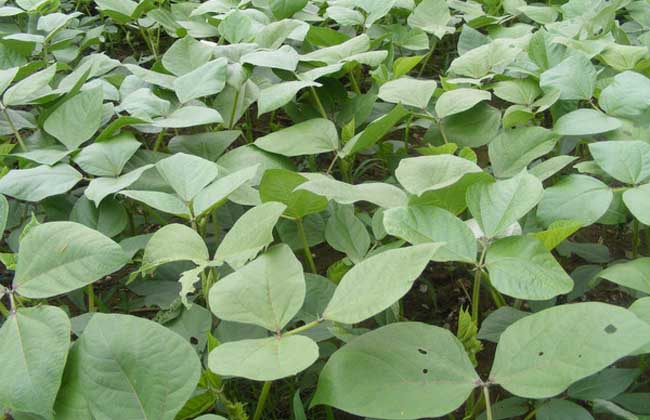
Mung bean is an annual erect herbaceous plant of the genus Vigna in the Fabaceae family. It is widely cultivated in East Asian countries, with small-scale cultivation also found in Africa, Europe, and the United States. Due to its short growth period, strong adaptability, and rapid seedling growth, it is suitable for intercropping and relay intercropping with various dryland crops in hilly areas, and can also be intercropped or mixed-cropped with tall crops such as corn and sorghum. Let us now take a look at high-yield mung bean cultivation techniques!
Land Selection and Preparation
1. Land selection and crop rotation: Mung bean has extremely strong adaptability and can generally grow in sandy soil, thin hillside land, black soil, and clay soil. It is often intercropped with crops such as corn, sorghum, cotton, sweet potato, sesame, and foxtail millet, and can also be planted on field ridges and in gaps between fields. Continuous cropping should be avoided, as it leads to more pests and diseases, poor quality, and the proliferation of harmful microorganisms that inhibit the development of rhizobia. At the same time, mung bean is also an important soil-enriching crop and an excellent preceding crop for cereals. Therefore, when planting mung bean, land should be reasonably arranged and crop rotation implemented. It is best to rotate with cereal crops such as corn, sorghum, and wheat. Chinese cabbage should not be used as the preceding crop. Generally, a gap of 2 to 3 years is preferable.
2. Land preparation and moisture conservation: Mung bean is a dicotyledonous crop, and its cotyledons emerge above ground. The seedlings have weak ability to push through the soil. If the soil is compacted or has too many clods, it can easily cause missing plants, gaps in rows, or uneven emergence. Therefore, before sowing, deep plowing and fine harrowing are required, with careful land preparation to break up clods, make the soil loose, store water and conserve moisture, and prevent soil compaction, keeping the topsoil loose and the subsoil firm, so as to facilitate seedling emergence and implement crop rotation.
Timely Sowing
1. Selection of improved varieties: Choose varieties with large grains, thin seed coats, low hard seed rate, easy cooking and softening, good taste, and good yield performance. Main varieties include Bailü 522, Bailü No. 6, and Bailü No. 8. From the Asian Vegetable Research and Development Center, there are Zhonglü No. 1 and Zhonglü No. 2. From Jilin, there are Jilü 9346, Gonglü No. 1, and Gonglü No. 2. These varieties generally yield more than 40% higher than local farmer varieties.
2. Sowing at the right time: Mung bean can be sown in spring and summer. Spring sowing is from late April to early and mid-May. Summer sowing is in mid-to-late June, and early sowing should be pursued. Mung bean prefers warmth. The suitable temperature for emergence and growth is 15 to 18 degrees Celsius, and higher temperatures are needed during the growth period. Germination begins at 8 to 12 degrees. During flowering and pod formation, the most suitable temperature is generally 18 to 20 degrees. If the temperature is too high, stems and leaves grow excessively, which affects flowering and pod formation. Mung bean is not tolerant of frost in the late growth stage. When the temperature drops below 0°C, the plants will freeze to death, and the seed germination rate will also be low. Therefore, for summer and autumn sown mung bean, attention must be paid to sowing early at the right time so that it can mature normally before low temperatures and early frost arrive. The sowing rate is generally 1.5 to 2.0 kg per mu, and the sowing depth should preferably be 3.0 to 5.0 cm.
3. Reasonable dense planting: The planting density of mung bean should be determined according to varietal characteristics and soil fertility. Generally, the principles are: dense for early-maturing varieties, sparse for late-maturing varieties; dense for upright types, sparse for semi-vining types, and even sparser for vining types; sparse for fertile land, dense for poor land; sparse for early sowing, dense for late sowing. For mung bean, the suitable density for early-maturing varieties on low-water and low-fertility plots is 180,000 to 200,000 plants, with 11 to 15 plants retained per meter of row. For medium-maturing varieties under medium water and fertility conditions, the suitable density is 150,000 to 170,000 plants, with 8 to 10 plants retained per meter of row. For late-maturing varieties under high water and fertility conditions, the suitable density should be 120,000 to 140,000 plants, with 7 to 8 plants retained per meter of row.
Field Management
1. Compaction and replanting: After sowing, for plots with poor soil moisture, timely compaction should be carried out. Compact as you sow so that the seeds are in close contact with the soil, increasing surface moisture, promoting seed germination and development, and achieving early and complete emergence. After mung bean emergence, if missing plants or gaps in rows are found, replanting should be completed within 7 days.
2. Thinning and final singling: To ensure good individual development of seedlings, thinning and final singling should be carried out. When mung bean seedlings reach the two-leaf-one-heart stage, clustered seedlings should be removed. At the four-leaf stage, final singling should be done, with a plant spacing of 13 to 16 cm, and a row spacing of about 40 cm for sole cropping. According to the predetermined density, remove weak, diseased, small, and mixed seedlings as well as weeds, and retain strong seedlings. Keeping single plants helps the plants grow robustly.
3. Cultivation and weeding: This not only eliminates weeds but also breaks soil compaction, loosens the soil, reduces evaporation, raises soil temperature, and promotes rhizobial activity. It is a measure for increasing mung bean yield. Generally, after the first compound leaf of mung bean unfolds, the first shallow hoeing is carried out together with thinning. After the second compound leaf unfolds, final singling begins and the second cultivation is carried out. At the branching stage, the third deep cultivation is carried out, along with earthing up around the roots. Cultivation should continue until the rows close. The cultivation depth should follow the principle of shallow-deep-shallow.
4. Irrigation and waterlogging prevention: Mung bean is a crop that requires relatively more water, is not tolerant of waterlogging, and is afraid of flooding. During the seedling stage, mung bean has strong drought resistance and requires less water. The flowering and pod stage is the peak period of water demand. At this time, if drought occurs, timely irrigation should be carried out. However, mung bean is also afraid of waterlogging and flooding. If there is too much moisture at the seedling stage, root diseases will worsen, causing root rot and seedling death. If waterlogging occurs later, the plants will grow poorly, show premature aging, shed flowers and pods, and yield will decline. Therefore, mung bean should be drained during the rainy season to prevent waterlogging.
Rational Fertilization
1. The fertilization principle for mung bean should be based mainly on organic fertilizer, supplemented by inorganic fertilizer, with mixed use of organic fertilizers, applying sufficient base fertilizer, and appropriate topdressing. Mung bean has a short growth period and strong tolerance to poor soil, and its root system also has symbiotic nitrogen fixation capacity. In production, it is often not fertilized, but in order to increase mung bean yield on medium- and low-yield plots, fertilizer should be added. Generally, about 10 kg per mu of seed fertilizer such as diammonium phosphate or nitrogen, phosphorus, and potassium compound fertilizer is applied. Topdressing for mung bean is best done at the flowering stage together with earthing up. Per hectare, 40 to 60 kg of nitrogen fertilizer such as ammonium nitrate or urea can be applied as topdressing, along with 100 to 120 kg of potassium sulfate.
2. For relatively poor plots, foliar topdressing can be carried out at the pod-setting stage, spraying plant growth agents such as monopotassium phosphate, Fu'er 655, Lüfeng 95, and Banger Yibianfeng on the leaves, with relatively obvious yield-increasing effects. On plots with higher fertility, the seedling stage should focus on control, and no further topdressing should be applied. Too much nitrogen fertilizer will lead to excessive vegetative growth, rampant stem and leaf growth, field shading, plant lodging, serious flower and pod shedding, and reduced mung bean yield.
3. Although mung bean rhizobia have nitrogen fixation capacity, applying farmyard manure and phosphorus and potassium fertilizers has obvious yield-increasing effects. Farmyard manure can be applied once before sowing, then plowed into the soil. If there is no time to apply base fertilizer, a certain amount of nitrogen and phosphorus fertilizer should be applied during the early growth stage, that is, at branching and early flowering, to enhance rhizobial nitrogen fixation capacity and increase flower bud differentiation. Increasing organic fertilizer, inoculating rhizobia, improving fertilization methods, and raising the utilization rate of chemical fertilizers: according to relevant reports, the nitrogen supplied by mung bean rhizobia can reach 50 to 70% of the total nitrogen required by mung bean. Therefore, inoculating rhizobia is one of the very economical and effective measures for increasing yield.
Timely Harvesting
1. Generally, when 70 to 80% of the pods on the plants have matured, harvest timely on a sunny day.
2. For large-area mung bean plots where manual picking is difficult, varieties with uniform maturity and non-shattering pods at maturity, such as Yulü No. 3, should be selected. After 70 to 80% of the beans have matured, harvest in the morning or evening.
3. It is preferable to harvest when more than two-thirds of the pods have turned black.
4. Because pods in different parts of the plant mature unevenly, varieties prone to pod shattering should be harvested in batches. For non-shattering varieties, when more than 2/3 of the pods in the whole field have turned black, they should be harvested all at once.