How to sprout mung bean sprouts well? Teach you the correct method for sprouting bean sprouts
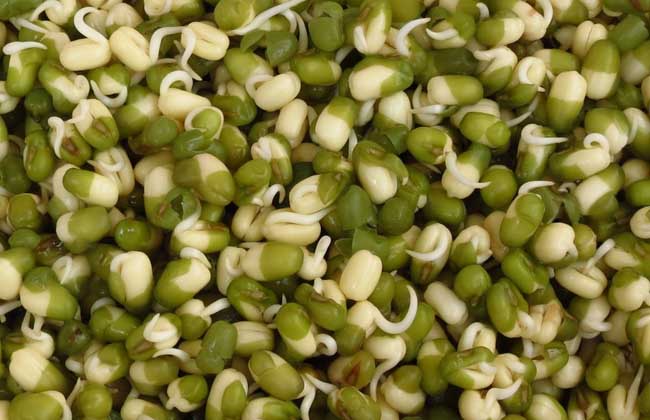
Mung bean sprouts are a food made from mung beans after processing, in which the nutritional content is increased several times over that of mung beans, because during the germination process of mung beans, the amino acids contained in the protein can recombine, greatly increasing the amino acids that are relatively lacking in mung beans, and making the proportion of amino acids more suitable for the needs of the human body, thereby improving the nutritional value of mung bean sprouts. Now let us take a look at how to sprout mung bean sprouts!
Pre-cultivation treatment
For cultivating bean sprouts, try as much as possible to select fully mature fresh bean seeds from the current year or the previous year, and at the same time aim for plump grains and bright color. To promote seed germination, "start-up treatment" and "seed soaking treatment" are usually used. The start-up treatment method is: for bean grains that have been pre-selected, before putting them into the sprouting container, generally first pour them into 60°C hot water, soak for 1 to 2 minutes, then rinse with cold water 1 to 2 times. The purpose is to adjust the activity of the oxidase system related to bean seed germination and to give the dormant seeds a temperature stimulus, which helps the bean grains germinate neatly and uniformly. The seed soaking treatment method is: 1 kg of mung beans or soybeans requires about 1 kg of water, and the most suitable water temperature for soaking the bean grains is 20 to 23°C. When soaking seeds in winter, warm water is generally used for soaking, while in summer cold water can be used directly for soaking. The soaking time for bean grains generally requires about 8 to 12 hours.
Sprouting temperature
The seeds of mung beans belong to the seeds of vegetable crops that prefer warmth and tolerate heat. The minimum temperature for their bean seeds to germinate is 10°C, the most suitable temperature is 21 to 27°C, and the maximum temperature is 28 to 30°C, and it should not exceed 32°C. In sprouting, temperature regulation is carried out by watering. For example, when the summer temperature is too high, cold water should be used to sprinkle and water the bean sprouts generally, but care should be taken to thoroughly water the sprouts in the central part of the cultivation container so as to lower their temperature. In winter, when the temperature is low, warm water should be used for sprinkling to raise the temperature of the bean sprouts being cultivated, and at the same time the circulation of cold air should be minimized as much as possible. For small-scale household cultivation of bean sprouts, in winter the cultivation container can be placed beside a stove or on a stove top to keep warm.
Watering to promote sprouting
There are generally two methods of watering during sprouting. One is the sprinkling method, which requires that each time water is sprinkled, the amount of water should be large, and at the same time the bean sprouts in the entire container should be thoroughly sprinkled, making sure to regulate the heat of the sprouts in all parts of the container evenly, until the temperature of the water flowing out is the same as the temperature of the water when sprinkled in. The other is the flooding method, filling the entire container with water and making the water surface about 2 cm above the surface of the bean sprouts, so that the bean sprouts in the container are generally immersed in the water, and then all the water is drained away or poured off completely. Repeat this watering 1 to 2 times, until the temperature of the sprouts in all parts of the container is regulated uniformly.
Timely harvesting
Mung bean sprouts are best harvested when the bean sprouts have grown and developed to the point that the embryonic stems have fully elongated and the true leaves are about to emerge or have just begun to emerge. At this time, the embryonic stems are about 5 to 6 cm long, the roots are about 0.5 to 1.5 cm long, the bean cotyledons are egg-yellow, the embryonic stems appear milky white and crystalline, and the true leaves that have just begun to emerge are milky yellow, with no lateral roots growing. Generally, each 1 kg of mung beans can produce 7 to 8 kg of mung bean sprouts.