How to Grow Mustard Seeds? A Detailed Guide to Planting Methods
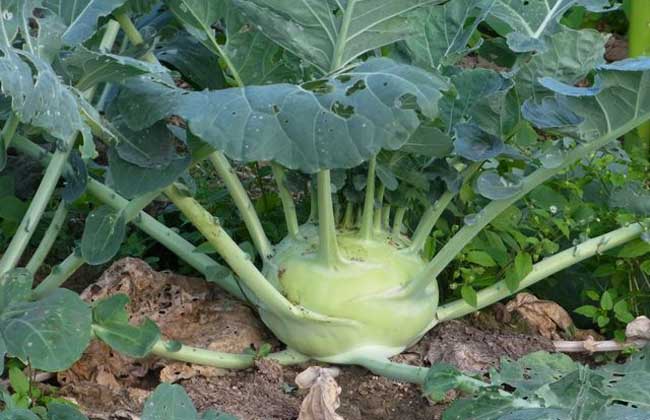
Mustard is usually propagated by sowing. Artificial cultivation includes open-field cultivation and protected cultivation. In open-field cultivation, it can be carried out in both spring and autumn in the Yangtze River and Huang-Huai regions, generally with autumn sowing as the main season. Sowing can be done successively from late July to October, and harvesting ends from mid-September to the following March, but the yield is highest when sown in August. Let's take a look below at how to grow mustard seeds!
Seed Selection
For mustard tuber seeds, those with an orange-red color and bright luster are preferred. After the seeds are purchased, they should first be carefully selected. In addition to removing mixed-in impurities, plump seeds should be chosen. Because mustard tuber seeds are small, they are generally selected by washing with water, that is, soaking the seeds in water and stirring continuously, skimming off shriveled seeds and debris; those that sink to the bottom are plump seeds.
Sun-Drying and Disinfection
After the mustard seeds are selected with water, spread them out immediately in the sun to reduce their internal moisture content, stirring from time to time so that all seeds can evenly receive sunlight, promote their internal material transformation, break dormancy, increase the germination rate, and produce more uniform seedlings. For disinfection, use a fungicide such as a carbendazim solution to soak the seeds for 5-10 minutes, stirring continuously so that all seeds fully contact the solution and all pathogens are killed.
Seed Soaking and Germination
Mustard seeds absorbing enough water is beneficial for the internal transformation of the seeds and for softening the seed coat to promote sprouting. Soak them in warm water for 3-4 hours; at this time, a foliar fertilizer with comprehensive nutrients can be added for them to absorb, so as to increase nutrition, increase the germination rate, and help produce strong seedlings. For seed germination, in addition to air and moisture, there must also be temperature. Therefore, place the soaked seeds in an environment of 25-30°C to ensure early germination and neat, uniform sprouting, which helps with management during the seedling stage.
Sowing Techniques
For spring cultivation, mustard is planted in late February; for summer cultivation, from early July to late August; for autumn cultivation, from early September to early October, generally with autumn cultivation as the main season. The sowing rate per mu is 1.5-2 kg for spring sowing, 3-4 kg for summer sowing, and 2-3 kg for autumn sowing. Usually broadcast sowing is used, but effort should be made to keep it even. After sowing, gently tread over the surface of the bed with your feet so that the seeds and soil are in close contact, which helps the seeds absorb water and emerge earlier. For summer and autumn sowing, 1-2 days before land preparation, wet the soil first, then prepare the land and make beds.
Seedling Stage Management
The purpose of management during the mustard seedling stage is to ensure that the seedlings emerge in time, emerge neatly and uniformly, have thick stems, dark green leaves, and are strong. Therefore, the main work is to keep warmth and moisture, but it must not be too wet, so as to avoid insufficient air and easy seed rot. Another task is to pay attention to preventing aphids to reduce infection by pathogens. From emergence to 2-3 true leaves, 1-2 applications of foliar fertilizer should be sprayed to promote strong seedlings. At this time, the seedlings grow faster, and thinning should be carried out in time, keeping a spacing of 4-5 cm between seedlings to prevent leaves from shading each other and forming leggy seedlings, until the seedlings are 14-16 cm tall and have 5-6 true leaves, when planting out can be carried out.