What Is Mustard Greens? A Complete Guide to Getting to Know Mustard Greens
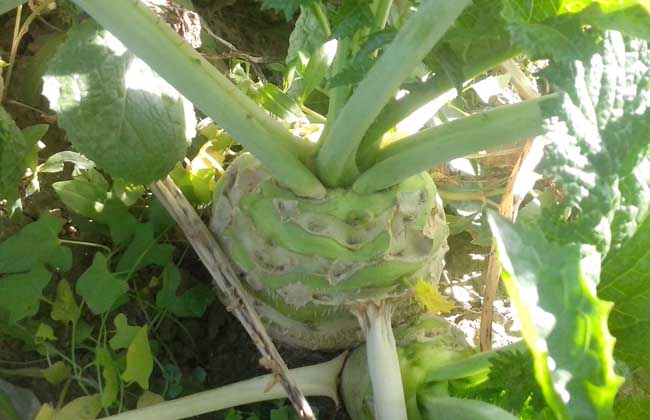
Mustard greens are a famous specialty vegetable of China, also known as gai cai, jie, gua cai and so on. They are an annual or biennial herbaceous plant of the genus Brassica in the family Brassicaceae, a common vegetable cultivated throughout the country, mostly distributed in the provinces south of the Yangtze River. Except for extremely cold and arid regions, there is no boundary to their distribution in China: east to the coastal provinces, west to the ** Uygur Autonomous Region, south to Sanya City in Hainan Province, and north to Mohe City in Heilongjiang Province. Mustard greens are cultivated from the middle and lower reaches of the Yangtze River plain all the way to the Qinghai-Tibet Plateau.
Mustard greens grow 30-150 cm tall, usually hairless, sometimes with bristles on young stems and leaves, covered with a powdery bloom, and pungent in taste. The stem is erect and branched. The basal leaves are broadly ovate to obovate, 15-35 cm long, with a rounded-obtuse apex and cuneate base, lyrate-pinnatifid with 2-3 pairs of lobes, or undivided, with incised margins or teeth; the petiole is 3-9 cm long and bears small lobes. The lower stem leaves are smaller, with incised or toothed margins, sometimes with rounded-obtuse serrations, and do not clasp the stem. The upper stem leaves are narrowly lanceolate, 2.5-5 cm long and 4-9 mm wide, with inconspicuous sparse teeth or entire margins.
The raceme of mustard greens is terminal and elongates after flowering. The flowers are yellow, 7-10 mm in diameter, on pedicels 4-9 mm long; the sepals are pale yellow, oblong-elliptic, 4-5 mm long, upright and spreading; the petals are obovate, 8-10 mm long and 4-5 mm wide. The silique is linear, 3-5.5 cm long and 2-3.5 mm wide, with the valves bearing 1 prominent midvein, a beak 6-12 mm long, and a fruiting pedicel 5-15 mm long. The seeds are spherical, about 1 mm in diameter, and purple-brown. The flowering period is March to May, and the fruiting period is May to June.
Mustard greens require vernalization at low temperatures and long-day conditions to form flower buds, bolt, flower and set seed. In both northern and southern China, they are mainly sown in autumn. In the Yangtze River basin and in the southwest and south China, they are harvested in winter or the following spring, while in the north they are harvested before frost. Leaf mustard, grown for its young plants as a vegetable, can be sown in spring or summer in the south. During the growing period, long days make bolting more likely, which affects the growth of the edible organs.
Mustard greens are rich in vitamin A, B-group vitamins, vitamin C and vitamin D. They contain large amounts of ascorbic acid, a highly active reducing substance that participates in important oxidation-reduction processes in the body, can increase the oxygen content in the brain, and stimulates the brain's use of oxygen, helping to refresh the mind and relieve fatigue. The ground seeds are called mustard, used as a seasoning. The oil pressed from them is called mustard oil.