How to Plant Daylily Seeds? A Detailed Guide to Sowing Methods
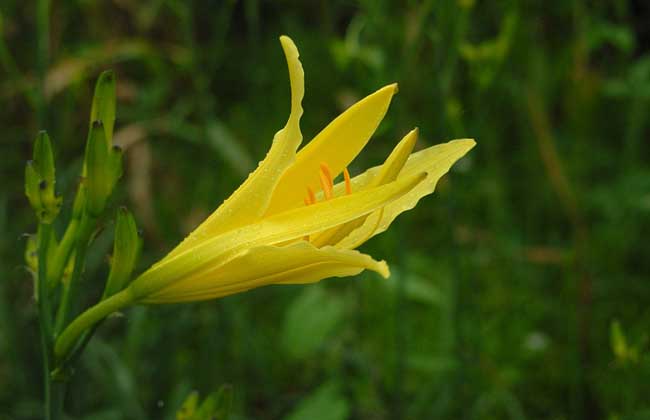
Daylilies are tolerant of poor soil and drought, and are not particular about soil requirements; they can be cultivated on field edges or hillsides. They adapt to a wide range of light conditions and can be intercropped with taller crops. They are cultivated throughout northern and southern China, and Shaodong County and Qidong County have been designated as places of origin for daylilies. The most commonly used propagation method is division, but they can also be propagated from seed. Let's take a look below at how to plant daylily seeds!
Collecting Daylily Seeds
For daylily seeds, choose healthy, pest- and disease-free daylilies that have been planted for 5-8 years. At the early flowering stage, leave 5-6 sturdy buds unpicked on each flower scape to let them set fruit and be kept for seed. The remaining buds continue to be picked and sold as produce. For the daylilies used for seed collection, spray 2000-fold amino acid solution once every 7-10 days during the early flowering stage, for 2-3 sprays. When the capsules mature and the tips crack slightly, pick them and thresh out the seeds. Store the seeds in a ventilated, dry place and keep them properly.
Seedling-Raising Techniques for Daylilies
Choose a sunny cold frame or greenhouse site, use fertile garden soil as the seedbed, and disinfect the soil. Soak the seeds in warm water at 25°C for 48 hours. When sowing, apply 200 kg of decomposed, sieved organic fertilizer per bed (1.50-7 m), level the bed and water it thoroughly, and after the water has seeped in, open furrows at a row spacing of 15 cm and a plant spacing of 3 cm and sow the seeds in holes, then cover with 2 cm of soil after sowing. When using a sunny cold frame for seedling raising, insert small arch rods and cover with film; keep the temperature inside the shed at 25°C during the day and no lower than 12-15°C at night. Seedlings can emerge in 1 week. After emergence, gradually lower the shed temperature to acclimate them to the outside climate and prevent leggy seedlings. Strengthen field management during the seedling stage and keep the soil moist. Pay attention to disease and pest prevention, do more intertillage and spray some foliar fertilizer to promote seedling growth and development, and cultivate large, strong seedlings for transplanting the following year.
Cultivation and Management of Daylilies
1. Reasonable close planting: Close planting of daylilies can give play to population advantages, increase the number of tillers, scapes and buds, and achieve the goal of increasing yield. Generally, wide-and-narrow row cultivation is mostly used, with wide rows of 60-75 cm, narrow rows of 30-45 cm, and hill spacing of 9-15 cm, planting 2-3 plants per hill, at 45,000-75,000 plants per hectare, reaching 1.5 million-2.25 million plants per hectare at peak production.
2. Proper deep planting: The root mass of the daylily grows from around the shortened stem and has the characteristic of one layer per year, with the rooting position moving upward year by year from bottom to top. Therefore, proper deep planting helps the plant survive and thrive, and the suitable planting depth is 10-15 cm. After planting, water to settle the roots, and keep the soil moist regularly before the autumn shoots emerge to facilitate the growth of new shoots.
3. Intertillage and hilling: The daylily has a fleshy root system and needs a fertile, loose soil environment to facilitate the growth and development of the root mass. During the growth period, according to growth and soil compaction, carry out intertillage 3-4 times. The first time is when the seedlings are just emerging, and the 2nd to 4th times are carried out during the scape stage together with intertillage and hilling.
4. Fertilization management: Daylilies require sufficient winter fertilizer (base fertilizer), early application of seedling fertilizer, heavy application of scape fertilizer, and supplementary application of bud fertilizer.
① Winter fertilizer: This should be applied when the aboveground part of the daylily stops growing, that is, after the autumn shoots wither from frost or at planting time. It is mainly organic fertilizer, applying 30,000 kg per hectare of high-quality farmyard manure and 750 kg per hectare of superphosphate.
② Seedling fertilizer: Seedling fertilizer is mainly used for emergence and leaf growth, promoting early and rapid leaf growth. Seedling fertilizer should be applied early rather than late, and should be applied when the daylily begins to sprout, applying 150 kg per hectare of superphosphate and 75 kg per hectare of potassium sulfate.
③ Scape fertilizer: The scape stage of the daylily is an important period of transition from vegetative growth to reproductive growth. This period requires more fertilizer, and it should be applied when the flower scapes begin to emerge, applying 225 kg per hectare of urea, 150 kg per hectare of superphosphate and 75 kg per hectare of potassium sulfate.
④ Bud fertilizer: Bud fertilizer can prevent the daylily from running out of nutrients and prematurely aging, increase the bud-setting rate, extend the picking period and increase yield. It should be applied within 7-10 days after picking begins, applying 75 kg per hectare of urea. At the same time, during the picking period, spray the leaves about every 7 days with 0.2% potassium dihydrogen phosphate plus 0.4% urea plus 1-2% superphosphate aqueous solution, and additionally spray once with 15-20 mg/kg 920 after 17:00, which has a clear effect on strengthening buds and preventing bud drop.