How to grow bottle gourd for high yields? A detailed guide to practical growing techniques
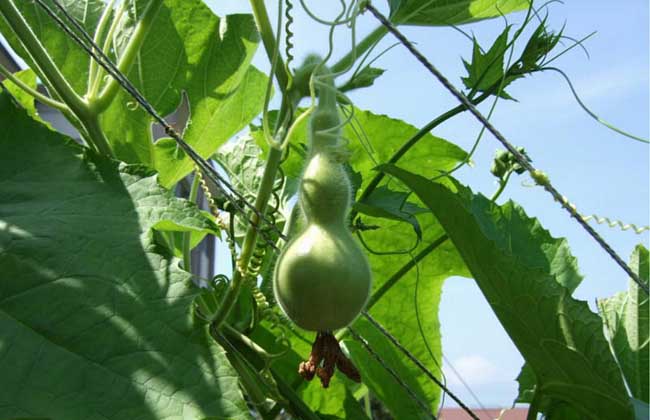
Bottle gourd, also known as calabash, flat gourd, hulu, night-blooming gourd, and black gourd, is an annual vining herbaceous plant of the genus Lagenaria in the Cucurbitaceae family. In ancient times its mature, dried fruit shell was used as a container and also as medicine. It is cultivated throughout northern and southern China, commonly in the south, and in recent years the north has also begun introducing and cultivating it. Let's take a look together at the high-yield growing techniques for bottle gourd!
The growing environment of bottle gourd
Bottle gourd is a warmth-loving plant, with an optimum growing temperature of 20-25°C. It is not tolerant of waterlogging or drought, so in rainy areas attention must be paid to drainage, and during drought it should be irrigated promptly. It likes warmth and is slightly tolerant of low temperatures. The seeds begin to germinate at 15°C, germinate fastest at 30-35°C, and the optimum temperature for growth and fruiting is 20-25°C. The long calabash is not tolerant of high temperatures. It has high requirements for light conditions; with sufficient sunlight there is less disease, growth and fruiting are good, and yields are high. It has strict water requirements, being neither tolerant of drought nor of waterlogging. During the fruiting period it requires relatively high air humidity. It is not tolerant of poor, thin soil, and soil rich in humus with strong water- and fertilizer-holding capacity is most suitable. Of the nutrients it needs, nitrogen is primary, combined with an appropriate amount of phosphorus and potassium fertilizer, so as to improve yield and quality.
Cultivated varieties of bottle gourd
1. Xian hu zi (line calabash): The flesh of the line calabash is white, about 1 cm thick, tender and fine in texture, with few fibers and good quality, suitable for cooked dishes. It has relatively strong heat tolerance, is not tolerant of cold, and is not tolerant of waterlogging. Its resistance to pests and diseases is moderate.
2. Chang hu zi (long calabash): The fruit of the long calabash is a long cylinder, 40-50 cm long, with light green skin and white, soft flesh of excellent quality. The fruits mostly set on secondary or lateral vines. It is an early-maturing variety.
3. Miantiao hu zi (noodle calabash): The fruit of the noodle calabash is long with similar thickness top and bottom, slightly thinner at the stem end, with thin, light green, glossy skin, and thick, tender white flesh. A single gourd weighs 1.5-2.0 kg. It keeps well without becoming tough and matures relatively early.
4. Da hulu (large gourd): The flesh of the large gourd is white, relatively dense in texture, high in water content, low in fiber, slightly sweet, and of fairly good quality. The young gourd is used for cooked dishes, and the mature gourd can be used as a container. It is heat-tolerant, not cold-tolerant, not drought-tolerant, and fond of fertilizer.
5. Xiaogan bottle gourd: The fruit of the Xiaogan bottle gourd is a long cylinder with thin green skin, thick white flesh, few seeds, and good quality. A single gourd weighs about 1 kg. It is an early-maturing, high-yielding variety.
6. Sanjiangkou hu zi: The Sanjiangkou calabash has tender, fine flesh with a slightly sweet taste and excellent quality. A single gourd weighs 750 g. It is relatively tolerant of low temperatures and relatively resistant to pests and diseases, with a yield of 3500-4000 kg per mu.
Growing techniques for bottle gourd
1. Planting method: Bottle gourd can be sown directly in the open field before the last frost, or raised as seedlings in a protected area and then transplanted. Before sowing, the seeds need to be treated. They must be soaked for 24-48 hours, then sown, with a seeding rate of 250 g per mu. The management of bottle gourd seedlings is the same as for spring cucumbers. You can refer to cucumber seedling-raising techniques.
2. Sowing and seedling raising: Bottle gourd is raised in a hotbed, sown from late February to early March, with a seeding rate of 3.75 g per hectare. Before sowing, soak the seeds in 55°C warm water for 15 minutes, then place them under a constant temperature of 25-30°C to sprout. Once the sprouts are uniform, sow them into nutrient pots. During the seedling stage, keep them warm and protected from cold, ventilated and light-transmitting, and keep the soil moisture appropriate. The seedling age is about 30-35 days. About 10 days before transplanting, harden the seedlings at low temperature.
3. Land preparation and fertilizing: For bottle gourd, choose oily sandy soil rich in humus as the cultivation field, and it is required that no cucurbit crops have been grown there for 2-3 years. After harvesting the previous crop, plow deeply 20-25 cm in time and apply sufficient base fertilizer: 30000-45000 kg of decomposed organic fertilizer per hectare, 15000-22500 kg of human and animal manure, or 1500-1875 kg of cake fertilizer, and 300-400 kg of superphosphate.
4. Timely transplanting: About 10 days before transplanting bottle gourd, make beds with a bed height of 20-25 cm, a bed width of 100 cm, and a ditch width of 50 cm, then lay plastic film and wait to plant. The transplanting spacing is 0.67 m, digging holes and planting a single seedling per hole, then watering to settle the roots. Before plowing, use gramoxone to control weeds once; after preparing the land, spray butachlor once more, and only then carry out transplanting.
5. Plant training: Bottle gourd can be grown with or without trellising. For ground-creeping cultivation without trellising, the vines need to be pressed down to prevent wind damage. For trellised cultivation, when the seedlings reach 30 cm tall, set up a inverted-V trellis with 2-3 m long bamboo poles, crossing at about 1.3 m. To make it easier for lateral vines to climb and for manual layered tying of vines, 2-3 horizontal bars are needed. Bottle gourd mainly sets fruit on secondary and tertiary vines, so plant training should be carried out, usually pinching the tips 2-3 times to encourage the development of secondary and tertiary vines.
6. Fertilizer and water management: Bottle gourd has weaker growth vigor than other cucurbits, a short growing period, and concentrated fruiting. In addition to base fertilizer, it also needs topdressing and irrigation. Topdressing should be applied lightly and frequently. Apply fertilizer once each after transplanting and survival and after pinching, and during the fruit enlargement period. After harvest begins, apply topdressing in stages 1-2 times to promote the growth of later-ripening gourds. Bottle gourd needs more water, so it should be watered promptly; during the fruiting period, in dry weather it can be watered once every 1-2 days, but if there is a lot of rain, drain promptly to prevent waterlogging.
7. Timely harvesting: Timely harvesting can improve fruit quality and encourage the upper part to continue setting fruit and the subsequent fruits to grow. This is an important measure for early-maturing, high-yield cultivation. When the fuzz on the young gourd has basically fallen off and the skin color has become lighter, it is the suitable harvest time. Generally, the first batch of gourds is harvested 15-20 days after flowering, and during the peak fruiting period, 10-12 days after flowering. Harvesting the fruit too mature affects its edible value.
Pest and disease control for bottle gourd
1. Fusarium wilt
[Symptoms] It attacks the roots and the base of the stems and vines. The leaves wilt severely. After flowering and fruiting, the initial appearance of the disease resembles water shortage: obvious wilting at noon, recovering in the morning and evening. The roots turn brown or rot, and the affected parts exude an amber gummy substance.
[Control] You can use one of the following to drench the roots: 50% carbendazim 500-fold dilution, 70% thiophanate-methyl 600-fold dilution, fulvic acid salt 800-fold dilution, special-effect huangweiling 1500-fold dilution, 50% dexon 500-fold dilution, or miebingwei 600-fold dilution, or agricultural streptomycin, etc.
2. Anthracnose
[Symptoms] The initial lesions are pale yellow and nearly circular, and later the centers of the lesions rupture. In severe cases the leaves die, pale brown streaky spots appear on the leaf stalks, and infected fruits show pale green water-soaked spots, followed by nearly circular dark brown lesions with sunken centers; sometimes the surface exudes an orange sticky substance or rots.
[Control] You can use one of the following for alternating spray control: 70% thiophanate-methyl 600-fold dilution, 75% chlorothalonil 500-fold dilution, miebingwei 600-fold dilution, kemeling 1000-fold dilution, fenghuan 1000-fold dilution, or sulfur suspension concentrate 500-fold dilution.
3. Downy mildew
[Symptoms] Affected leaves develop small pale yellow spots, and in humid conditions a pale purple moldy growth appears on the underside of the lesions.
[Control] You can use one of the following for spray control: 58% metalaxyl 500-fold dilution, mancozeb 500-fold dilution, 60% shaduvul 500-fold dilution, kemeling 1000-fold dilution, beideli 600-fold dilution, 70% mancozeb 500-fold dilution, or yishuangling 500-fold dilution.
4. Pests
[Damage] The main pests of bottle gourd include melon aphids, melon flies, yellow squash beetles, and noctuid moths, which damage the roots, leaves, stems, and fruits of bottle gourd.
[Control] Apply miler deeply or broadcast it, and spray with pyrethroid pesticides mixed with shachongshuang to control them.