Detailed Explanation of Sedum kamtschaticum Planting Techniques and Management Methods
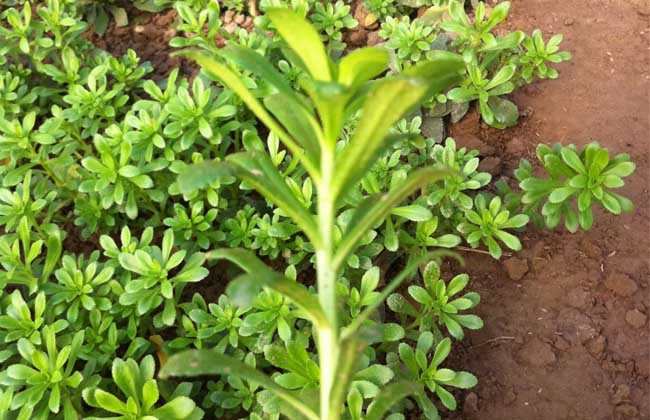
Sedum kamtschaticum, also known as Sedum aizoon, Tusangi, and Feicai, is a perennial herbaceous plant of the genus Sedum in the family Crassulaceae. It mostly grows on mountain forest edges, in shrub thickets, and in riverside grass clusters. It is relatively shade-tolerant, drought-tolerant, and cold-tolerant, and can overwinter in the open field in northern regions. It has no strict requirements for soil, has strong adaptability, and possesses high cultivation value. Let us now take a look at Sedum kamtschaticum planting techniques!
Growth Habits of Sedum kamtschaticum
Sedum kamtschaticum is an ancient plant that grows on hillside forest edges, in valley understories, in shrub thickets, in shady and moist riverside areas, and in dry, ventilated places. It dislikes waterlogging, has no strict requirements for soil texture, is slightly shade-tolerant, cold-tolerant, and tolerant of drought and barren conditions. It can grow vigorously on hillside rocks and wasteland. In China, it is distributed in Sichuan, Hubei, Jiangxi, Anhui, Zhejiang, Jiangsu, Qinghai, Ningxia, Gansu, Inner Mongolia, Ningxia, Henan, Shanxi, Shaanxi, Hebei, Shandong, Liaoning, Jilin, Heilongjiang, and other places.
Cultivated Varieties of Sedum kamtschaticum
1. Narrow-leaf variety: Leaves narrowly oblong-cuneate or nearly linear, less than 5 mm wide. Flowering period June to July, fruiting period August. Produced in Gansu, Shaanxi, Shandong, Hebei, Inner Mongolia, Jilin, and Heilongjiang. Grows on shady hillsides at an altitude of about 1350 m.
2. Broad-leaf variety: Leaves broadly obovate, elliptic, or ovate, sometimes slightly rounded, apex rounded-obtuse, base cuneate, 2 to 7 cm long, up to 3 cm wide. Flowering period July. Produced in Shandong, Hebei, Liaoning, and Jilin-Heilongjiang.
3. Milky-hair variety: Leaves narrow, apex obtuse, plants covered with minute papillate protrusions. Flowering period June to July, fruiting period August. Produced in Qinghai, Ningxia, Gansu, Shaanxi, Hebei, and Inner Mongolia. Grows on rocky hillside grasslands below an altitude of 3600 m.
Propagation Methods of Sedum kamtschaticum
1. Root division propagation: For root division propagation of Sedum kamtschaticum, dig out the roots in early spring, divide them into several plants according to the number of root buds, with each plant carrying more than 2 root buds. Then dig holes at a row spacing of 30 x 15 cm, plant with water, and compact the soil after covering.
2. Cutting propagation: For cutting propagation of Sedum kamtschaticum, select thick and strong young branches in summer, cut them into 10 to 15 cm long stem segments, insert them into a cutting bed, water frequently, and keep the soil moist. After about 15 to 20 days, they will take root and survive.
3. Seed propagation: For seed propagation of Sedum kamtschaticum, sow the seeds in mid-April of spring on a pre-prepared seedling bed, open shallow furrows at a row spacing of 15×20 cm, water after sowing, and cover with grass to preserve moisture. When about 10% of the seedlings have emerged, remove the covering grass, and loosen the soil and remove weeds.
Planting Techniques for Sedum kamtschaticum
1. Land preparation and fertilization: Any dry land suitable for crop growth can be used to cultivate Sedum kamtschaticum, but fertile sandy loam farmland and loam farmland are conducive to high yield. Deeply plow the farmland in advance and sun the soil clods. Apply 2000 kg of decomposed pig and cattle manure per mu, or 100 kg of decomposed rapeseed cake plus 50 kg of imported ternary compound fertilizer as base fertilizer. Fine plow and harrow, make beds with a width of 2 m including ditches, with ditch depth of 30 cm and bed length of 20 to 40 m. Also open waist ditches and surrounding ditches, level the bed surface, and wait for planting.
2. Transplanting and field planting: Open planting ditches at a row spacing of 25 cm. Apply 1000 kg of decomposed pig and cattle manure per mu, or 50 kg of decomposed rapeseed cake. Apply the fertilizer into the ditches and mix it thoroughly with the soil, then plant at a plant spacing of 15 cm. When planting, lift seedlings from the seedling bed with soil, plant 2 to 3 seedlings per hole, with a planting depth of about 5 cm. After planting, water thoroughly, then cover with fine soil and press lightly, and water to settle the seedlings. The total number of planting holes per mu is 9500 to 10000 holes, and the total number of plants is 22,000 to 25,000 plants.
3. Fertilizer and water management: After field planting, topdressing should be applied in small amounts and frequently, generally once a month or applied with irrigation, with 10 kg of urea and 3 kg of monopotassium phosphate per mu each time. Before overwintering or regreening, apply 2000 kg of decomposed barnyard manure per mu or 50 kg of ternary compound fertilizer. After each harvest, promptly apply 10 kg of potassium chloride per mu or broadcast 100 kg of plant ash to promote branching and increase yield. If the soil is dry, water in time, and the water must soak through. Sedum kamtschaticum dislikes waterlogging, so in the rainy season, clear ditches and drain water in time.
4. Overwintering management: Sedum kamtschaticum has strong vitality. In winter in northern Liaoning, it can be moved to the south-facing balcony of a heated building to continue growing, or placed in a corridor or outdoors in a wind-sheltered, sunny place. First water it thoroughly once, then cover it with rice straw, and after snow falls, cover it with some snow to let it overwinter in dormancy. In the spring of the second year, the new buds it sends out are more robust than those of Sedum kamtschaticum grown year-round.
5. Pest and disease control: The main disease of Sedum kamtschaticum is powdery mildew, which generally occurs easily in rainy, hot, and humid seasons. The affected leaves first develop white powdery mold spots, which gradually expand to cover the entire leaf, and later scattered black dots appear on the diseased spots. For control, pay attention to ventilation and light transmission, remove weeds in time, drain water in the rainy season, and burn diseased plants in autumn to reduce the occurrence of this disease. If the disease has already occurred, it can be controlled with 0.5 degree Baume lime-sulfur mixture or with triadimefon.
6. Harvesting and processing: There are two harvesting methods for Sedum kamtschaticum. One method is uniform harvesting, that is, while retaining most branches with 3 to 4 nodes at the base, use a sickle to cut the tender stems and leaves horizontally in one go, generally cutting once every about 60 days, with a yield of about 4000 kg per mu each time. The other method is harvesting in stages and batches, first harvesting the dense and robust tender stems and leaves, letting the thin and sparse stems and leaves continue to grow, and then harvesting them successively later. The total annual yield of the two harvesting methods is basically the same. The harvested tender stems and leaves can be sold directly on the market, or dried for consumption or brewed as tea.