What are the methods for grading orchid seedlings?
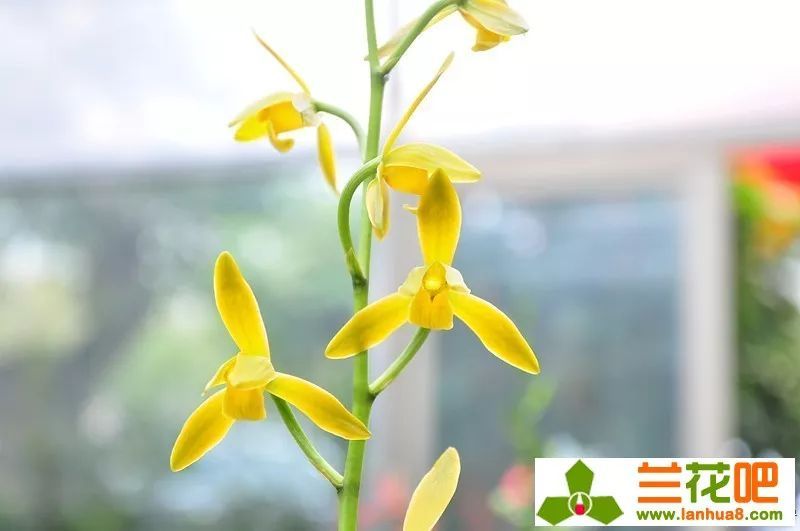
Promote Chinese orchid culture, spread orchid knowledge
One, smell the fragrance: orchids are fragrant without needing an audience; those with a clear, not muddy, fragrance are top grade.
Two, look at the posture: those with a well-proportioned whole plant and harmonious flowers and leaves are good.
Three, look at the color: flower colors that are a pure single color and pale green are best, dark green is next, those with red streaks or red dots on the petals and lip are even lower, and those that are red when first opening and later turn green are lower still. Leaf color that is glossy and lustrous is good.
Four, look at the shoulders: the two lateral sepals on the left and right rising slightly upward are called flying shoulders, and are the most precious; those spreading horizontally and flat into a "straight-line shoulder" are excellent varieties; those whose two lateral sepals gradually droop after blooming are called falling shoulders, and are next.
Five, look at the petals: orchid enthusiasts generally agree that judging the petals is primary. Lotus-petal type is top grade, plum-petal type is next, narcissus-petal type is next again. Odd-petal multi-flowered and butterfly-petal types are a notch above.
Six, look at the column: the column, being smooth and clean, fleshy and thick, and concave inward to form a pouch shape, indicates a good variety.
Seven, look at the lip: the lip is best when its form is proper and it is round, short and large. The color on the lip is called moss; pure white, green, or fully red is best, yellow is next. The lip often has red lines or block-like red patches; those with bright colors are good, and spots forming a single dot, a single patch, or a triangular arrangement are good; the appearance of multiple lips is extraordinary.
Eight, look at the nose: a small nose that appears spirited is top grade. The appearance of a large, hard nose is extraordinary.
Nine, look at the shell: the shell is the bract; those with a discerning eye can tell from the bracts of a "dumb grass" that if the veins run all the way to the top, it will surely produce good flowers. Generally, green is good, and purple-red is next.
Ten, look at the stalk: the stalk should be clear in color, its length proportionate to the flowers and leaves, and slender and standing out above the leaves (commonly called the flower rising above the foliage) is good.
In summary of the above, orchids are a commodity, and this is determined by region, season, and human factors. If you are used to them, they are all good; if you are not used to them, they will not grow well. Spending money, effort, and time "running after others" is not worthwhile either. Each of the east, west, south, north, and center simply has its own preferences, and the differences in awards and evaluations are no more than this. National exhibitions are continuous; the important thing is to participate, to appreciate, learn, and exchange ideas, so as not to be "misled."
In some larger flower markets, various beautiful orchids can often be seen for sale. How can these orchid types be identified? Several commonly cultivated orchids are introduced below for flower lovers to refer to when purchasing.
Cymbidium goeringii (Spring Orchid): roots fleshy, white; leaves narrowly linear, about 20 cm to 25 cm long, with fine sharp serrations on the edges and obvious veins; each stem bears 1 to 2 flowers, yellow-green, with a delicate fragrance; blooms in early spring from February to March.
Cymbidium faberi (Huilan): roots fleshy, pale yellow; leaves linear, more upright and thicker and longer than Cymbidium goeringii, with rough leaf margins; one stem bears 5 to 13 flowers, pale yellow, with a greenish-white lip bearing red-purple spots; the flowers are very fragrant; flowering period is April to May.
Cymbidium ensifolium (Jianlan): leaves broadly linear, mostly upright, with smooth leaf margins; one stem bears 16 to 12 flowers, yellow-green to pale yellow-brown, with dark purple stripes; the fragrance is very strong; flowering period is July to September.
Cymbidium sinense (Molan): leaves 50 cm to 100 cm long, up to 3 cm wide, smooth, with pointed tips, upright in habit; the flower stem is about 60 cm tall; one stem bears 5 to 10 flowers; the petals mostly have purple-brown stripes; flowering period is winter to early spring, and it is fragrant.
Cymbidium kanran (Hanlan): leaves narrow and upright; the flower stem is slender and upright, bearing 5 to 9 flowers; flowers are small, with narrow petals, in colors such as yellow, white, blue-green, red, and purple; it is delicately fragrant; flowering period is late autumn to early spring.
Standards for judging the quality of orchids
The standards for good and poor quality are introduced as follows:
1. Roots that are round, fine, and numerous are good.
2. Leaves that are tight at the base and broad in the middle and upper parts are good.
3. For flower color, tender green is best, deep green is next, and red-green is next again. Bright red flowers are also good. Plain-heart or plain-color flowers, that is, those with the whole flower of one color, are even better.
4. Flower fragrance that is elegant, pure, and mild is good; one with an overly strong off-odor is inferior.
5. The three outer petals of the flower are prized when even and slightly thick in texture and glutinous in quality. Those with a broad main petal and narrow lateral petals or outward-curling petals are inferior.
6. For the shoulders, "flat shoulders" are top grade (that is, with the main petal as the center, the left and right petals extending horizontally are called flat shoulders). Those with the two lateral petals slightly upward, called "flying shoulders," are also good. Those with shoulders sloping downward, called "falling shoulders," are next.
7. The column (that is, the inner petals) is best when smooth and clean, large, and thick and glutinous.
8. The lip is best when short, round, broad, and large. If it is a colored heart, those with stable patterns of colored dots and colored lines and good color are good.
9. Dots (referring to the dots on the lip): the dots on the lip of Cymbidium goeringii must be neat; those that are messy and dull in color are inferior.
10. Identification of flower buds. Orchids on the market are supplied before blooming, so flower buds become the main object for identifying and selecting excellent varieties. This can be done by recognizing the bud shape and the color of the bud sheaths. Cymbidium goeringii opens one flower, so it is relatively easy to identify. The bud shape is best when short and round, like a soybean or peanut; when blooming, the petals are often also short and round, and one can select lotus-petal-type orchids. If the tip of the bud sheath has white dots, this may be a main sign of plum-petal or narcissus-petal types. If the bud sheath is brightly colored and glossy, with fine dense veins running from the base straight to the top, and layer upon layer tightly clasped, its petals may be pure green. The bud sheaths of plain-heart varieties are often pure white-green without the slightest stray-colored line, like thin gauze. The characteristics of summer orchids are not as obvious as those of Cymbidium goeringii; one may choose those with bud sheaths tightly clasped, obvious color and good gloss, thick and short bud sheaths, and bud sheath tips curling inward and forming a pouch, which are often top grade. These can only serve as reference; the true quality still needs to be judged after blooming.
Orchid Bar, your good teacher on the path of growing orchids