Underground tree roots need to be soaked for 7 days and 7 nights before they can be eaten; poor people once used them as a staple food, but now they are rarely seen
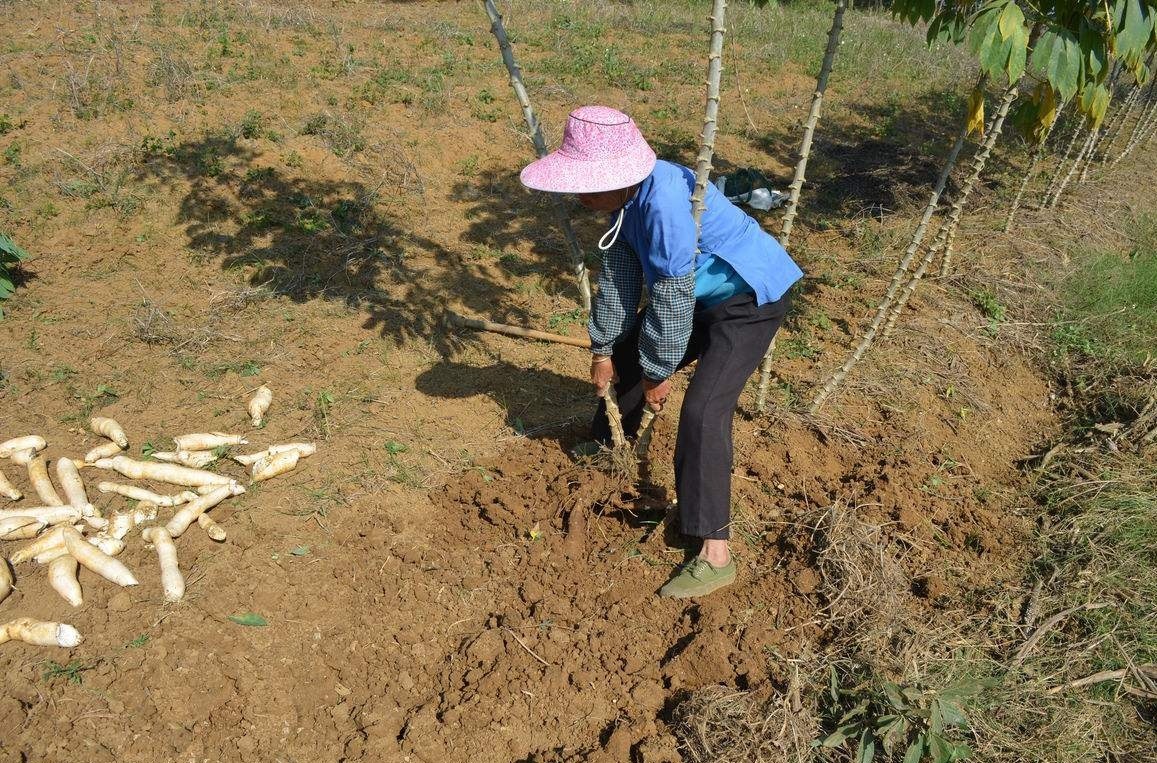
Nowadays people's living standards are very high, and diets are becoming more and more refined. Many young people today have never even seen the grains that people used to eat. In the past, food was extremely precious. When we were children, our parents often taught us that we could not waste a single grain of food; even if one grain of rice fell on the ground, we had to pick it up and eat it. This is because the older generation had all gone through hard times and knew what it felt like to go hungry, so they could not bear to see waste. I remember the elders of my grandfather's generation saying that they were very poor back then and had no food to eat, so they would go into the mountains to dig up a kind of tree root to eat. This tree root contains a large amount of starch and can fill the stomach. But it cannot be eaten raw; it must be soaked in water for 7 days and 7 nights before it can be eaten. What tree root is this? Has anyone ever eaten it?
This tree root looks like sweet potato, but its aboveground part is not a vine, but a kind of tree. This tree is called "cassava," and in some places it is also called "tree arrowroot," because its root looks very similar to kudzu root. Tree arrowroot is divided into two types: one has green leaves, and the other has purplish-red leaves. Usually, the kind farmers plant as food is the one with green leaves, because it is less toxic. Yes, you read that correctly. Although it looks like sweet potato, it is toxic. The toxin contained in tree arrowroot is called "cyanogenic toxin," which is highly toxic to the human body and must be soaked in water or thoroughly cooked before it can be eaten.
Usually, before eating it, people soak it in water for 7 days and 7 nights to let the cyanogenic toxin dissolve into the water. Of course, the water must be changed during this process, and the water that is changed out contains this toxin, so it must be poured away quickly to prevent children from accidentally drinking it and being poisoned. After soaking, 70% of the toxin in tree arrowroot has dissolved away, and the remaining toxin is not enough to be feared. After being thoroughly cooked or steamed, it can be eaten. In the past, there were mainly two ways to eat tree arrowroot: one was to eat it directly after steaming, and the other was to use it to make congee, because its starch content is very high, which can make the congee look very thick, and it can serve as a meal.
Nowadays people rarely eat tree arrowroot anymore, because basically there is no shortage of food or clothing now, and farmers generally do not plant it either. But in some relatively poor and backward countries, tree arrowroot is still their main food crop. In Africa, everyone knows that it is relatively poor there and does not produce rice or wheat, and poor people there eat steamed tree arrowroot for almost every meal. According to statistics, 65% of the tree arrowroot produced in the world is eaten as food, and the rest becomes industrial products, feed ingredients, and so on. Internationally, tree arrowroot is known as one of the "world's three major tuber crops" and occupies an indispensable position.
Now probably very few people have seen tree arrowroot! It is said that after steaming it is very starchy and soft, and its taste is no worse than sweet potato. Has anyone eaten it?