Those flowers on the Qinghai-Tibet Plateau, let me introduce them to you one by one
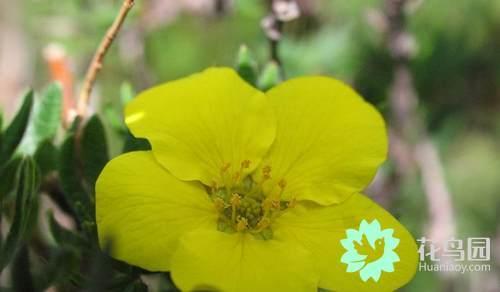
Gesang flowers on the grassland - beautiful times
Gesang flowers do not specifically refer to a single kind of flower, but broadly refer to those bright yellow flowers blooming on the grassland, such as Ranunculus nephelogenes, Potentilla bifurca, Potentilla fruticosa, and Potentilla anserina. The meaning of Gesang is beautiful times, and the name Gesang flower is also taken from this symbolism. The bright colors of these flowers are as brilliant and warm as sunlight, dazzling to the eye. When people see these flowers flickering with sun-like bright yellow, they feel joy and happiness, so many Tibetan girls are named Gesang Meiduo, meaning beautiful and lovely.
Warmth like a mother - lamb flowers
Lamb flowers mostly refer to Polygonum plants on the grassland. They are excellent forage grasses on the grassland, and the season when they bloom is exactly when little lambs can graze on the grass. In particular, Polygonum sphaerostachyum and Polygonum viviparum, which bloom relatively early and are relatively plump on the grassland, provide excellent and delicious food for little lambs, caring for the growth of the lambs with warmth like a mother sheep. Therefore, Tibetans affectionately call these flowers lamb flowers. There is also a saying that, according to legend, after a ewe gives birth, the placenta left on the grassland turns into flowers as white as sheep's wool, and so they are called lamb flowers.
Sages on the high mountains - snow lotuses
Tibetans often call flowers that grow above 4,000 m in elevation, especially flowers growing on snow mountains, snow lotuses. The name snow lotus itself represents purity and nature, which is related to the environment in which they grow, meaning unafraid of wind and snow, simple, and pure, just like sages. Therefore, the snow lotus referred to in Tibetan areas is different from that referred to in botany. In botany, snow lotus refers to a species distributed in the Tianshan Mountains of Xinjiang, China, while the snow lotus spoken of in Tibetan areas broadly refers to multiple plants of the genus Saussurea in the Asteraceae family.
An embodiment of auspiciousness - blue poppies
There are many kinds of blue poppies, with colors including red, yellow, and blue. They generally grow on high mountain scree slopes at an elevation of about 4,000 m around Qinghai Lake. The petals of blue poppies are as thin and light as silk, the flowers are relatively large, the texture is unique, and the colors are brilliant. Tibetans have different names for different blue poppies, naming them after lions, tigers, and garudas respectively, representing auspiciousness. If blue poppies grow in a valley, then even the water flowing out of the valley is believed to be able to cure illness.
The blue on the plateau - gentians
Gentians are one of the four major flowers on the plateau. From the perspective of appreciation and ecological distribution, gentians, primroses, blue poppies, and rhododendrons are called the four major flowers on the plateau. Gentians are the most widely distributed and most numerous among them, and are also a commonly used raw material for Tibetan medicine. Their Tibetan name is Abakaga, meaning that when you pinch them they burst open with a "pop," as if their bellies were full of air and exploded under pressure. Gentians broadly refer to plants in the Gentianaceae family. They are mostly purple or blue, which is inseparable from the intense sunlight on the plateau. Whatever color a flower appears to be is actually the color of light it reflects. The intense ultraviolet radiation on the plateau makes most plants distributed there favor blue, and gentians are a typical representative of this.
Childhood playmates - bell flowers swaying in the wind
These flowers mostly have flowers shaped like bells. They include plants such as Adenophora stricta, campanulas, and Clematis. For Tibetan children, their importance lies in being good companions throughout childhood. Their slender, light, and resilient stems and bell-like flower shape are the origin of their name. Children on the grassland invented a way to play a game with these soundless bells: pick a string of them, hook them around each other, and whoever's does not get broken by the other is the winner. This is remarkably similar to a game played by children in inland areas, only the props they use are different; children in inland areas use the leaf stalks of poplar trees. So when people see these bell-like flowers, they feel especially close to them, as if seeing intimate childhood companions.
The sweetness of childhood - honey pots
In fact, there are many kinds of flowers of this type on the grassland, such as Corydalis scaberula, Dracocephalum heterophyllum, and various Pedicularis plants. They all share one common feature: the base of the flower's beak is full of juice and is as sweet as honey. Gently pick one and hold it in your mouth, sucking slowly and letting the fragrance and sweetness of the flower and grass wander across the tip of your tongue?????? For children growing up on the grassland, it is exactly this sweetness from the flowers and grasses on the grassland that becomes the sweetest memory of childhood.
Flowers with long noses - Pedicularis
Pedicularis is the most common and most widely distributed wildflower around Qinghai Lake. There are many kinds of them. Pedicularis longiflora var. tubiformis often grows in patches in the wetlands by the lake; Pedicularis kansuensis often appears on the grass by the roadside; and Pedicularis alaschanica is also a common wildflower on the grassland. The shape of Pedicularis is very distinctive. Their flowers mostly look like a curved long nose, and some have helmet-shaped petals hooked downward at the front. According to legend, when naughty children blow into these long tubes like long noses, they can bring rain. Sometimes people use the "BiuBiu" sound made by blowing these long tubes as the name of Pedicularis.
The shy ones in the wetlands - crystal flowers
Crystal flowers broadly refer to multiple plants of the primrose group. The most common one at Qinghai Lake is Primula nivalis. They are scattered in patches or sparsely in the wetlands by the lakeside. On slender tender stems, delicate small flowers grow in clusters. The pink petals are thin, light, and tiny. Against the blue water and sky of Qinghai Lake, they look so charming they seem about to drip, like shy maidens standing by the lakeside, extremely endearing. In the hearts of local herders, these delicate and beautiful flowers are like beautiful, bashful maidens on the grassland, so people often use crystal flowers to describe a maiden's beauty.