A Detailed Guide to Growing Purple Heart (Tradescantia pallida) in Pots
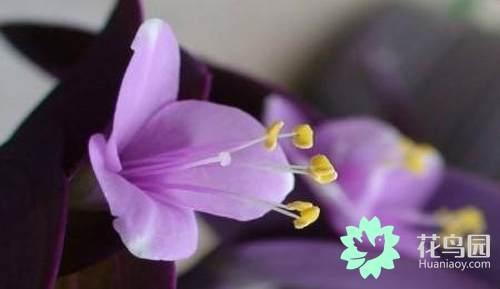
Purple heart, which in some places people like to call "purple-leaf spiderwort", is a perennial herbaceous plant of the genus Tradescantia. As more and more plant lovers take a liking to purple heart, it is now widely grown in pots all over the world. So, how do you grow purple heart in a pot?
When it comes to growing purple heart, whether in soil or in water, it takes root quite easily; not only can it be propagated by cuttings just like many potted flowering plants, it can also be propagated by division to produce young plants. Whichever method of propagating young plants is used, once the young plants have grown to a certain point they should be potted up and transplanted at the right time, and this is the most important step in the process of growing purple heart.
1. Choosing a pot
First, when it comes to choosing a flower pot, purple heart is not very fussy; you can choose fairly economical pots made of materials such as clay or earthenware; if you want something more attractive and cost is not a concern, pots made of porcelain, purple clay ceramic and similar materials are recommended for a better effect.
2. Mixing the soil
This is about preparing the potting soil, and here we recommend a few good soil mix options:
1. You can mix garden soil and burnt cinders in a 2:1 ratio.
2. You can also mix garden soil, river sand and sawdust in a 4:1:2 ratio.
3. If you have a bit more money to spare, you can also mix perlite, clay pellets and peat in a 2:1:2 ratio.
Above we have only recommended 3 soil mix options, though of course there are many other mixes; as long as the potting soil you prepare suits the growth of purple heart, it is fine, and more mixes are for you to discover through practice. The principle is that the potting soil you prepare should be as loose, airy and well-draining as possible. Once the potting soil and flower pot are ready, you can then pot up and transplant the young plants.
3. Potting up
Before potting up the young plants, you should place large granules or broken tiles about 2 cm thick in the bottom of the pot as a drainage layer, then sprinkle 1-2 cm of fully rotted organic fertilizer on top as a base fertilizer, and finally spread a layer of potting soil about 1-2 cm thick over the organic fertilizer. After completing the steps above, place the purple heart young plant into it, taking care to avoid the roots coming into direct contact with the organic fertilizer below the soil layer, so as not to cause fertilizer burn that damages the roots. Next, continue covering with potting soil, and after the soil is added, water once thoroughly and place the pot in a shady spot for care and management.
4. Care and management
The care and management of potted purple heart mainly involves light, temperature, water and fertilizer management. Once the plant has returned to a normal state of growth, you can gradually provide it with plenty of light, but avoid harsh sun exposure during hot summer weather; the temperature should be kept at 18-30°C, and when the winter temperature drops below 10°C you should take the necessary measures to keep it warm so the plant does not get frost damage; for routine watering, follow the principle of "don't water until it's dry", and besides keeping the potting soil moist at all times, in hot, dry summer conditions you should also mist to raise air humidity and lower the temperature; purple heart has low nutrient requirements, and even when fertilizing, you should stick to the principle of "weak fertilizer applied frequently, complete nutrition, even nutrients".