This green plant has distinctive leaf color and takes root as soon as it is inserted
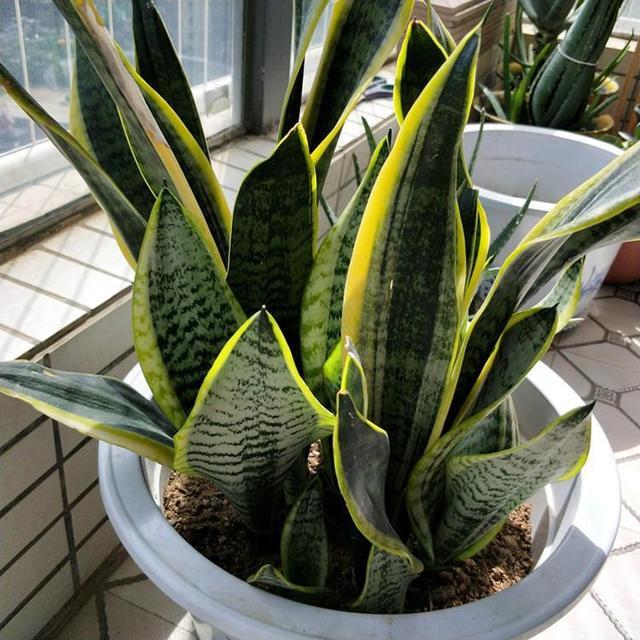
Snake plant (Sansevieria) has leaves that are thick at the bottom and pointed at the top, standing upright like swords, which is quite unusual. The leaf color is also "distinctive," with alternating white and green horizontal stripes, like the markings of marble. This green plant is easy to care for, and it is grown both for its foliage and for its flowers, and it is also suitable for long-term indoor cultivation. Moreover, snake plant takes root as soon as it is inserted, making it an excellent choice for indoor decoration.
Why is it said that snake plant takes root as soon as it is inserted? Snake plant grows vigorously and readily produces offshoots, and it can be propagated by division or by cuttings. Division is carried out during the growing season, or when repotting and changing the soil, the plant is cut and divided for replanting, generally best after April.
For leaf cuttings, cut the whole leaf into several sections, each 7-10 cm long, let them dry in the air for 2 days first, and after the leaf sections appear wilted, insert them into sandy soil in a pot to a depth of 1/3 of the sandy soil, but be careful not to insert them upside down. Keep the potting soil moist, but not too wet, and in about 30 days they will take root and survive.
In addition, when caring for this potted green plant, the snake plant, the following aspects need attention:
1. The snake plant, as a green plant, likes warmth, fears cold, tolerates drought, and dislikes wetness. The optimal growing temperature is above 20°C. It does not have high light requirements; year-round it can be placed either in a spot indoors with ample light or at a north-facing window with weak light, and it will generally grow well in either.
2. For potted snake plant, in terms of soil requirements, you can use 7 parts humus soil and 3 parts coarse sand, add a little rice husk ash, mix well, and then pot it for planting. Repotting and changing the soil is generally done once every 3-4 years.
3. The snake plant's growing season is summer and autumn. At this time, the snake plant grows vigorously, and it needs a general-purpose organic nutrient solution for plants, diluted with water at 500 times, with topdressing once every 7 days. Normally, attention should also be paid to fertilizing; potassium dihydrogen phosphate and organic nutrient solution can be used alternately to water it, once every half month, to promote green and glossy snake plant leaves.
4. For potted snake plant, when the indoor temperature in winter is around 10°C, it can overwinter safely. During short periods at 2-3°C, it can also get through the winter, but the potting soil must be kept dry, not too wet, otherwise it easily causes root rot. Especially in early spring when it is still in the dormant period, if the potting soil is too wet, or if it is watered too much even once, it will almost certainly develop root rot.
But root rot is not a problem; flower lovers can cut off the snake plant above the rotten part, keep it indoors or in a plastic bag for storage, and after Qingming when the weather turns warm, cut it into sections for propagation, and nine out of ten will survive.