Grow azaleas this way for more blooms and a longer flowering period, blooming for 30 days straight is not hard
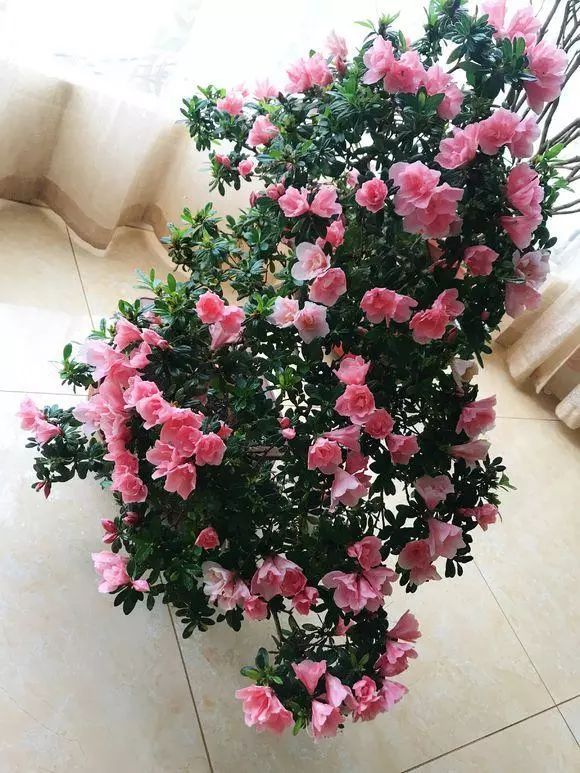
Azalea, also known as yingshanhong, shanzhizhu, shanjuan, juanhua, etc. It likes cool and humid, ventilated, semi-shaded and semi-sunny environments. It likes light but avoids scorching sun exposure, fears severe cold, avoids heavy fertilizer, and is not tolerant of waterlogging. The optimum growth temperature is 12~25°C; when the temperature exceeds 30°C, growth slows or the plant enters a semi-dormant state. It is suitable for loose, fertile acidic soil and dislikes alkaline soil. Spring azaleas bloom in early April, and summer azaleas bloom in mid-June. Propagation methods include cuttings, layering, grafting, division, and sowing; all can be used to propagate it.
Cultivation tips: For potted azaleas, suitable varieties include Sihai Bo, Han Mudan, Wangguan, Wubaozhu, and Taoxue (also called Helan). Choose healthy seedlings propagated by cuttings or air layering, and clay pots are preferable. For the potting soil, use humus soil from under coniferous trees, mix it evenly with a small amount of garden soil and sand, then add bone meal; or mix 4 parts leaf mold from under broadleaf trees, 4 parts decomposed manure, and 2 parts sand evenly, add an appropriate amount of sulfur powder to make the soil acidic, and apply base fertilizer. The pot size should match the plant size; too large a pot easily causes the soil to be too wet and roots to rot. Place broken tiles at the bottom of the pot to help drainage. When potting, firm the soil around the seedlings, then water thoroughly by the soak-watering method. During the growth period, keep the potting soil moist regularly. If using tap water, it is best to store it in a vat for 1~2 days and place it in a ventilated, shaded spot. After 10~12 days, place it in a ventilated, semi-shaded spot on the balcony.
In winter, place it indoors in a warm, airy room with weak light. During the growth period, watering is very important. Water appropriately according to whether the potting soil is dry or wet; when watering, water thoroughly, and do not give only a half watering. Too much watering will cause leaf drop, or even death. In spring when flower buds sprout, increase the watering amount slightly to ensure sufficient moisture. When the buds begin to show color, water at least once a day, and never let the plant dry out; in summer, water once in the morning and once in the evening, but the amount should not be too much. Around noon each day, spray water on the leaves and ground to increase air humidity and reduce water evaporation from the leaves, and pay attention to shading; after autumn begins, reduce the watering amount, water once each morning, and just keep it moist; do not let it become too dry or too wet, to prevent leaf drop. In winter (December~February), overwinter it indoors, and do not water too much; every 3~4 days, depending on how dry the potting soil is, water moderately between 10 a.m. and 3 p.m. in sunlight, keeping the potting soil moist; during the growth period, apply thin fertilizer frequently, preferably diluted decomposed cake fertilizer water, and avoid applying heavy fertilizer. Before flowering in early spring and after flowering, apply more fertilizer; every 7~10 days, apply once a thin liquid fertilizer based mainly on phosphorus combined with quick-acting nitrogen and phosphorus, so it grows more branches and leaves and creates conditions for bud formation. In June~July, apply a liquid fertilizer rich in phosphorus (bone meal, potassium dihydrogen phosphate, etc.) to promote flower bud differentiation. After midsummer begins, stop fertilizing.
In autumn, it is suitable to apply phosphorus and potassium fertilizer frequently (once a week), and the next day after fertilizing, water once with clear water. In winter and during the plum rain season, stop fertilizing. For 1-2 year old seedlings, apply less fertilizer or no fertilizer, otherwise it easily causes "fertilizer damage"; prune and shape in a timely manner. After autumn, the top of the plant generally has 1~4 flower buds; before flowering, buds must be thinned, leaving only 1 bud per branch tip and removing the rest.
After spring, when the buds lose their scales, if you find 2~4 flowers inside a bud, keep only 1~2 to help concentrate nutrients and make the flowers large and beautiful. In addition, as the plant grows, mainly cut off diseased and weak branches, with thinning pruning as the main approach. If the potting soil has not become alkaline, there is no need to repot every year.
Azaleas are easily harmed by pests and diseases such as red spider mites, scale insects, and brown spot disease, and should be controlled in a timely manner.
Common care tips for potted azaleas
What to do if the terminal buds collapse after potting azalea seedlings
Rescue method: After potting, water thoroughly and place it outdoors in a shaded, open area for care; strictly avoid sun exposure and fertilizing. Around noon each day, spray water on the leaves twice to reduce water evaporation from the leaves, and afterward water whenever the pot becomes dry. After about 2 weeks of "adjusting to the pot," the tender branches and leaves at the top will gradually stand upright. After that, move it to a semi-shaded place and return to normal care and management.
What to do if summer azaleas have buds but do not bloom
When some people grow summer azaleas, due to improper management, although many flower buds form, when spring comes and flowers should bloom, the plant instead grows new shoots vigorously and does not bloom. What is the reason? This phenomenon is called bud blasting. The causes of bud blasting in summer azaleas are: indoor temperatures in winter are too high, and excessive branch and leaf growth competes with the flower buds for nutrients, so the buds cannot open due to insufficient nutrition. Rescue method: Summer azaleas have strong cold resistance and can overwinter safely outdoors in East China, so let them go dormant naturally and prevent excessive growth of branches and leaves. Before flowering, apply once a thin fertilizer based mainly on phosphorus, such as superphosphate, and then it will bloom with brightly colored azalea flowers.
Why azalea buds do not bloom but turn into leaves
When azalea buds form, the flower bud differentiation stage comes first. At this stage, fertilizer based mainly on phosphorus must be increased; otherwise, when the buds grow out, they look like flower buds but are actually leaf buds. Because the flower buds are enclosed within the leaf buds, when phosphorus fertilizer is insufficient, the flower buds enclosed within the leaf buds cannot form. Therefore, when leaves emerge the following year, no flower buds are seen, which also creates the misunderstanding that the flower buds have turned into leaves.
What to do if azalea leaves scorch and drop during the plum rain season
Rescue measures: Quickly move it to a cool, ventilated, semi-shaded outdoor place for care. When the potting soil is dry, water it in time; usually also spray more water on the leaves and increase environmental humidity. Pause fertilizing. With careful care, the condition will improve.
What to do if azalea leaves scorch in summer
Sun exposure. Azaleas like semi-shaded environments, especially in midsummer; potted azaleas should be placed under a shade shed to prevent scorching by strong sunlight. Improper watering. The potting soil should not be too dry or too wet, and attention should also be paid to spraying water on the leaves and ground to increase humidity and lower temperature. Applying heavy fertilizer or raw fertilizer. Azalea root systems are fine and weak, with poor fertilizer absorption; after applying heavy fertilizer or raw fertilizer, the roots will be burned, causing leaf tips or leaves to scorch. Pesticide damage. When azaleas have pests or diseases, spraying pesticides at too high a concentration causes pesticide damage.
Rescue methods: For leaf scorch caused by pesticide damage, place the azalea outdoors in a semi-shaded area, increase the frequency of spraying water on the leaves, and pause fertilizing, so that leaves regrow on the branches; if it is caused by fertilizer damage and not much time has passed, you can use "enema" (flushing with plenty of water) or promptly change the potting soil, which can also save it.
Why potted azaleas should not be loosened frequently
Potted azaleas are shallow-rooted plants, and their fine roots are delicate and fragile, so loosening the soil easily damages the roots and affects growth. When caring for azaleas, you can place a few broken tiles on the soil at the base to prevent topsoil erosion; when roots are exposed above the soil, add some loose soil until the root system is covered.
How summer azaleas should overwinter and get through summer
Summer azaleas are relatively cold resistant. When growing summer azaleas in East China, generally let them overwinter outdoors in the open so they can go dormant naturally; this can prevent excessive growth of branches and leaves and avoid bud blasting. If overwintered indoors, it often results in buds forming but no blooming, and excessive growth of new branches and leaves. In summer, appropriate shading should be provided to avoid leaves becoming scorched by strong sunlight, and attention should be paid to frequently spraying water on the leaves and increasing the humidity of the surrounding environment.
How to make azaleas bloom abundantly
Growing environment. Azaleas like cool, humid climates and are very suited to semi-shaded and semi-sunny environments. They avoid strong sunlight and also avoid excessive shade. Soil and water quality. Azaleas like acidic soil with good drainage and rich humus.
The soil pH requirement is 5.5~7.0. The water used for irrigation should preferably not contain alkalinity. If using tap water, it is best to store it for 1~2 days before use. Fertilizing. After midsummer begins, stop fertilizing so the plant can pass the summer safely and flower bud differentiation is favored; during flower bud differentiation and bud formation, apply a fertilizer based mainly on phosphorus about every 10 days; during the growth period, apply thin fertilizer frequently; apply phosphorus fertilizer 1~2 times one month before flowering; after flowering, apply mixed fertilizer 1~2 times. Pest and disease control. In hot, dry periods, red spider mites and lace bugs cause serious harm to azaleas, making leaves turn yellow and drop. Brown spot disease is a common disease of azaleas.
For these pests and diseases, spray the relevant pesticides promptly for control.
How to delay azalea flowering
If you want azaleas to bloom after their natural flowering period, before the flower buds open, place them in a low-temperature room at 1~3°C, give only 3~4 hours of weak light each day, keep the potting soil slightly moist, and generally they can be stored until September~October. Take them out 15~20 days before the desired flowering date, preferably after 5 p.m. or before 8 a.m. After taking them out, place them in a shaded, cool, wind-protected area for care, and frequently mist the plant. After 4~5 days, once they regain vitality, let them receive a little sunlight, and also apply a little thin fertilizer, so they will bloom at the desired time.
Why azalea leaves turn from green to red
Most azaleas grow from early summer to early autumn. Before the plant enters winter dormancy, nutrients such as glucose accumulated in the leaves show red after stimulation by low temperatures. By the next spring, when it is warm and flowers are fragrant, azalea leaves turn from red back to green.
Especially in some small-leaved summer azaleas, the leaves begin to turn red after autumn begins, and in winter the leaves become even redder. There are also some semi-evergreen azaleas, such as spring azaleas and summer azaleas, where all care and management are very normal, but after the leaves turn red in winter, some leaves then turn from red to yellow and gradually drop; these are all normal physiological phenomena of plant metabolism.
How to make one plant produce Western azaleas of multiple colors
To make one azalea plant bear Western azaleas of different colors, grafting can achieve it. Scion selection. Take one-year-old, healthy, lignified or semi-lignified young branches (varieties similar in flower type, flowering period, leaf color, leaf shape, and growth vigor), keep 3~4 leaves at the top, cut half of each leaf, and cut the base into a wedge shape. Rootstock selection. The rootstock can be 3-year-old, healthy Mao Bai Juan for young branch cleft grafting. Take current-year branches, remove the terminal bud with a grafting knife, then make a straight cut in the middle to a depth of about 1.5 cm. Grafting. Insert the scion into the cut opening of the rootstock, align the cambium layers with each other, tie the joint tightly with a plastic film strip, put on a plastic bag, and tie the bag firmly. In the same way, graft scions of other colors of Western azaleas onto other branches of the rootstock. Careful maintenance. After grafting, place the plant in a semi-shaded place for care.
After the graft survives, remove the plastic bag and enter normal care. When it blooms, the same plant will produce azalea flowers of different colors.
Besides being ornamental, azaleas can also be used medicinally. But it is worth noting that among azaleas, "yangzhizhu" (yellow flowers) is toxic and absolutely must not be eaten. Its flowers, leaves, and roots can be used medicinally. In addition, azaleas are relatively resistant to carbon dioxide, sulfur dioxide, and carbon monoxide in the air. They are also very sensitive to ammonia gas and can be used as an indicator plant for monitoring ammonia gas.
Today's handy tips shared by Sister Tips:
[Whether mangosteen is good or not, you can tell just by looking here. Learn this trick and choosing mangosteen is just this simple]
For more handy tips, please follow Sister Tips!
??????????END??????????
Thank you all for reading, and thanks to the fans for your attention
If you think the article is good, share it with your friends too
Don't forget to give mea likeoh
Reply: plant name (such asmoney tree): view cultivation methods