Hosta varieties are abundant, and they can bloom with fragrant flowers even in shady spots on a patio or balcony
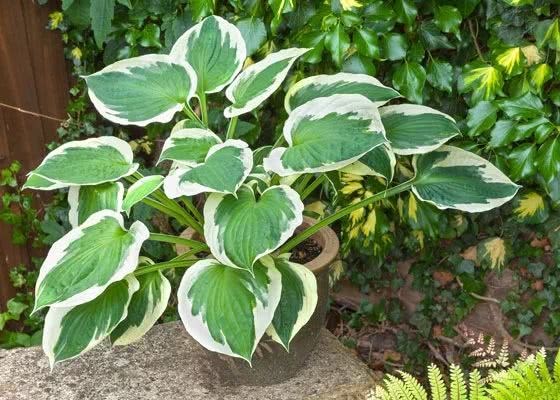
If you want to grow some shade-tolerant plants that can bloom on a balcony or in a yard, and whose flowers have a fresh fragrance, then hostas are perfect for you.
Hostas have very low light requirements and can grow vigorously in shady environments, making them suitable for container or in-ground cultivation. They come in an extremely large number of varieties; some can grow to one or two meters in size, while others are compact varieties only as big as a palm, which can be grown into fresh and beautiful little potted plants on windowsills and desks.
On the left is the shade-tolerant heuchera, and on the right is a hosta
Hostas were originally a very traditional ornamental plant in our country, and they began to spread to the West around the 19th century, where they were even hyped up feverishly for a time. Some of the more unusual varieties were even driven up to sky-high prices.
Hostas vary greatly in flower color and form, and the ones we commonly see are just some varieties with emerald green leaves. If you want varieties with better ornamental value, you can choose some hostas with leaf spots or varied forms.
You can choose different hosta varieties and combine them in cultivation to grow a bright and beautiful potted display. Hostas have fairly good adaptability to their environment, but you should still avoid growing them in places with strong sunlight and avoid exposure to the harsh midday and afternoon sun. You can give them appropriate scattered light every day.
For the environment where you care for hostas, you should also pay attention to keeping it warm and humid year-round, maintaining a certain level of air humidity, and ensuring the environment is well ventilated. During the growing season, you can appropriately supplement with light fertilizer, and in spring and summer you can give about 3 to 4 applications per month of dilute organic liquid fertilizer.
As long as they are cared for properly, hostas can also produce beautiful and charming flowers, usually purple or white. Their flowers are edible, and in some places even the stems and leaves are used as food. So if you are worried about growing poisonous plants at home, you can grow some different varieties of hostas.
Caring for hostas also has certain requirements. It is best to choose a loose, fertile, and well-drained humus soil. The soil should be rich in humus, and you can add an appropriate amount of perlite or river sand to increase the soil's drainage.
During the growing season of hostas, pay attention to regular watering. In spring and summer, you generally need to keep the soil slightly moist and maintain a certain level of air humidity. When the air is dry, you can spray water around them in a fine mist.
After it turns cool in autumn, you should appropriately reduce watering and wait until the potting soil dries out before watering thoroughly. The minimum care temperature should be kept above five degrees to avoid frost damage. If you live in a colder place, you can move them indoors for care at around ten degrees.
When caring for hostas, you should also pay attention to preventing pests and diseases, mainly by avoiding watering too frequently. If the soil becomes waterlogged or overly moist, it can easily cause root rot. Another thing to watch out for is avoiding pest problems, because most hostas grow in moist and dim corners, so they easily attract slugs and snails. Therefore, check regularly to prevent the hosta leaves from being eaten bare by these pests. You can use some glass bottles filled with some beer to trap and kill the pests.
If you have some leftover coffee grounds at home, you can evenly sprinkle the coffee grounds around the potted plants in a ring, and that will keep pests from getting close.