Trimming the roots when planting succulents can make them grow faster
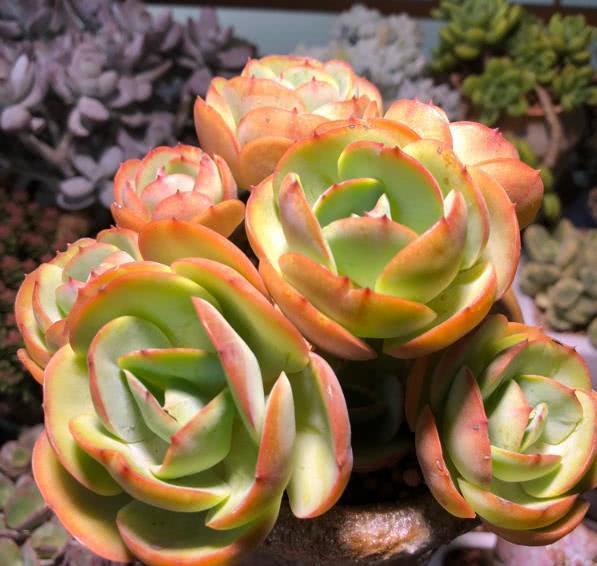
Succulents are not afraid of you touching their roots, so whether it is a succulent that needs repotting or one you just bought, the first thing to do is trim the roots. For succulents, root trimming has many benefits: not only can you check how the roots are growing, but you can also promptly discover whether there are hidden insects or eggs inside the potting soil and on the roots. After we remove the dried and old roots from the succulent's root system, the speed at which new roots sprout will be greatly promoted. If you repot at an inappropriate time, such as in summer, and the succulent is in normal condition, you can consider keeping its root system and medium as intact as possible and moving it into a new pot. If the roots at the bottom are rotting and the stem is decaying, then it is necessary to carry out a complete root-trimming procedure.
Newly purchased succulents generally need root trimming. This is because by the time the plant arrives home it may have been out of its pot for many days, and the fibrous roots may have dried up and died; if planted directly into soil, the dead roots will become moldy and deteriorate, affecting normal root development and the plant's normal growth. In addition, pests or eggs may be attached to the roots, so root trimming is still recommended for newly purchased plants. For plants with relatively weak roots such as Ariocarpus, you can skip root trimming and avoid the problem through physical and chemical methods, including thoroughly disinfecting the planting medium and frequently using fungicidal medications during the early stage after potting.
For succulents that have been in their pots for many years, the granular substrate breaks down into powder, which easily leads to poor root aeration and difficulty for the substrate to drain, affecting plant growth; the normal drying and rotting of roots and root secretions cause the soil to acidify; or the plants become overcrowded, causing deformation, leggy growth, and so on. At this point repotting is needed, and during repotting you can trim away the decayed, rotten and dead roots. Even for plants with healthy roots, if you want to plant them in a group, it is also advisable to trim off the fibrous roots and part of the main roots (not the taproot) to make transplanting easier. If the plant is growing at an ideal rate, has normal color and blooms on schedule, I think there is really no need to trim the roots, or at least not too aggressively.
It is best to clear away all the soil around the roots; loose soil can be rinsed off in water. If the plant's root system is too complex and tangled together, you can directly pull off the very bottom part, especially those roots that have turned black, and clean them out all at once; afterward you can soak them in a diluted carbendazim solution for a few minutes, then take them out to dry. When cleaning the root system, do not forget to also clean up the dead leaves at the base of the plant along the way. In the process of washing and trimming the roots, it is inevitable that the succulent's root system will be damaged, so after planting, the succulent also needs a certain recovery period to heal its roots.
For plants in poor growing condition that, once pulled out, are found to have weak root development or root pests and diseases, you can trim away all the fibrous roots and part of the main roots to induce new root growth. The benefit of drying the roots is that you can see whether you have trimmed the roots well and thoroughly; some roots look fine on the outside, but are actually hollow inside, and after drying for a while these roots naturally shrivel and the problem is exposed. Dead and dried roots are useless in soil, and secondly they rot and become moldy easily, doing the plant harm rather than good. How well a succulent grows later is directly related to its root system, and whether the root system is good is in turn closely related to the initial root trimming.
When the roots have not fully recovered and cannot effectively absorb water and nutrients, the plant will rely on consuming itself to sustain survival and the growth of new tissue, so people often see succulents showing soft, yellowing, dried leaves, and the outer ring of old leaves gradually wilting and dropping; these are all natural phenomena, so there is no need to worry. After root trimming, the seedlings of some varieties recover very slowly and do not grow for several months, mainly Astrophytum, Escobaria minima, and White Squill; while some varieties recover quickly. For root trimming of seedlings, I suggest: planting them out within one month after the seedlings emerge from sowing, to avoid root trimming caused by overcrowded housing. The reason for choosing one month is that by then the roots are not yet very long, making them easier to move.
This is a gathering place for succulent lovers, sharing succulent care tips; you are welcome to follow and exchange ideas.