Use "air" well for orchids, and their blooms will be more vibrant
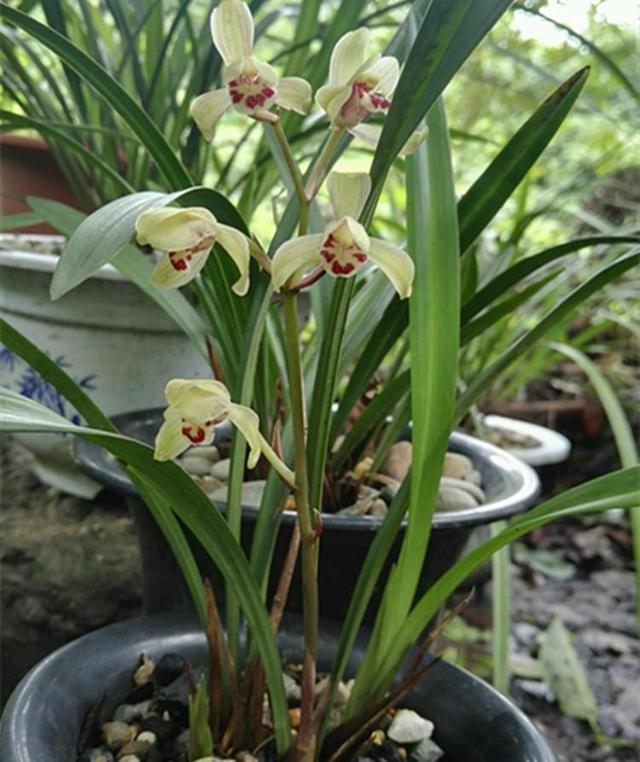
Fellow flower lovers, if you love growing orchids, do you know: "air" is the very lifeblood of orchids, and orchids need good ventilation conditions for both respiration and photosynthesis. Not only does the orchid room require ventilation, the environment where orchid roots grow must also be breathable. Therefore, in the process of growing orchids, you must make good use of this "air" so that the orchids can bloom with vitality.
So, how do you make good use of this "air"? The specific measures are as follows:
1. Choose orchid pots that are easy to ventilate
For orchid pots used for soil cultivation, you should choose unglazed pottery pots with a rough texture and many holes in the bottom and around the sides. The medium and large holes in the bottom of the pot should not be blocked; they should be covered with a water-draining, breathable cover or propped up in some way, and it is even better if a water-draining air conduit can be inserted into the pot. If the orchid pot has no feet, it should be raised on bricks.
For orchid pots used for soilless cultivation, although plastic pots can be used, it is still best to choose ones with holes in the bottom and around the lower sides. For plastic pots, you can choose gallon pots, enlarge the drainage holes in the bottom, and orchids can still achieve the purpose of ventilation.
2. Choose potting media with good breathability
Terrestrial orchids inevitably require soil cultivation, and in order to keep orchid roots breathing freely, no less than 40% coarse potting medium should be mixed into the humus soil. The bottom layer and lower potting medium in the pot should also be coarse. If fellow flower lovers are not sure, use ready-made special orchid soil from the market instead.
3. Do not plant or display them too densely
For orchids cultivated in an orchid nursery, appropriate plant spacing should be maintained when planting. Orchids planted in pots should be spaced appropriately, and when too many new plants sprout, they should be divided into separate pots as early as possible. For potted orchids displayed in an orchid shed, it is best to keep a distance of more than 10cm between pots.
In addition, in order to maintain the growth rate of orchids, while ensuring good ventilation, you also need to replenish nutrients for the orchids in a timely manner. Fellow flower lovers can use organic liquid fertilizer specially made for orchids, dilute it 500 times, and water it onto the orchid roots in the evening, once a week, then water once with clean water the next day; the orchid root system will grow vigorously and the blooms will be more energetic.
4. Pay attention to ventilation in sheds and rooms
During the orchid growing season, the doors and windows of the orchid shed or room should often be opened to let the air circulate. Not only should a series of ventilation facilities such as exhaust fans be started when the temperature is high, the air humidity is high, and after watering with fertilizer or spraying, attention should also be paid to opening windows appropriately on sunny days for air exchange even when keeping warm and preventing freezing in winter.