Don't know how to grow roses? Just follow the monthly care essentials
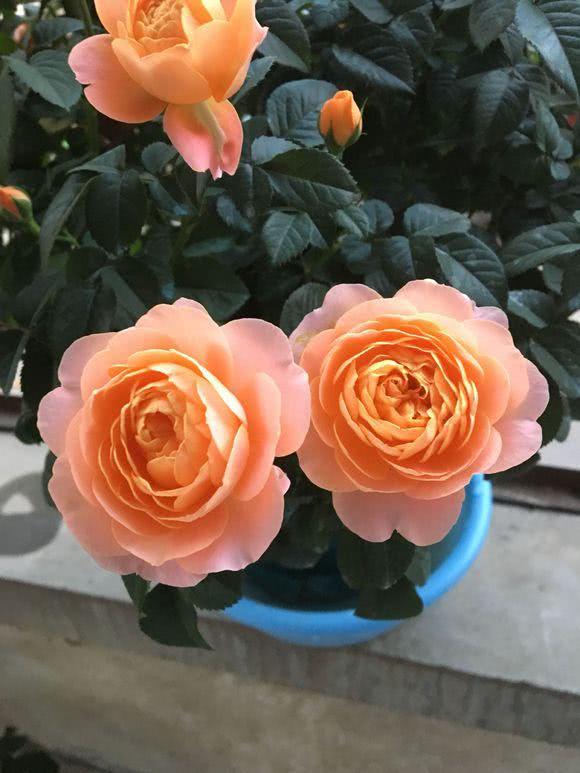
Roses bloom once every month, which is why we call them "monthly red." If you want your monthly red to stay red every month, but you know nothing about rose care, then just follow the monthly rose care essentials and do as they say, and they will surely bloom.
Early February: waking up; March: buds sprouting
Spring begins in February, and roses slowly start to push out tiny buds. By March, buds emerge one after another, and by May they reach peak bloom. Midsummer brings another wave of flowers. Summer is hot, so growth slows a little. In autumn they enter peak bloom again, and in winter they begin their rest and tidy-up. If you want to get roses in spring and see flowers early, choose rose seedlings with buds and a soil ball, and just pick a flower color you like.
Spring begins in February. If your rose's potting soil has been used for more than 2 years, it is time to start thinking about repotting. While repotting, add rose-specific organic fertilizer every week; this promotes the sprouting of spring buds, the growth of side branches, and bigger flower buds.
In March the temperature gradually warms up. You can lightly prune away inner branches, overly dense branches, dead branches, diseased branches, and so on. This makes the bud-break rate higher. At the same time, make sure there is plenty of light and good ventilation, reduce nutrient loss, and promote growth and development. If there are many buds on the branches, thin the buds promptly so the flowers are brightly colored, the blooms are bigger, and the flowering period is extended.
July to August: cool things down
These months are the hottest time of the year, with blazing sun and scorching weather, and temperatures reaching above 35°C. For a heat-fearing variety like the rose, it will certainly stop growing to protect itself. So to keep roses blooming and prevent sunscald, strengthen water and fertilizer management, fertilizing 1-2 times a month, but be sure to use fairly dilute fertilizer. Normally, use Huazengduo organic fertilizer diluted 500 times; in summer, dilute it about 1000 times. At the same time, pay attention to water retention and drought prevention; when watering, follow the principle of not watering until dry, and watering thoroughly when you do. If conditions allow, move the roses to a semi-shaded spot, and watch out for pests such as slug moths, bagworms, and so on.
September to October: prune
After the weather turns cooler, roses enter another vigorous growth period. Branches and leaves grow strongly, and flower buds appear frequently. At this time, strengthen water and fertilizer management. Every half month, apply 1 dose of organic fertilizer rich in balanced nitrogen, phosphorus, and potassium. At the same time, pay attention to pruning so nutrients are more concentrated, and thin out dense branches so the shape is more graceful.
Autumn is also a good time to change the potting soil. If the plants have grown far beyond the pot and it feels like the flowers are about to tip the pot over, you can repot and change the soil as appropriate. At this time the plant recovers fairly quickly, and this can continue until around November. In the south, roses bloom as usual in winter.
November-December: heavy pruning
If you are in the colder north, after December the roses begin to drop their leaves. At this time, do a somewhat heavy pruning: starting 15 cm from the base, cut all the branches off. The cut should be half a centimeter above an outward-facing axillary bud. At the same time, you can cut off dead branches, diseased branches, weak branches, crossing branches, inner branches, overlapping branches, and so on. This kind of pruning helps the rose maintain its shape, opening outward in all directions, and is better for growth and development when spring begins.
Winter is a good season to give roses a base fertilizer. You can place some well-fermented animal organic fertilizer around the potting soil, then add soil on top. They can be left outdoors to overwinter. If the weather is too cold, put down a layer of straw to protect the roots.