More and more gardeners use it to water their flowers, practical and able to keep all kinds of plants alive
Growing flowers follows the saying "three parts fertilizer, seven parts water", so the importance of watering is self-evident. Many people say they always kill their potted flowers, but in fact, most are killed by watering. How to water flowers is also a skill.
As more and more people grow flowers, they have also summed up quite a few watering tips in their daily care routine. For example, watering flowers with vegetable-washing water, watering flowers with beer diluted in water, watering flowers with expired soy milk, and so on. Besides these, there is one of the most practical watering tips: using "it" to water flowers, which basically every flower lover has used.
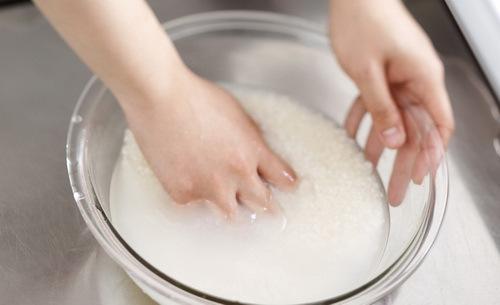
"It" is the "rice-washing water" commonly seen in our daily lives.
Rice-washing water has many benefits for watering flowers:
The surface of rice contains various trace elements such as potassium and calcium, and after washing the rice, the water retains some trace substances. Substances like potassium are exactly the raw material for plant photosynthesis, and facts have proven that when trace elements are lacking, plant leaves develop spots, yellowing, and other such symptoms.
In addition, after fermentation, rice-washing water becomes slightly acidic, which can adjust the pH of the soil, benefit the growth of acid-loving flowers, promote lush green leaves, and extend the flowering period.
Rice-washing water is most suitable for watering clivia (Clivia miniata), spider plant (Chlorophytum comosum), gardenia (Gardenia jasminoides), camellia (Camellia japonica), orchid (Orchidaceae), and so on, because they all like slightly acidic soil.
How do you grow clivia?
Soil: Clivia likes fertile, loose soil and is suited to growing in loose, fertile, slightly acidic organic soil. You can mix the nutrient soil yourself by combining leaf mold, river sand, pine needles, and ordinary garden soil at a ratio of 1:1:1:2.
Light: It likes a semi-shady and humid environment and fears strong direct sunlight, so in summer remember to shade it and give it a certain amount of scattered light.
That is all for the flower-growing knowledge shared here. Rice-washing water is the "all-purpose water" for watering flowers, and it is fairly easy to make. However, when using rice-washing water, remember to ferment it. Specific steps: pour the rice-washing water into a mineral water bottle, do not screw the cap on tightly, then place it in the sun, and generally about a week is enough for fermentation to complete. After fermenting, remember to dilute the rice-washing water with water before using it to water flowers, otherwise it will burn the plant's roots.
For more knowledge about flowers and potted plants, welcome to follow Potted Plant Nook, and thank you for reading!
Remember to like and share~