Crafting Techniques and Aftercare Essentials for Mountain Pine Bonsai: Keeping One Alive Is Truly No Easy Feat
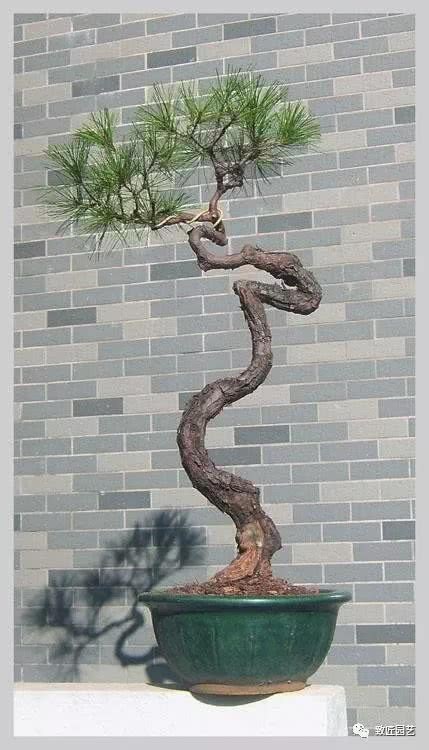
Mountain pine is a fairly common tree, also known as Masson's pine (Pinus massoniana), yet material suitable for bonsai use is actually quite scarce, because although it is common, it grows slowly, and both crafting and care are extremely troublesome, so owning a mountain pine bonsai can be regarded as a treasure.
The making of a mountain pine bonsai is mainly divided into four parts: collecting the stump, planting, management, and styling. When collecting the stump, you must pay close attention to timing, because if it is too early or too late, the resin inside the stump will flow; if the bark is damaged during collection, the resin will seal the wound, which is also unfavorable for the stump's survival afterward, so it is best to choose around the Beginning of Spring (Lichun), when the sap inside the stump is relatively stable and has not yet begun to stir.
At the same time, after collecting the stump is finished, you must first pretreat the stump, sealing the wounds and root ends, and keep a soil ball with intact fibrous roots; the branches and foliage should also be determined according to the condition of the roots. For the final planting, it is best to choose a wide, large pot, and the soil used should preferably be a looser-textured soil, as this benefits root growth; as for water, it needs moderate watering.
Regarding light, a newly planted bonsai should be carefully shaded, because in the early stage of planting the roots are not fully grown and too much light will cause the plant to lose excessive water; once it has fully survived, this no longer matters, though it is still best to place it in a ventilated spot and pay attention to soil moisture. During the styling process, grafting and pruning should be combined, and you must pay attention to its growth period, otherwise it will harm the plant.
In daily care there are also many details to note, otherwise the growth and ornamental quality of the mountain pine bonsai will be affected. Mountain pine is an extremely sun-loving plant; if the light duration is not long enough, it will have a negative effect on its growth. Unlike other plants with broad leaves, its needles must also be handled regularly: remove some dead and aged needles to prevent them from competing with new needles for nutrients. The placement of the pot also matters: it should be placed in a spot with light and ventilation, and it should not be moved frequently. Of course, in windy and rainy weather, be sure to take protective measures.
There is another point that is also very much worth noting: during planting, the potting soil used absolutely must not be sterilized. Many people think sterilization can prevent microorganisms from harming the plant, but due to the special nature of mountain pine, since it is a mycorrhizal tree species, sterilization will also have a major impact on its roots; in severe cases, the plant's new roots will be unable to grow, ultimately leading to the plant's death. Therefore, both the making and care of mountain pine bonsai require a certain amount of skill, otherwise it is very hard to keep alive.
Featured Content