How to care for kalanchoe from July to September: when the blooming season arrives, flowers will bloom one flush after another
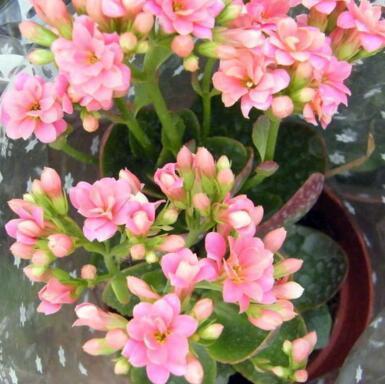
Kalanchoe (Kalanchoe blossfeldiana) is a potted plant that blooms in winter and spring. Its leaves are thick and fleshy, it stays evergreen all year round, and it comes in a wide range of varieties with abundant flowers and a long blooming period, making it deeply loved by flower growers everywhere. Keeping kalanchoe alive is not hard, but if you want to grow it well, you really need a few little tricks. If you want your kalanchoe to bloom as soon as the blooming season arrives, then take a look at the care for kalanchoe from July to September, so that your kalanchoe will bloom flush after flush.
July-August temperatures are high, so water and fertilizer control must be done well
When temperatures in some areas reach 3
0°C in July-August, the kalanchoe plant enters a semi-dormant state and its growth is hindered, so it also needs shading. At this time we should control watering and stop fertilizing.
The watering interval should be doubled compared with usual, and the plant should be placed in a well-ventilated spot.
It can be pruned appropriately, even hard pruning is fine, and the cut branches can also be used for cuttings. Place them in a spot with bright, indirect light for care, and by autumn they will bloom in a full pot.
September care requires extra attention: keep up with fertilizer and water, and provide an appropriate amount of light
From September, kalanchoe begins to grow rapidly, so water and fertilizer management should be strengthened. Apply a nitrogen-based nutrient solution once every half month to promote vigorous growth of the kalanchoe's branches and leaves.
Note that the nutrient solution should be an organic nutrient solution specially made for kalanchoe, to meet the kalanchoe's growth needs and the nitrogen, phosphorus and potassium fertilizer it requires, helping it take root, strengthen the plant, and bloom more.
At the same time, remember to pinch out the growing tips of newly propagated seedlings to make the plant fuller.
However, in September the sunlight in some areas is still very strong, so appropriate shading is still needed. In October the light is softer, so the kalanchoe can be given direct sunlight. If you want the kalanchoe to bloom more and bloom early, you need to control light, that is, give the kalanchoe only 8 hours of light a day, and provide complete darkness for the rest of the time. Generally, after about 30 days you can see the kalanchoe grow flower buds.
If you want the kalanchoe to bloom more, we also need to pay attention to the following points in everyday care:
1. Light and position
Kalanchoe is suited to growing in a warm, sunny environment, but it should not be exposed to scorching sun, so placing it on a balcony or in a corridor is most suitable. If conditions allow, in winter it is best to put it outdoors during the day to fully receive sunlight, and the flowers that bloom in spring will be more brightly colored.
2. Soil and watering
Kalanchoe's soil needs to be loose and breathable, avoiding waterlogging, and it is best to use leaf mold and slightly acidic sandy loam. The potting soil should be mixed with 4 parts leaf mold, 4 parts garden soil, 2 parts river sand, plus a small amount of bone meal. This growing medium is loose and fertile, has good drainage, and shows a slightly acidic reaction, which is beneficial to root development.
Like other succulent plants, kalanchoe contains a relatively large amount of water in its body and has strong drought resistance, so it does not need a lot of watering. During the growing period, just water thoroughly once every 2-3 days and keep the potting soil slightly moist.
3. Fertilize in the right amount
During the growing period, apply a dilute liquid fertilizer rich in phosphorus once or twice a month. Fertilize during the peak growing seasons of spring and autumn and after flowering.