Give your clivia a little something every household already has, and it will fill the whole pot with blooms even without fertilizer for 10 years
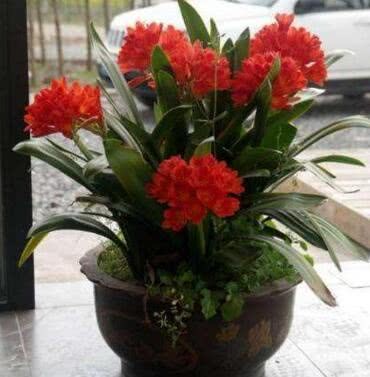
As people's living standards improve, they begin to pay attention to their quality of life, and growing flowers has become a lifestyle trend. Nearly 95% of people keep a pot of flowers at home, and clivia (Clivia miniata) is a potted plant with both beautiful flowers and leaves, loved by many flower enthusiasts. Keeping one at home is elegant and grand, and it also purifies the air. But while this plant is easy to keep alive, keeping it well takes a few little tricks. Flower enthusiast Ms. Zhang is very fond of clivia, and the ones she grows all have large, plump and evenly shaped leaves and lots of blooms. Ms. Zhang has one clivia she has grown for more than 10 years, now planted in a large vat, and it fills the vat with blooms every year. So how did Ms. Zhang do it? Come and take a look!
Ms. Zhang simply gave her clivia a bit of bone scraps and eggshell powder. These two things can be found in almost every household, and everyone has them. Let's take a look at how to use them:
After collecting eggshells and bone scraps, here is what you need to do
1. Processing the eggshells
First, wash the egg liquid out of the collected eggshells clean, then put them in the sun to bake for about 7 days. Smashing, stepping on them, grinding, whatever works, but flower enthusiasts need to find a way to break the eggshells up, the finer the better, to make eggshell powder.
2. Processing the bones
Collect the bones left over from eating pork ribs at home. First soak them in clean water for about 20 hours to remove the salt and other seasonings on them, then put them in a pressure cooker and simmer for 30 minutes, take them out and let them cool, then put them in the sun to bake. After 4-5 days, smashing, stepping on them, grinding, whatever works, but flower enthusiasts need to find a way to break the bones up, the finer the better, to make bone scrap powder.
3. Mix these two powders together and they are ready for growing flowers.
How to use them is as follows:
When repotting, you can mix it directly into the potting soil at a ratio of 1:10 and use it directly to grow the plant. You can also dig a few small holes around the edge of the pot, put 1 spoonful of eggshell and bone scrap powder in each hole, and cover it with soil. As you water, the nutrients in the bones and eggshells will slowly leach out to support the clivia's growth. The effect after use is especially good, and even without fertilizer for 10 years, it will make the clivia bloom all over.
With sufficient fertilizer, the clivia has the strength to grow and bloom. In fact, care cannot be neglected either. Let's take a look!
1. Light
Clivia tends to bloom under short-day conditions. Normally, during the day, place the pot in a sunny spot indoors so that sunlight can reach the plant. Before blooming, at night you should also place the pot under a fluorescent lamp to supplement the light.
From May to September each year, it should be grown under a shade shed in a semi-shaded environment without direct sunlight. But in winter, the longer the sunlight exposure, the better.
Clivia is phototropic, so during care, you should turn the pot as the sun's position changes, so that the direction the leaves spread is parallel to the direction of the incoming sunlight. This way, the clivia you grow can be "like a fan when viewed from the front and a single line when viewed from the side," with neat and beautiful leaves.
2. Watering
The simplest way to tell whether a clivia needs watering is to tap the pot. Specifically: tap the pot lightly with your finger at the 1/3 point; a relatively crisp sound means there is plenty of water in the soil, while a dull sound means the pot is dry, and then it needs watering.
Generally, water the clivia once every 5-6 days, watering at 9-10 am; if the weather is dry, you can also spray water on the leaves.
For watering clivia, stored rainwater is best. Tap water should be left to settle for 24 hours before use, to prevent the soil from deteriorating.
That's all for today's sharing