How to care for succulents in summer? Master these precautions to get through summer safely
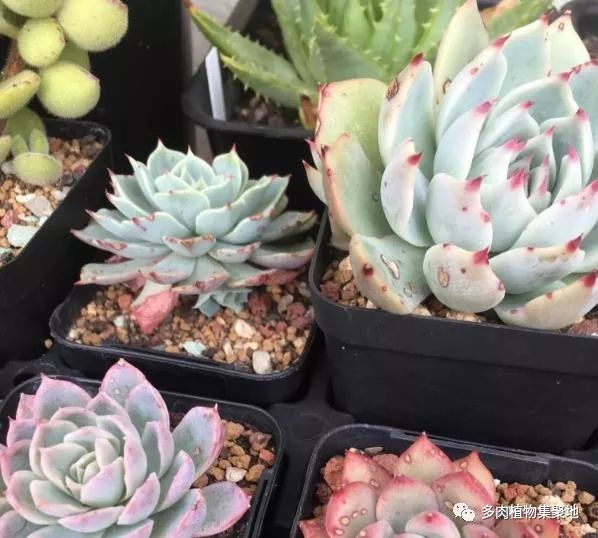
Don't water too much: When watering succulents, you must control the amount of water. If you really can't resist, you can water a small amount along the edge of the pot or soak the pot briefly, keeping it to about 10 seconds, that is, put the pot in the water and take it out right away, just a bit of moisture is enough. Watering is extremely important for succulents to get through summer, and its technical requirements are relatively high. Since most succulents will grow in summer, it is just that different varieties grow at different speeds. For those that have already gone dormant, such as Aeonium, under cool and ventilated conditions, watering once every one to two months is also fine.
Pay attention to shading and ventilation: If you don't shade succulents in summer, you may face sunburn or even death from the sun, so for safety's sake, shading is the better choice. When installing a shade net, you also need to consider ventilation; don't shade them in a way that instead makes ventilation poor, which ultimately leads to the succulents developing black rot and turning to mush. Keeping air flowing is extremely important for succulents. Normal airflow can not only lower the high-temperature environment immediately around the succulents, but also quickly carry away the excess moisture produced by accidental overwatering. In addition, a ventilated environment can also effectively prevent pests and diseases.
Generally speaking, most succulents are suited to warm environments, especially in the range between 20°C and 30°C, where they are at their most lush. Whether they are winter-growing types or summer-growing types, succulents will take measures to protect themselves when getting through summer. For example, summer-growing types will briefly go dormant under sustained high temperatures, while winter-growing types may even remain dormant throughout summer. So if you are caring for them at home, they should be placed indoors in a spot with circulating air. If conditions allow, you can also scatter clean white stones on the surface layer of the potting soil, which reduces heat absorption by reflecting sunlight. Don't reverse the temperature difference. In summer, some people move them into an air-conditioned room to grow, but there is a fatal flaw: the air conditioning is cool during the day, and after it is turned off at night the temperature quickly rises again. This reversed temperature difference will make the succulents weaker and weaker.
Don't water at noon: Watering at noon when the sun is strongest is like putting succulents in a pot to boil. Even if the high temperature doesn't steam the succulents to death, the high-humidity soil plus the excessive temperature difference between the roots and the leaf surface will hinder the normal water absorption of the succulents' root system. This is because water given in the morning, if it has not dried out by noon, will continue to endure high temperatures in the afternoon, making the potting soil temperature relatively high. Therefore, it is best to water in the cool, breezy evening; the water evaporates better after a night, and moreover when watering, water droplets remaining on the leaves will gather strong light and scorch the leaves, so they should be blown away promptly.
Ensure the soil is breathable: In summer, you must never use a type of soil that is not breathable to grow succulents. Soil that is not breathable and will compact is of no help at all for succulents getting through summer; instead, it will kill them, so soil with plenty of grit is the first choice for getting succulents through summer safely. Most succulent root systems are slender and fragile. In order to survive in harsh environments, they tend to have thicker leaves, so changing the soil once before summer arrives each year can let the plants grow better. After changing the soil, you can appropriately add some vermiculite, peat, or coconut coir to retain water.
Soil ratio also greatly helps with getting through summer. For seedlings or succulents that are not healthy enough, you can use 50% peat soil and 50% coarse sand, then mix in a small amount of akadama (to help rooting), and it is best to keep the soil with a certain degree of moisture; this way the succulents will grow and recover quickly. For some old stumps or adult plants, you can use 70% grit and 30% peat soil. The grit can be coarse sand, or weathered rock, volcanic rock, and the like. This makes water drain faster and can avoid creating a stuffy, damp environment. So, if you find in summer that your succulents at home are not in good condition, check the soil first!
Place succulents in a ventilated, shady spot in summer; this shade refers to the degree of light exposure. If direct sunlight continuously shines on succulents, they will appear listless, shriveled, and so on. Succulents must maintain sufficient light to grow normally. Among them, succulents such as Dioscorea elephantipes and Albuca spiralis most need shading and protection from light. In addition, if conditions allow, using a shade net also works very well.
This is a gathering place for succulent enthusiasts, sharing succulent care tips. You are welcome to follow and exchange ideas.