In the styling design of Chinese hackberry (Celtis sinensis) bonsai, breaking the trunk is an effective means of speeding up the transition.
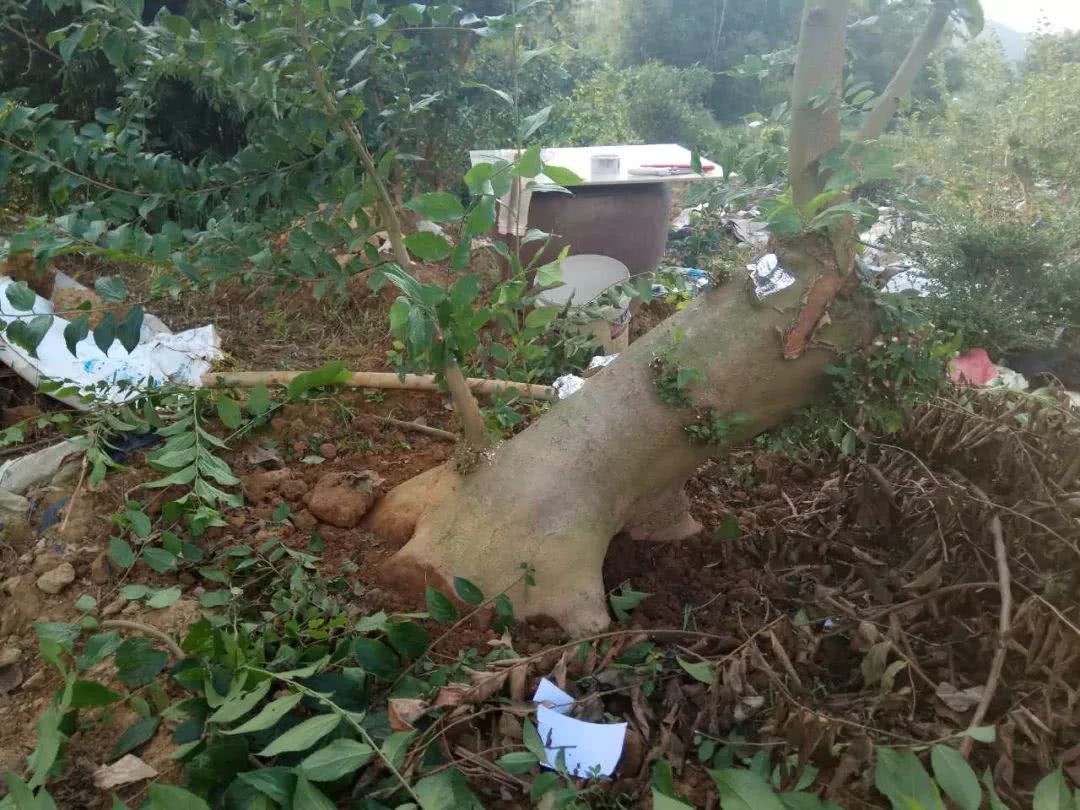
Advantages of the stump material:
1. The front root flare of the stump base is strong, with a reasonable distribution.
2. The trunk leans at 45 degrees, rising along a parabolic curve, which gives the emerging branches a powerful, vigorous force.
3. The apex branch has been grown out fully, making it easy to form a suitable transition.
Material sourcing and cultivation measures
1. Artificial propagation: Chinese hackberry is usually propagated by sowing seeds. The seeds ripen from September to October, and the fruit turns reddish-brown; they should be collected in time, spread out in the shade to dry, cleared of debris, and stored mixed with sand and soil. Sow in March of the following spring. Before sowing, the seeds must be treated by cracking the seed shell with a wooden stick or scarifying the outer seed coat with sand, and only then can they be sown; this helps the seeds germinate. The seedbed soil should preferably be loose, fertile, well-drained sandy loam. After sowing, cover with a layer of fine soil about 2 cm thick, then cover with rice straw and water thoroughly once; germination begins after about 10 days, and once the seedlings emerge, remove the straw promptly. Care and management must be done well during the seedling stage, paying attention to loosening the soil, weeding, and topdressing, and thinning the seedlings appropriately; seedlings of the current year can reach 30-40 cm tall. For young saplings grown for Chinese hackberry bonsai, attention should be paid to pruning and shaping, "suppressing the apex to promote the sides," controlling the height growth of the sapling and promoting thickening of the trunk and growth of side branches, so as to facilitate potting and styling.
2. Collecting from the wild: Chinese hackberry is commonly found growing wild beside streams and valleys in the hilly low mountains of the Yangtze River basin and areas to its south. Old sprout-grown stumps with ancient, unusual postures that have been cut back for many years can be collected and "cultivated as pre-bonsai." After pruning to promote root development and the sprouting of new branches, they are then styled and cultivated; after 1-2 years, they are potted and worked on, and a vigorous, ancient-looking Chinese hackberry bonsai can be produced in a relatively short period. END
Potting process: Chinese hackberry bonsai is distinguished for its antique elegance, so it is best to use a zisha (purple clay) pottery pot or a glazed pottery pot, with a rectangular, square, or oval shape being preferable, depending on the tree's form. Because the Chinese hackberry has dense foliage, deep green leaves, and grayish-brown, rough bark, a pot color of light yellow or ochre-brown is best, creating a contrasting, setting-off effect.
Disadvantages of the stump material:
1. The middle section of the trunk is too straight and lacks variation.
2. The head of the trunk is too large, forming an inverted triangle, and the overall transition is unnatural.
Styling and care suggestions:
Cut off the branch emerging on the left side and make it into a horse-eye hollow, echoing the horse-eye hollow made in the middle of the trunk, to reduce the disadvantage of the trunk lacking variation.
2. Grow out the apex branch for 1-2 years, then cut it back to develop secondary and tertiary branches.
3. Carve the head to change the visual effect of the head being too large.
Accepting bonsai stump material styling design,
Aimu Bonsai stump material design,
is not just drawing a picture,
it includes stump-cutting suggestions, styling design, stump type analysis, and care advice.
So you can understand it clearly, work on it easily, and style with confidence.
Friends with design ideas, send a private message to Aimu,
send your photos over, from 80 yuan per design.
Follow the official account,
and get the e-book "Small Bonsai Making and Appreciation" for free.
Aimu looks forward to communicating with you face to face.