Breaking off corn tillers takes time and effort without increasing yield, truly a thankless task
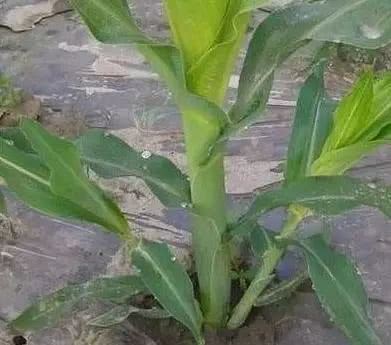
Looking at everyone's opinions, many agree with removing corn tillers, but since you agree with breaking off corn tillers, you need to present specific data. Without data support, it is clearly not convincing! Before this, Science Agriculture had discussed the issue of corn tillers and clearly pointed out that breaking off corn tillers does not increase yield, while keeping corn tillers may even increase yield.
And after consulting relevant research, I still support this conclusion. Below is a detailed interpretation of this issue, to avoid everyone struggling when they see such a problem again, and also to eliminate misleading by a few people. Now let us return to the scientific track and re-examine this issue based on scientific experimental data.
The production of corn tillers
The so-called corn tillering is what we commonly call corn tillers or corn suckers. In fact, this is a normal phenomenon in grass family plants. Wheat and rice that we see all have strong tillering ability. In wild corn, tillering is very common, but with human breeding selection, the tillering ability has become weaker and weaker, and plants with strong tillering have gradually been eliminated.
Apart from genotype, for today's varieties, basically the only factors that can affect tillering are environmental, such as corn variety, planting density, amount of fertilizer, and pests and diseases. To a large extent, these factors are no longer controlled by us, since environmental changes have a certain randomness.
(The greater the density, the fewer nutrients each plant has, and the fewer tillers; too much base fertilizer at the seedling stage causes excess nutrition and promotes tiller production; when pests and diseases occur, growth is hindered, which also promotes tillering.)
The relationship between tillering and yield
The general view is that the production of corn tillers causes a lack of nutrient supply to the main plant due to competition between the tillers and the main corn plant, thereby hindering the growth and development of the main plant and causing reduced yield. Some people even believe that if tillers are not removed, it will cause a 30% impact.
Is that really the case? Science Agriculture consulted some of the latest scientific research experiments, but in fact this is not the case. For example, tillering can increase photosynthesis, store more dry matter, and bring positive effects to the plant.
According to Li Haihong's research, although tillering has a certain impact on the growth and development of the main stem, the tillers can accumulate more dry matter, which instead promotes the growth and development of the root system.
From the position of the corn ear, corn ears with tillering treatment are higher, while the ear position of untreated corn is relatively lower. However, through analysis of yield, it was found that whether tillers are treated or not has no effect on yield.
Similar conclusions were also found in the research of Zhang Xiaowei and Abdureheman. Regardless of planting density, removing corn tillers did not achieve the desired yield increase. Moreover, breaking off corn tillers takes time and effort and still cannot achieve a yield increase, so this behavior should be abandoned. Although this conclusion is somewhat different from everyone's understanding, this conclusion is not from just one study. Farming still needs to be guided by science!
This is Science Agriculture. You are welcome to follow, and let us grow knowledge together.
References: Li Haihong. Effects of seedling-stage tillering treatment on yield under different corn densities [J]. Seed Science and Technology, 2017, 35(04):125+128. Zhang Xiaowei. Dynamic analysis between corn tillering and yield [J]. Rural Science and Technology, 2017(10):19-20. Abdureheman Rouzi, Wang Zhixian. Analysis of the effects of tillering on agronomic traits and yield of corn [J]. Xinjiang Farmland Reclamation Science and Technology, 2017, 40(04):6-7.