Heat-tolerant flowers you must grow during the dog days of summer - the hotter it gets, the more vigorously they bloom
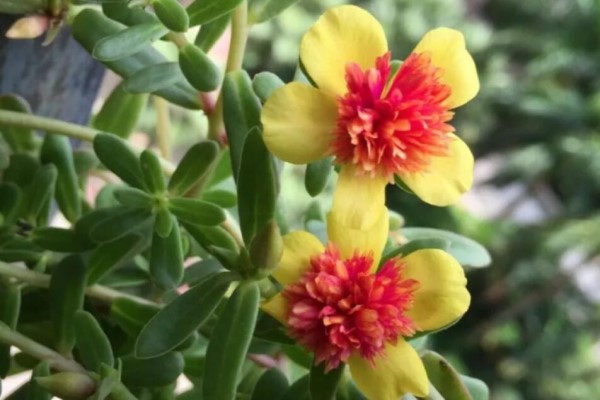
Moss Rose
Temperature limit: high heat 40°C
Moss rose, as the name suggests, blooms right under the sun. It's famous for not fearing sun or heat. Many flower lovers in the south plant a ring of them on rooftops, building tops, and balconies, and enjoy flowers from May to November.
1. Propagation: seed sowing, cuttings
Seed sowing is usually done in spring. Right now you can take cuttings - snip a few flower stems about a finger long, insert them 2 cm deep into the soil, water thoroughly, and place in a shaded spot. After a day or two, if the stems stand firm, you're in business. Give them morning and evening sun, and after 1 week they can take full sun all day. Once the cuttings take root, they'll bloom before long, and after blooming they'll even set seed - save it to plant again next year!
2. Care
Moss rose is quite drought-tolerant, but if you keep it in the sun all the time, evaporation is high, so it's best to water thoroughly once every morning or evening. Fermented rice-washing water or fruit-peel water diluted with 5 times clear water works as a nitrogen-phosphorus fertilizer, so no special fertilizing is needed. After cutting off leggy long branches, you can stick them straight into the soil as cuttings~
Summer Chrysanthemum
Temperature limit: high heat 40°C
Unlike other chrysanthemums that bloom in spring and autumn, summer chrysanthemum blooms from May to September, bursting into a ball of flowers as soon as it opens. The pyrethrin scent it gives off can drive away mosquitoes and bugs - it's an important raw material for mosquito coils!
1. Propagation: cuttings
Summer chrysanthemum is a new variety with very strong reproductive ability - some flower lovers have even gotten leaf cuttings to root! You can take plenty of summer chrysanthemum stems and leaves, use airy soil mixed with perlite, insert them and place in a cool spot, water thoroughly once, then mist morning and evening to keep moist. They root in about a week.
2. Care
Although summer chrysanthemum doesn't fear heat, too-strong light easily fades its color, so it's best to shade it at noon. No need to water too frequently - you can mist around it daily to keep it moist. Add phosphorus-potassium fertilizer once every half month; fermented soybean water or sun-dried banana peels both work~
Balloon Flower
Temperature limit: high heat 40°C
Even though balloon flower is used in flower arrangements, it's actually not delicate at all. Some flower lovers who've grown it say that even when the weeds in the pot were scorched dry, it was still blooming... Just how heat-resistant it is, you'll only know by trying!
1. Propagation: seed sowing, cuttings
Balloon flower can produce over a thousand seeds each year and can be sown in both spring and autumn. In summer you can buy a few stems of balloon flowers, keep the flowers for display, and cut the extra stems for cuttings. Each stem should have a pair of leaves; insert into sterilized sandy soil, water, and place in a cool, ventilated spot. Just mist occasionally to keep moist, and they root in about 1 week.
2. Care
Lisianthus (Eustoma) counts as a lazy person's flower. Plant it in nutrient-rich leaf mold mixed with potting soil and gravel; water only when the soil is dry to avoid root suffocation. Mist morning and evening to keep moist and cool things down. After blooming, remember to collect seeds, then prune back hard - next year it can bloom twice as much!
Golden Dewdrop
Temperature limit: high heat 40°C
Golden dewdrop, also called false forsythia, is grown more in southern regions. It not only fears no heat but also fears no cold, blooming in summer, autumn, and winter. Flower lovers in the north can give it a try too.
1. Propagation: cuttings
Golden dewdrop tolerates pruning very well, and the pruned branches can go straight into cuttings with a very high survival rate. Cut them into 8-15 cm lengths, insert into sandy soil, water thoroughly, and place in a shaded spot; they root in about 2 weeks. Just keep them moist and ventilated during that time.
2. Care
Golden dewdrop loves sunlight - the more sun, the brighter its color. It's very suitable for planting in gardens and can also be grown as a climbing flower. In summer, it's best to water once a day. After each bloom, prune lightly and add nitrogen-phosphorus fertilizer. Kitchen waste and leftover fruit peels from home, once fermented, can also be added to the potting soil as fertilizer~
Dahlia
Temperature limit: high heat 38°C
Summer is exactly dahlia's blooming season. It can bloom all summer long, and with proper care, in southern regions it can even bloom until November!
1. Propagation: root division, cuttings
Dahlia's tubers are like sweet potatoes. In the north, as winter approaches, you can dig them up and bury them in sand to overwinter, then divide the roots and plant again in spring. Right now we can take stem cuttings - a 10 cm stem inserted into ordinary garden soil will take root. Be sure to keep it moist, and placed in a shaded spot it roots quickly.
2. Care
Dahlia likes fertile sandy soil; you can plant it in leaf mold mixed with sandy soil. Don't water too much - once every 1-2 days - and mist around it often to keep it moist. Add compound fertilizer and nitrogen-phosphorus fertilizer before and after the blooming period; fermented rice-washing water or soybean water diluted with water also works.
Madagascar Periwinkle
Temperature limit: high heat 38°C
Madagascar periwinkle has beautiful flowers and is cheap, and it can be grown for over a decade to become an old stump - isn't that a great deal~
1. Propagation: seed sowing, cuttings
Seed sowing is relatively slow; take cuttings directly and it'll bloom next month. Cut vigorous young branches, preferably with a terminal bud, insert into vermiculite soil, place in a cool spot, water thoroughly once, then mist morning and evening to keep moist. They root in about 1-2 weeks, and 1 week after rooting, repot them.
2. Care
Madagascar periwinkle loves sunlight, so be sure to keep it somewhere sunny. Water when the soil is dry. Morning and evening you can use a spray bottle to mist around it, or mix in some monopotassium phosphate and spray - it'll bloom faster and more abundantly~
Mandevilla
Temperature limit: high heat 36°C
Mandevilla originates from the tropical regions of the Americas, is naturally heat-tolerant, excels at climbing, and has large, fragrant blooms. Flower lovers who like it must not miss this great season for growing mandevilla~
1. Propagation: cuttings
Cut 5-8 cm lengths of one-year-old vigorous mandevilla branches with a pair of leaves at the top, insert into vermiculite or granular soil, water thoroughly, and keep in a ventilated, shady spot. Keep the potting soil moist during this time, but don't let it get waterlogged~ They root in about 2-3 weeks.
2. Care
Mandevilla likes fertile acidic soil; leaf mold mixed with sandy soil and garden soil works well. Give it plenty of light, mist daily to keep it moist, and water thoroughly once every 1-2 days. Set up a trellis while it's still a seedling so it can climb faster. Fertilize mainly with nitrogen-phosphorus fertilizer; monopotassium phosphate or fermented rice-washing water can both be used~
Dianthus
Temperature limit: high heat 36°C
Dianthus is also famous for not fearing heat. Many flower lovers' dianthus are already blooming. It doesn't bloom for just one season - varieties like the evergreen dianthus bloom from April to November!
1. Propagation: seed sowing, cuttings
Dianthus cuttings are much faster than sowing. It's best to choose branches with flower buds, about 8 cm long, insert into moist sandy soil, place on a ventilated windowsill, mist a little daily, and they root in about 1-2 weeks. After rooting, let them stabilize for 1 week before repotting~
2. Care
Dianthus has low soil requirements; ordinary garden soil can grow it well. To get more blooms, you must give it plenty of sun and control water appropriately. Add some urea before and after the blooming period, and you can easily grow a pot bursting with flowers~
These sun-proof flowers
Do you grow any at home?
Hurry up and save this
Grow a few pots and get through the dog days of summer~