Succulents are ours, the World Cup is the world's
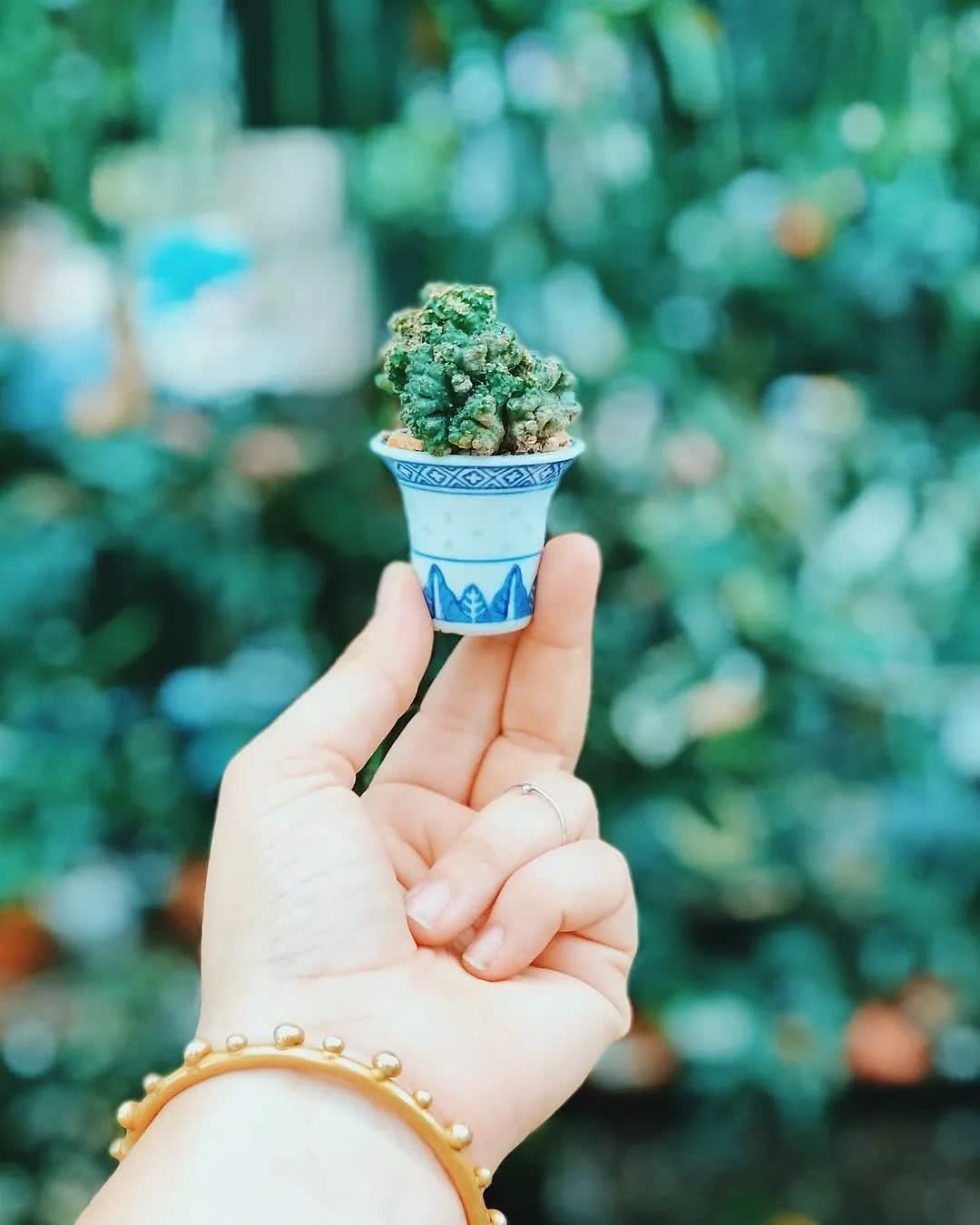
On a weekend in April, I braved the scorching heat to visit the flower market. Shopping at a flower market is like shopping at a mall - it's absolutely impossible to come home empty-handed. Besides the flowers I always buy, I also brought home a few pots of succulents.
Anyone who dares to buy succulents in summer is a warrior. And just like that, the succulents I brought home in April came with uninvited guests - scale insects.
Last time when I talked about black rot and rot in succulents, many friends mentioned that their succulents were under attack by scale insects, with heavy casualties.
Today, April is going to help everyone deal with these arrogant scale insects. After reading this article, I hope your succulents can all escape the dreaded "Jack"~
{ Peony Girl Vol.810 }
x
Succulents vs Bugs
Ever since I started growing succulents, this lazybones April has had dreams. I dream of having a terrace where my succulents can bathe in sunlight to their heart's content; I dream of having a courtyard, planted into a succulent garden.
Pick a succulent to make a corsage,
wear it, and you're mine.
Make a succulent wreath,
and you're a succulent princess~
Carry a basket of succulents and visit a friend far away.
Succulents are the scenery closest to us. No matter how exhausted body and mind may be, seeing these adorable succulents can heal you. But succulents are easy on the eyes yet hard to grow, especially in summer, when every succulent grower's dream boils down to one thing: to survive well
The hot, humid environment of summer is not only unfavorable for succulent growth, but also a peak period for scale insects. Veteran succulent fans have long gotten used to scale insects, but for beginners, they are absolutely intolerable.
So what exactly are scale insects, why do succulents get scale insects, and how can you solve the scale insect problem once and for all?
If you've never encountered scale insects, you're not qualified to talk about growing succulents.
When it comes to scale insects, every succulent fan has a mouthful to say. The first time you meet them, they look like white sesame seeds stuck to the leaves, and you don't pay them much attention - who would have thought such tiny things could be so destructive.
ps: to avoid making everyone uncomfortable at the sight of scale insects, I'll only post one photo of infested plants
Many people wonder why they still get scale insects when they've already sterilized. In fact,90% of scale insects are already present when you buy the succulent - at that time they're just tiny eggs, hidden in the roots or soil, less than 1 mm, very hard to spot with the naked eye. By the time they fully hatch two or three months later, it's the period of full-scale scale insect outbreak.
Scale insects like concealed environments. The thick leaves of succulents are full of sap, which is exactly their food source. Succulents attacked by scale insects gradually become stunted, and develop symptoms like yellowing leaves and early leaf drop. Succulents attacked by large numbers of scale insects may even slowly wither until they die.
Scale insects are annoying, but there are still plenty of ways to eliminate them~ April will introduce a few simple, convenient and efficient methods here for everyone's reference.
Manual removal
Everyone knows scale insects are brought along when you buy succulents. To prevent problems before they occur, replace the soil in time - and soil bought in sealed bags rarely carries insect eggs.
For a small number of scale insects, just imagine yourself as Rong Momo and use a needle, toothpick or other sharp tool to pick the bugs out one by one and kill them. This method is for emergencies only - it can only remove the bugs on the surface of the succulent and cannot clean them out completely.
If you find this method too cruel and can't bring yourself to do it, you can wash the bugs off with a spray of water. As long as the water flow is strong enough, it can generally wash them clean.
Alcohol removal
Using alcohol to remove scale insects is the most commonly used method among succulent fans.The alcohol concentration needs to be controlled at around 75%. As soon as alcohol meets scale insects, it absorbs the water from the bacterial proteins, causing the scale insects to dehydrate, denature and solidify, thereby achieving the effect of sterilizing and eliminating pests.
There are two ways to remove scale insects with alcohol.Use a small brush to apply alcohol to the affected areas of the succulent, or spray it directly. After spraying, it must be placed in a cool, ventilated spot.
The 75% concentration is deliberate: too low and it has no effect on scale insects; too high and it instead forms a protective film, and the scale insects aren't afraid of it at all.
Applying vinegar
Vinegar has excellent sterilizing and disinfecting properties, and also works well for removing scale insects.
To use vinegar against pests, no need to dilute with water - just dip a cotton swab or small cotton ball in it, apply it to the affected succulent, and gently wipe, and the scale insects will be killed.This method is not only safe and convenient, but can also bring leaves eroded by scale insects back to youth.
Spraying garlic water
Garlic has a strong pungent taste and can also sterilize and disinfect. For preventing and controlling scale insects, garlic cloves also have powerful effects.
First, peel and crush the garlic cloves.One crushed garlic clove needs to be diluted with one kilogram of water. Soak for a while until the garlic water becomes clear, then spray it directly on the succulents. Spray once every three or four days; under normal circumstances, the scale insects can be killed within about two weeks.
This method can kill many kinds of pests and also has the effect of inhibiting bacterial reproduction.
Fumigating with mosquito coils
Mosquito coils are a summer household staple. They not only repel mosquitoes, but are also quite effective at killing scale insects.Break the mosquito coil into segments, stick them at the edge of the flower pot and light them, then invert a bucket over it and let it fumigate.After an hour, open it up and you'll find the scale insects have all dropped to the ground in a neat pile.
This method is very effective, but it has limitations - it doesn't have much effect on eggs. Also, there's no need to clean up the mosquito coil ash that falls into the pot; the ash itself is a very good fertilizer.
Biological control
At any time, for plants, the best form of prevention and control is to be able to form a small ecological cycle, letting living things solve the problem themselves.
Scale insects are the natural enemy of succulents, so scale insects must also have natural enemies.The natural enemy of scale insects is, quite commonly, the seven-spot ladybug we often saw as children.
If you can find one or two seven-spot ladybugs, the succulents won't need to worry about being harassed by scale insects. Go to the wild or a park to look for seven-spot ladybugs - as long as you find them, they're easy to catch~
Spraying pesticide
For beginners, the simplest and most direct way to deal with scale insects is, of course, to buy pesticide!When scale insects appear, the first choice is of course "Huhuashen" - this pesticide is cheap and easy to use. Just dilute with water according to the instructions and spray.In addition, such products asJie Bizhi, Guoguang Jie Bizhialso have a good reputation.
Note that plants that have just been sprayed with pesticide must never be moved directly outdoors into the sun. Once the sun hits them, the pesticide concentration increases - though the scale insects are killed, the succulents are burned to death too.
Many people use sterilizing and disinfecting agents like potassium permanganate or carbendazim when they discover scale insects. In fact, these agents have little effect on scale insects, because their main function is sterilization and disinfection - they cannot kill the insects and eggs.
When spraying pesticide, be sure to take protective measures. Especially if there are elderly people or children at home, keep them from coming into contact with the pesticide.
Once you've got these methods down, even a scale insect outbreak won't fluster you~
Growing succulents requires a strong inner self. It's a process of fighting against weather, pests and diseases. Although you may lose some, it's also a fun process of exploration. That's how April is - watching my succulents get chubbier and chubbier, I can't help but smile like an old auntie
Experts are among the people,
April just wants to cast a brick to attract jade.
As for how to deal with scale insects,
do you have any other good methods?
END