A wild grass in the mountains has leaves shaped like bamboo and fruit like cherries, and it is a precious folk remedy for treating illnesses.
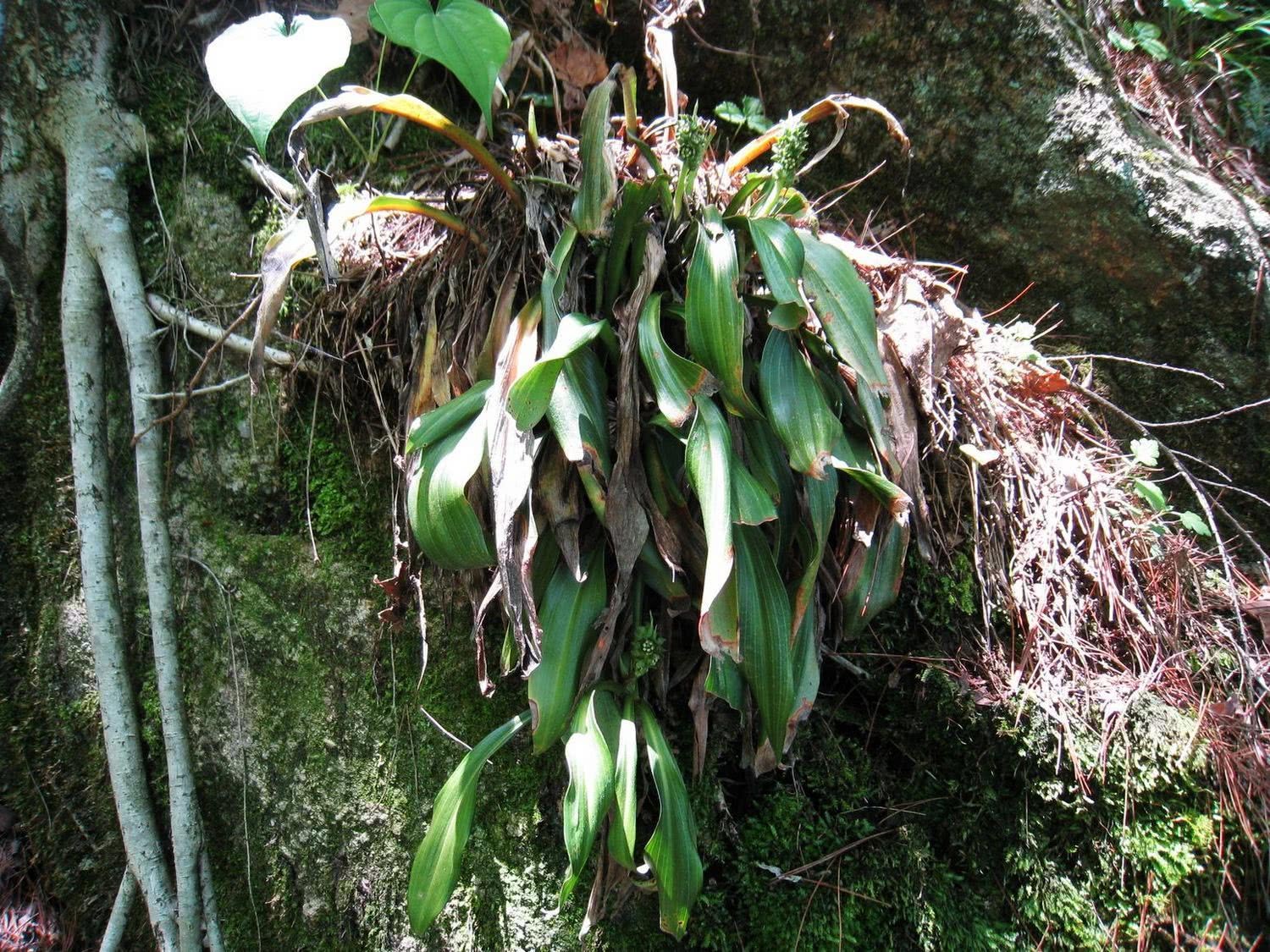
In the rural mountains, there are many wild plants growing in mountainous areas. For many farmer friends in mountainous areas, these wild plants are highly valuable, especially in the past when living conditions were poor, many mountain farmer friends lived by "relying on the mountains and rivers for a living," taking whatever they lacked from the mountains, so they were very fond of the many wild plants in the mountains. Below, the author introduces a kind of wild grass in the mountains. This wild grass also looks quite unusual.
In the rural mountains of our country, there is a kind of wild grass whose leaves look like bamboo leaves and also like orchid leaves. The most interesting thing is its fruit. Around October, when winter is about to arrive, this wild grass bears wild fruit. This wild fruit is bright red and looks just like a cherry. But although its fruit looks very nice, do not be greedy and eat it, because this wild fruit cannot be eaten. This wild grass is "Kaikoujian" (Campylandra armata, a species of flowering plant in the Asparagaceae family). However, because its leaf shape is quite interesting, in some areas it is called Zhugenqi, Zhugenshen, Wannianqing, Laoshelian, Kaikoujian, and so on.
Many friends may not have seen Kaikoujian. It is mainly distributed in Shaanxi, Anhui, Zhejiang, Jiangxi, Fujian, Taiwan, China, Sichuan, Yunnan, Hubei, Hunan and other provinces and cities in our country. It mainly grows in shaded and damp places such as under mountain forests, beside streams, and along roadsides at an altitude of about 1,100 m to 3,000 m. The author remembers that when I was a child, when I followed my mother into the mountains, I often dug up some roots of Kaikoujian. According to my mother, the roots of this wild grass are very precious. At that time, the author was also very curious. Since there were so many of these wild grasses in the mountains, what was so precious about them?
In fact, it is because this wild grass is a folk remedy for treating illnesses. So what value does Kaikoujian have?
The author also consulted relevant materials. According to the records in "Chinese Materia Medica," the root of Kaikoujian can be used as medicine. Its taste is pungent and its nature is cold. As medicine, it has the effects of clearing heat and detoxifying, dispelling wind and removing dampness, dissipating blood stasis and relieving pain, and can be used to treat diphtheria, sore and swollen throat, rheumatic arthralgia, traumatic injuries, stomach pain, carbuncles, swellings and sores, venomous snake bites, rabies bites, and many other symptoms. Therefore, in the past, many farmer friends in mountainous areas liked this wild grass very much and often went into the mountains to dig up some roots of Kaikoujian to bring back and soak in liquor.
However, although Kaikoujian has good medicinal value, the author wants to remind everyone that the root of Kaikoujian is actually slightly toxic. If used too much, symptoms of poisoning such as headache, dizziness, nausea, and vomiting may appear. Therefore, the author does not recommend that everyone use it casually. It is best to consult a professional doctor to avoid problems.
Dear friends, do you know about "Kaikoujian"? What do you call it in your area? You are welcome to leave a message and share!