What vegetables, melons and fruits, and grain crops are suitable for intercropping with Sichuan pepper
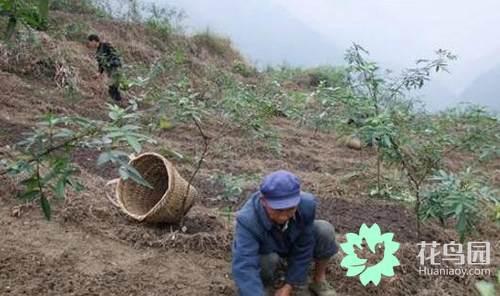
In young pepper orchards or pepper orchards with low pepper tree coverage, intercrops can be planted between the rows of pepper trees. Planting intercrops in a pepper orchard can cover the soil, prevent erosion, reduce weed damage, increase soil humus and improve soil fertility; at the same time, it allows rational use of the land, and by intercropping grain and other cash crops, it can both increase grain output and raise income, achieving the goals of "using the orchard to support the field" and "using the short-term to support the long-term." Planting intercrops also has certain disadvantages: they easily compete with pepper trees for water, nutrients and sunlight, among other adverse effects. However, if the types of intercrops are chosen appropriately and planted properly, the adverse effects can be reduced to a minimum.
The trunk of the Sichuan pepper tree is relatively low, so intercropping is only suitable during the young stage or the early fruiting stage; large trees in full fruiting stage are generally no longer suitable for intercropping. Even in the young stage, attention should be paid to the choice of intercrop types, following the principle of not affecting the growth and development of the pepper trees. Good intercrops should meet these conditions: a short growing period and low absorption of nutrients and water, with periods of high water and fertilizer demand different from those of pepper trees; relatively short plants that will not affect the light conditions of the pepper trees; the ability to improve soil fertility, with few pests and diseases, and without aggravating the pests and diseases of the fruit trees; and relatively high economic value of the intercrop itself.
Legumes, root and tuber crops, wheat and barley, melons, and vegetables are usually suitable. Legumes suitable for intercropping include peanut, mung bean, soybean, red bean, and so on. These crops are generally relatively short, and their nitrogen fixation can improve soil fertility, with less conflict over nutrients with pepper trees. Among them, peanut is short and needs less fertilizer and water, making it a good intercrop for sandy pepper orchards.
The root and tuber crops are mainly sweet potato and potato. Sweet potato needs less fertilizer and water in the early stage and has little effect on pepper trees; in the later stage, during tuber formation, it needs more fertilizer and water, and for pepper trees growing too vigorously, planting sweet potato can make them stop growing earlier; but for trees bearing a large amount of fruit, it easily affects later growth. Because sweet potato has strong adaptability and high yield, it is a commonly used intercrop in pepper orchards. However, when sweet potato grows vigorously, its green leaves completely cover the ground, and very little light is reflected from the ground toward the canopy, so the inner part and lower part of the canopy appear insufficiently lit and fruit coloring is poor.
The root system of potato is relatively shallow, its growing period is short, and its sowing time is early, so the conflict with pepper trees over light is relatively small; as long as attention is paid to increasing fertilizer and irrigation, both can achieve a good harvest. Therefore, it is a commonly used intercrop in pepper orchards on flat land with better fertilizer and water conditions.
Wheat, barley, and so on are also used as intercrops in pepper orchards. These crops are not very tall, mainly grow in spring, and have dense fibrous roots that can increase soil aggregate structure, and wheat and barley themselves have relatively high economic value. However, because wheat and barley crops have deeper roots and strong nutrient uptake, they easily compete with pepper trees for fertilizer and water in early spring, so when used as intercrops, fertilizer and water should be increased, which can reduce the adverse effects on pepper trees.
Intercropping pepper trees with vegetables is relatively beneficial to the fruit trees because of careful cultivation and more adequate fertilizer and water. However, planting vegetables in autumn that need more fertilizer and water or that mature late can easily prolong the growth of pepper trees, which is unfavorable for the overwintering of pepper trees and often causes new shoots to "die back" or kills the trees; at the same time, it easily worsens the damage by leafhoppers to the branches of pepper trees.
Intercrops should be planted at a certain distance from the pepper trees, usually limited to the outer edge of the canopy, otherwise it will have adverse effects on both the pepper trees and the intercrops. Young pepper trees have an underdeveloped root system and a poor ability to compete with intercrops for fertilizer and water, so intercrops should be planted closer to the canopy. Large trees have well-developed root systems, so intercrops can be planted farther from the canopy. In addition, where fertilizer and water conditions are better, and for tree species with taller pepper trunks, deeper roots, and sparse canopy branches, intercrops can be planted closer to the trees.