What are the growing conditions and suitable growing regions for Polygonatum odoratum (fragrant solomonseal)?
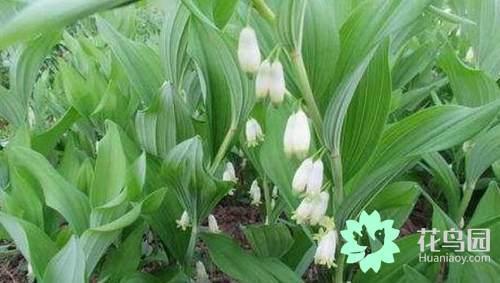
In what kind of orchards, woodlands, hillsides and farmland is Polygonatum odoratum suitable for planting?
1. Woodland
(1) Site selection. Open woodland with a canopy density of 0.1-0.2 and vegetation of broadleaf forest or mixed coniferous-broadleaf forest is preferable; artificial coniferous forest is not suitable for planting Polygonatum odoratum. Requirements: slope <=20°, soil layer thickness >=15cm, pH value 5.5-7.0, and the soil should be humus soil or mountain brown earth.
(2) Land preparation. For every 50m-wide planting area, leave a 10m-wide non-cultivated protection belt. Within the planting area, remove stones, small shrubs and tree roots; weed removal can follow the hillside procedure. If hole planting is used, large-scale centralized land preparation and weeding are not needed; it is enough to manually cut down overly dense small shrubs and mugwort in the suitable planting area.
2. Orchard
(1) Site selection. It is suitable for planting in large woody orchards such as pear, peach, apple and Chinese chestnut, but orchards of vine plants should not be chosen. Because orchards may be planted on flat land or hillsides, site selection should follow the standards for farmland or hillside.
(2) Land preparation. There is no need to plow and turn the soil; use the hillside weeding method to spray liquid between the fruit tree rows. When spraying, install a safety hood on the top of the sprayer nozzle so that the liquid is sprayed in a concentrated manner and directed spraying is carried out. Do not spray on windy days to prevent drift from damaging the fruit trees.
3. Hillside
(1) Site selection. Use barren hills, barren slopes and previously cultivated hillside land, and choose gentle slope land with a slope <=20° (avoid south-facing slopes to prevent damage from warm southern exposure). The soil should be moist, loose yellow sandy soil or brown earth rich in humus, with a soil layer thickness >=15cm, and a pH value of 5.5-7.0 is best.
(2) Land preparation. First remove stones, small shrubs and tree roots from the soil, and in June-July when weeds are 30-40cm tall, spray each mu with 2000-3000mL of 10% glyphosate aqueous solution mixed with 75kg of water; if rain occurs within 4h after application, respray.
4. Farmland
(1) Site selection. It is preferable to choose sandy loam that is sheltered from wind, facing the sun, well drained, fertile and loose, with a deep soil layer. Avoid heavy clay, barren, low-lying land prone to water accumulation, and continuous cropping land; if continuous cropping is needed, planting may only be done after an interval of more than 4 years.
(2) Land preparation. Spread 2500-3000kg of decomposed organic fertilizer and 25kg of superphosphate per mu, plow to a depth of about 30cm, level and harrow finely, and make ridges 65-70cm wide, or beds 113m wide and 15cm high, with operation paths 30-40cm wide, then wait for planting.