Detailed Explanation of Techniques for Forcing Buds from Old Pseudobulbs of Potted Orchids
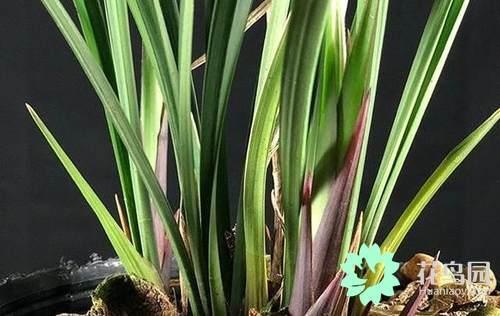
When potted orchids have multiplied to a fairly large number of plants, some old pseudobulbs will be produced. If the old pseudobulbs are plump and full, there are usually still several dormant buds on their middle and upper parts that have not yet sprouted. As long as the old pseudobulbs are separated from the original clump and planted separately, and given careful maintenance, the probability of their dormant buds producing new shoots is very high. These old pseudobulbs can serve as material for propagating new orchid plants. As long as measures are taken to force leaf buds to sprout, they can be turned from "waste" into treasure, increasing the propagation rate. The methods for forcing buds are as follows.
1. Select a suitable growing medium and pot in layers
Fill the bottom of the orchid pot with larger pieces of plastic foam as drainage material, then fill it with a mix composed of 60% shiitake mushroom soil and 40% rice husk charcoal, filling to about 2/3 of the pot height. On top of that, add clean river sand that contains no salt or lime. Plant the old pseudobulbs in the river sand, and spread an appropriate layer of sphagnum moss on top of the river sand. During maintenance, keep the potting soil moist but not wet, and spray 0.2% monopotassium phosphate once every 7 days. About 1 month after planting, new shoots can sprout. The best time to plant old pseudobulbs is December in winter.
Using these growing media and potting them in layers has many advantages: First, shiitake mushroom soil and rice husk charcoal both have the property of being both well-draining and moisture-retentive. Placing them in the middle and lower part of the orchid pot makes water accumulation and orchid root rot unavoidable. Shiitake mushroom soil contains nutrients, while rice husk charcoal mainly contains potassium (which promotes root growth). When the new roots of the new shoots sprouted after planting the old pseudobulbs extend and grow into the mixed layer of shiitake mushroom soil and rice husk charcoal, they can obtain nutrients from it. The new plants remain in the original pot, with no need to lift the seedlings and plant them separately. Wait until they have multiplied to 2-3 plants forming a clump before lifting and replanting them separately. This can prevent the originally rather weak new seedlings from "dying young" due to too early transplanting. Second, using river sand for orchids is beneficial for forcing roots and promoting buds, but because river sand contains no nutrients, has no microporosity, and has very poor fertilizer absorption and moisture and fertilizer retention, if used alone for a long time, the effect is far from ideal. By adopting the layered potting method, with shiitake mushroom soil and rice husk charcoal below to supply nutrients to the orchid plants and sphagnum moss spread on top to retain moisture, the advantages of river sand in forcing roots and promoting buds can be better brought into play.
2. Plant reasonably shallowly and provide appropriate shading
Old pseudobulbs must be planted reasonably shallowly, because the eyes of the dormant buds that have not yet sprouted on the old pseudobulbs are mostly located on the middle and upper parts of the pseudobulbs. If planted deeply, the new shoots that sprout are prone to rot. The planting depth should preferably be 1/3 - 1/2. Light should not be too strong; too strong is unfavorable for sprouting, but it is advisable to receive some scattered light or reflected light, which is beneficial for the old pseudobulbs to sprout new shoots early.