These 3 kinds of flowers: if you don't repot them for a few years, the potting soil completely disappears, so it would be strange if they could still grow well.
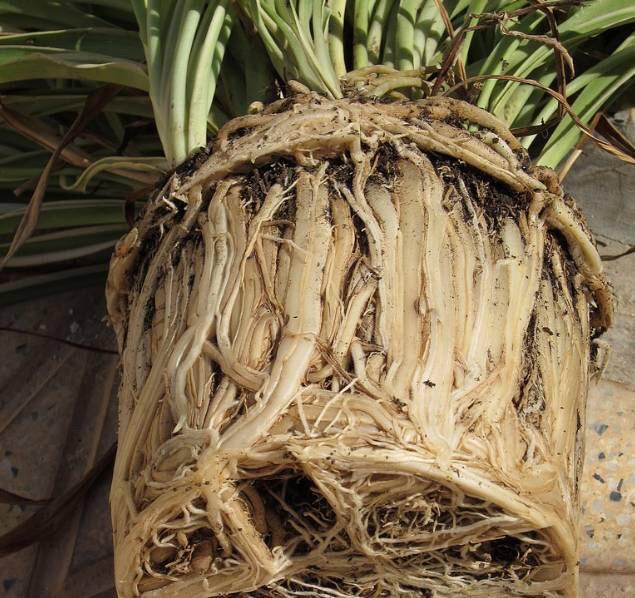
A cozy home is never complete without the adornment of flowers and plants. Growing flowers at home looks simple, but it actually contains great knowledge and little tricks. Among the three environmental conditions plants need - sunlight, water and soil - soil is the environment in which the roots grow, and this is a major factor. As the roots grow, they must extend their root hairs through the surrounding space, then continuously absorb water and mineral nutrients and transport them to the stems and leaves, providing raw materials for photosynthesis. The more fully the roots grow, the more nutrients they can provide to the stems and leaves, and the more luxuriantly the plant grows. There are several kinds of flowers that need frequent repotting. If you don't repot them for a few years, the potting soil all "disappears", so it would be strange if the flowers could still grow well!
1. Spider plant
To improve their ornamental value, the pots generally used for growing them are rather small, while spider plants grow extremely fast. Their roots are fleshy roots, very thick and well developed. In a healthy spider plant, the roots will quickly fill the pot and even push the potting soil out, so the soil must be changed once a year for the spider plant to grow well.
2. Clivia
Clivia not only needs to grow well, but also must be guaranteed to bloom every year. Its roots, like those of the spider plant, are fast-growing fleshy roots. It not only needs a growing medium with excellent permeability, but also sufficient fertilizer. If the soil is not changed for a long time, not only does the soil's permeability deteriorate, but a great deal of the fertilizer is also used up, which is not enough to supply the needs of flowering. Even if fertilizer is applied, the ideal effect is often not achieved. So the soil must also be changed once a year, and this is one of the key techniques for growing clivia well.
3. Orchid
For potted orchids, generally after two years, because the nutrients in the growing medium have been completely exhausted and can no longer meet the needs of the orchid seedlings' continued development, the seedlings will look thin and stunted; sometimes when many seedlings have sprouted, the roots become tangled and knotted, leaving no space for new seedlings and new roots to continue developing, which also affects the normal growing environment of the old seedlings. In these situations, you must repot in time, otherwise the orchids definitely will not grow well.
Orchids like cool, shady and moist conditions, but moist means keeping the soil moist, not watering heavily. When the climate is dry, use a fine-nozzle watering can to moisten the leaves and potting soil until slightly damp, and never water too much and let water accumulate at the roots of the flowers. In dry summer weather, spray water on the leaves, and spraying 2--3 times a day is even better. In winter, if the potting soil does not look too dry, there is no need to water. However, in spring, summer and autumn, you must not let it get too dry.