Succulent leaf cuttings can achieve a sprouting rate as high as over 90%. A 10-year succulent grower shares the secret.
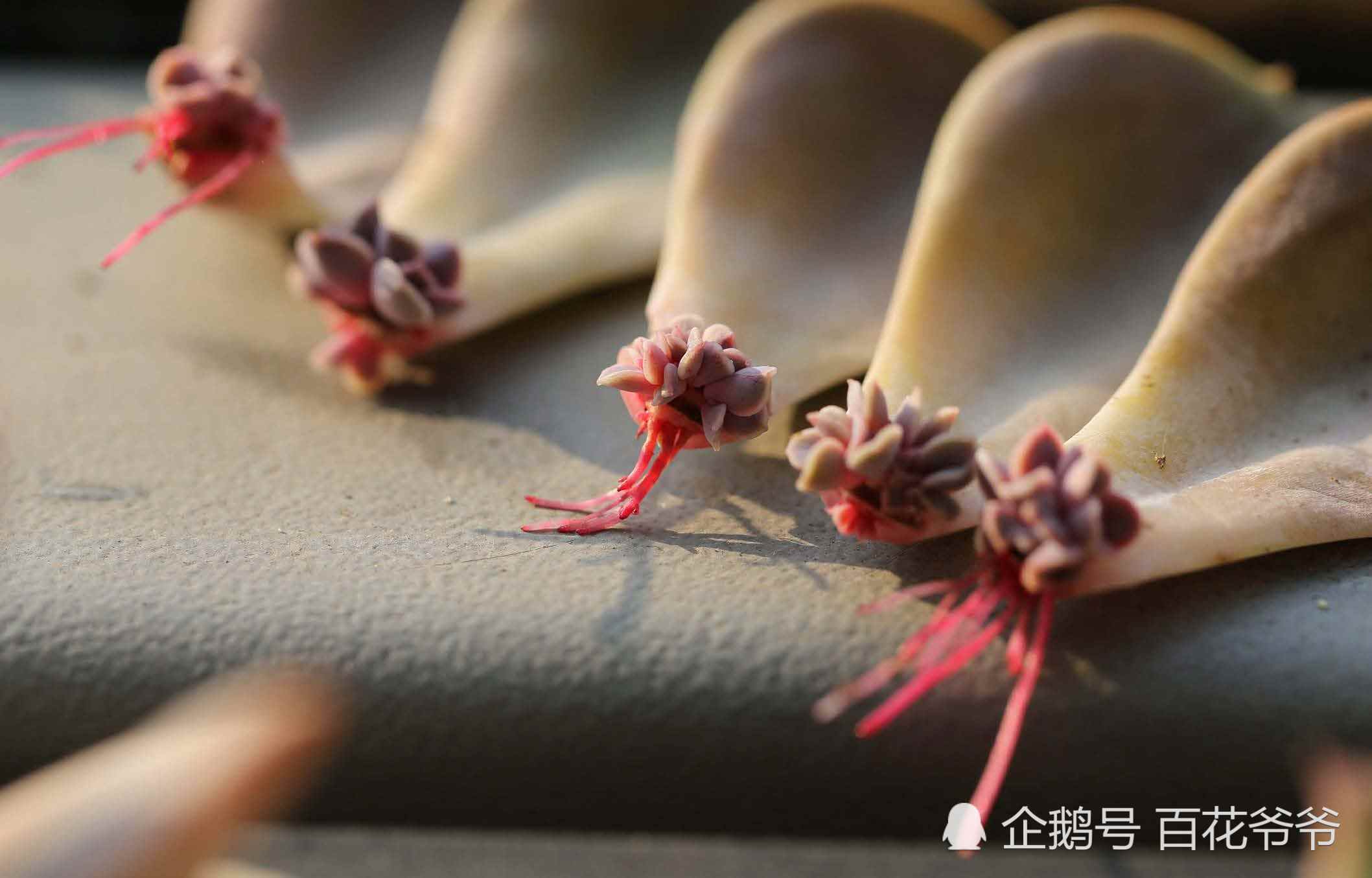
It's Monday today, and in this summer when succulents easily die, let's talk about succulent propagation, such as leaf cuttings. If you happen to have succulents at home that struggle to survive the summer, before they die, learn how to do succulent leaf cuttings and try to propagate a whole bunch of new succulents.
Let's take a look at the succulent leaf cutting tips shared by fellow succulent growers for everyone's reference, and we also welcome all the experts to offer more valuable suggestions.
1. Succulent cutting time:
Spring, summer and autumn are all fine, as long as the temperature is above 15°C. Some folks worry that summer temperatures are too high, but actually the impact is not significant, and they can still sprout.
2. Leaf selection
The leaves must be taken from a healthy plant. Even if some are slightly wilted or soft, as long as they are handled well, they can still successfully sprout.
3. Cutting soil
Recommended: humus soil : coal cinder 6:4, because leaf cuttings need to retain water, warmth and moisture, and the small seedlings need a lot of nutrients after they emerge, but the small seedlings are quite tender and cannot be fertilized, so the fertility of the humus soil just compensates for this gap.
4. About disinfection, this must-do task
After the soil is mixed, the very important thing is that it must be disinfected. Spread it out in the sun and bake it for 3 days, then dilute carbendazim with water at 1:1000 and spray the soil until it is moist, then cover it with plastic film and continue baking it in the sun for 3 days. After that, remove the film, turn the soil over, and continue sunning it for another 1-2 days to fully kill the bacteria in the soil. This is crucial and can prevent black rot later on.
5. Succulent leaf treatment
After removing the leaves, soak them in a carbendazim solution (diluted with water at 1:1000) for 10 minutes, then put them in the sun for 2 hours so the wounds can heal sufficiently. Then place them in a ventilated spot with diffused light for 3-4 days. That is best, or even longer is fine, but no longer than 7 days at most.
6. Once prepared, you can pot them up for cutting. Prepare a container of suitable size, spread 3-5 cm of soil, level it, then spray the soil with carbendazim solution until moist.
7. Start laying the leaves flat. Personally, I do not recommend inserting the leaves into the soil. If the leaf treatment time is not long enough and the soil disinfection is not done well, inserting the leaves into the soil can easily cause bacterial infection and rot. So, just lay the leaves flat on the surface of the soil.
8. Later care
In the early stage, spray water about once every 3 days to keep the soil slightly moist. After about 1 week, you will find that the leaves begin to grow roots. After roots appear, you can spray water every evening to keep them moist. Once seedlings emerge, spray water whenever the soil dries out. Once they grow bigger, just pot them up normally.
Note: small seedlings are not recommended for potting up. It is best to pot them up after they are a bit bigger. After cutting, place the succulents in a ventilated spot with diffused light. Do not expose them to strong sun and do not let them get rained on. Under high temperature and high humidity in summer, they easily rot.
If you follow the above method, the sprouting rate of succulent leaf cuttings can basically reach over 90%. Fellow succulent growers who are interested can give it a try!