Complete Guide to Caring for a Cinnabar Plum Bonsai: Beautifully Shaped with Small, Lovely Flowers
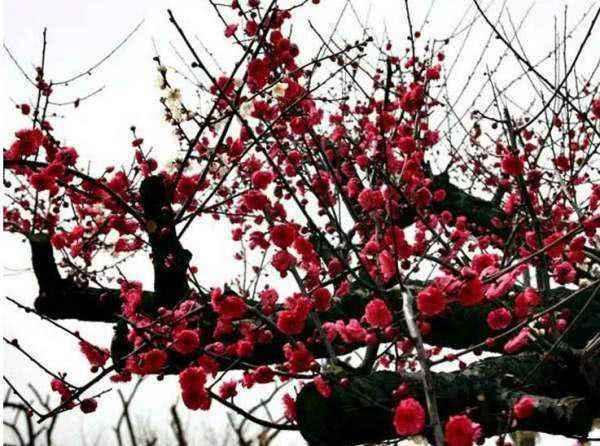
Do you want to bring the beauty of winter into your home? Cinnabar plum is a great choice. Many people may not know how to care for it, so below the editor explains what to pay attention to.
There are many types of plum blossoms, and cinnabar plum is one of them. Some of its branches are very straight, while others spread at an angle. Its leaves are all ovate or elliptical, with small serrated edges, and the leaves are grayish-green. The flower buds of cinnabar plum are obovate in shape and purple-red in color; they generally have many layers, so they are very beautiful. Its fragrance is also quite strong, and smelling it is a pleasure.
Cinnabar plum has relatively poor cold tolerance, and its propagation is also relatively difficult. It is a variety that blooms relatively late, with a flowering period at the end of February and the beginning of March. There are many varieties of plum blossoms, each different and each with its own characteristics. In making cinnabar plum bonsai, there are some plum bonsai of poor varieties that can be grafted with different varieties in spring, and when they bloom the whole tree is very beautiful. Of course, people who like simplicity can also plant pure-colored, elegantly plain plum bonsai.
When planting the bonsai, carefully open the plum packaging and do not break the branches. The roots are the part of the cinnabar plum that needs key protection. Generally, when purchased, the roots have already been carefully wrapped with plastic wrap, so when planting, you must be very careful when removing the plastic wrap and must not let the soil around the roots scatter, which would damage the plum roots. Then carefully place the plum into the pot, fill the pot with soil, and water it, giving it a thorough watering all at once, then wait for it to sprout. During the planting period, cinnabar plum must be ensured sufficient light and sufficient water. Usually it is best to place it on a balcony or another place where it can receive sunlight, and also remember to water it daily.
The shape of the bonsai can be cultivated according to the style you like, but plum blossoms are most beautiful when sparse, understated, and twisting, so many people use the method of coarse wiring and fine pruning to cultivate various different shapes. The choice of pot has two features: one is to benefit growth, and the other is to enhance the shape. Therefore, cinnabar plum bonsai generally uses a purple clay pot with better breathability. You can choose different pots according to different shapes. The soil is the same as for most plants; as long as it is normal soil, it is fine. When choosing a pot, you also need to note that it is best to choose a pot color that can set off the flower color, so it will look more beautiful.
If you want the plum bonsai to play a good decorative role, it needs careful care. It is best to keep the air around it circulating. In winter, it is best to place it in a warm place, and remember to water it but not too much. The pest problem of cinnabar plum is relatively serious, and there are many insects that everyone needs to eliminate in time, otherwise the cinnabar plum will soon be harmed by pests.