Two-tone Jasmine: one plant blooms in two colors, a potted plant even beginners can grow well
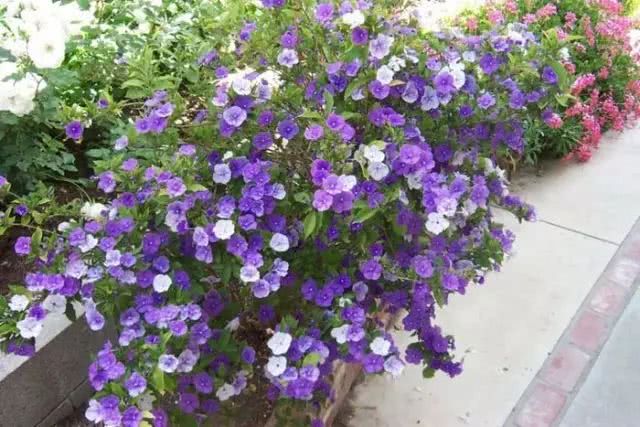
The plant introduced below is the two-tone jasmine, also called yesterday-today-and-tomorrow. It is a small shrub flowering plant that can bloom multiple times a year, suitable for growing in pots or in the ground. Actually, it is not in the same genus as true jasmine, but because the flowers of the two-tone jasmine carry the delicate fragrance of jasmine and open in two colors, it is called two-tone jasmine.
The reason the flowers of the two-tone jasmine have two different colors is that they bloom at different times. Each flower starts out blue-purple, and as time passes it slowly turns white. Because a single tree has many flowers opening, different flower colors appear at the same time.
The two-tone jasmine blooms once in spring and summer, and can bloom again in autumn. Its growing seasons are spring and autumn. Its flowers carry a captivating jasmine fragrance, and many people still love it.
The two-tone jasmine is also a very good potted shrub. When caring for it, keep the environment warm and humid, and maintain sufficient light throughout its care. In winter, take care to avoid frost damage; once the temperature drops below 10°C, move it indoors and place it on a windowsill with diffused light.
The two-tone jasmine likes loose, fertile, well-drained, slightly acidic soil. During cultivation, water it with soft water, preferably rainwater. Tap water should be left to stand for three days before use, to avoid the soil becoming alkaline.
In addition, regularly water with alum fertilizer water to supplement ferrous sulfate, making the soil slightly acidic and promoting flowering. When watering, make sure the potting soil has completely dried out before watering thoroughly. Avoid frequent watering, otherwise it easily causes root rot.
If you want the two-tone jasmine to bloom more, give it sufficient light, with at least 4 hours of direct sunlight per day. Potted two-tone jasmine can be appropriately shaded in summer, and when moved indoors in winter, it should still be given appropriate light.
If you want the two-tone jasmine to grow a better plant shape and produce more branches and flowers, pay more attention to pruning. Leggy branches, crossing branches and weak branches should all be cut off in time. After the winter frost ends, appropriate pruning can be carried out.
After flowering, remove spent flowers to avoid nutrient consumption.
When caring for the two-tone jasmine, be careful to avoid frequent watering. The two-tone jasmine has fairly strong drought tolerance and does not like soil that is constantly moist. Also, be careful to maintain appropriate environmental humidity; the growing environment should not be too dry.
Overwatering easily causes yellow leaves, and alkaline soil also easily causes yellow leaves. When fertilizing, be careful to give acidic fertilizer and avoid concentrated fertilizer. Apply thin fertilizer frequently. Do not fertilize during the high heat of summer or the cold of winter.