Jade plant cuttings are easy enough for beginners to master, blooming with branches full of white flowers
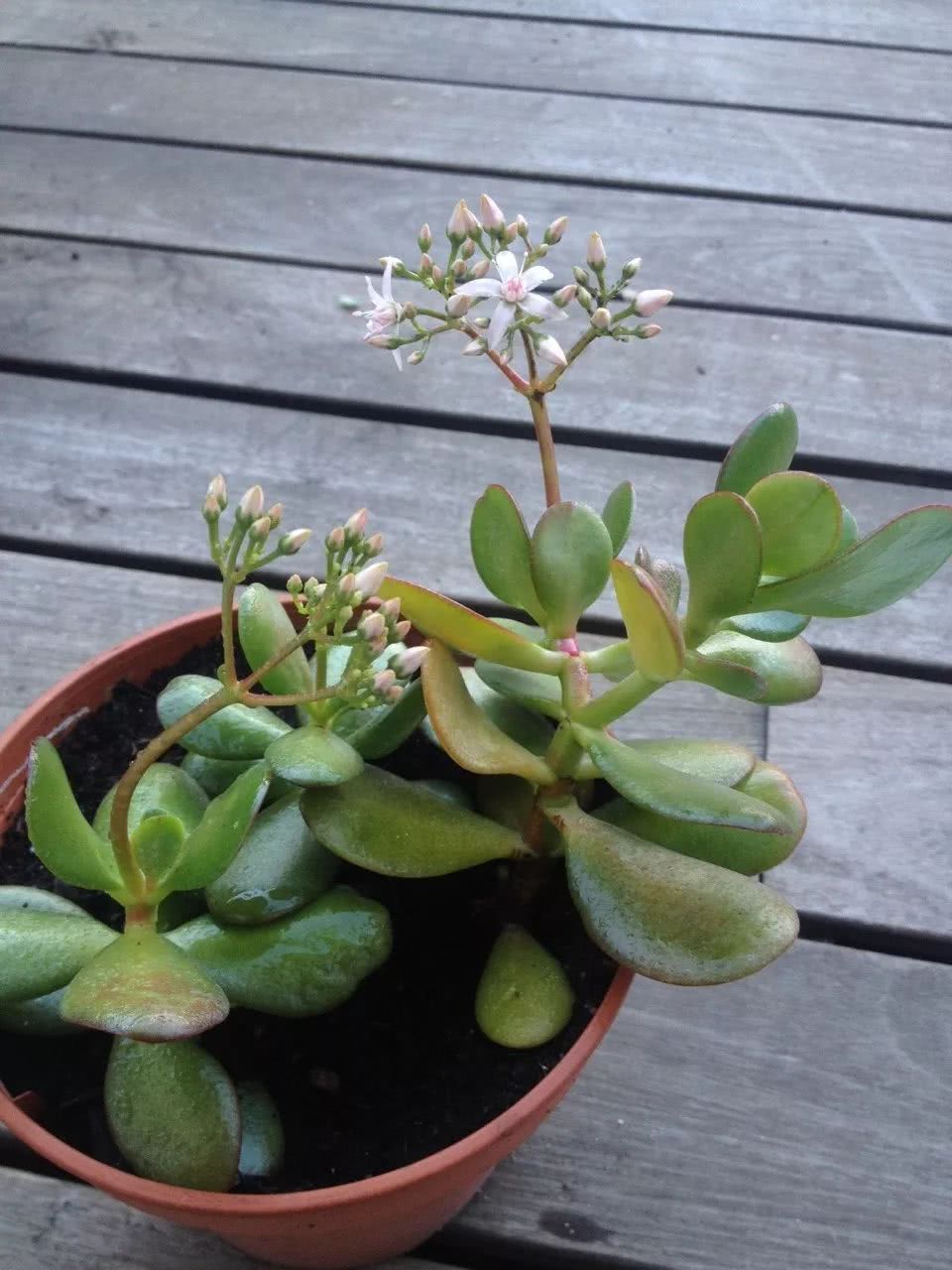
The jade plant (Crassula ovata) is a common potted succulent kept indoors; it is an especially easy-care plant that does not need frequent attention. Some friends can keep it growing for decades, and some can even get it to bloom continuously. With its branches covered in brilliant white flowers, it looks especially gorgeous. If you want to encourage your jade plant to keep growing, you need to master the following care tips.
When caring for a jade plant, you must never water it frequently. It has extremely low water needs, and both its leaves and stems are full of moisture. If there is too much water, it easily causes root rot, and the leaves will keep turning yellow and dropping off.
Especially when summer temperatures are high and in cold winter, the jade plant is in its dormant period during these two periods, absorbing very little water, so watering must be controlled. You can water once every two to three weeks; even during the growing season, you need to wait until the soil is completely dry before adding water.
When caring for a jade plant, you must use a loose, breathable, well-draining sandy soil. You can directly use cactus potting soil; the soil can be a mix of compost and river sand, or a general-purpose mix of peat moss with perlite, with some well-rotted organic fertilizer added as appropriate.
To grow a jade plant, use a pot with good drainage. The bottom of the pot should have fairly large drainage holes, and you can place some broken tile pieces at the bottom before adding soil, to keep the potting mix from clogging the drainage holes.
If you want to propagate a jade plant, it is usually done directly by leaf cuttings or by cuttings taken from pruned branches. It is an especially easy succulent to propagate; a leaf that falls on the soil surface can take root and sprout without any watering.
As the jade plant keeps growing, the base of its stems and roots will gradually become woody. At this point, you must be sure to repot it regularly so the root system has enough space to grow. When repotting, you can prune the branches and leaves as appropriate to prevent excessive lush growth, and this also encourages continuous branching.
If a jade plant has many branches and is growing very vigorously, you can cut off the excess branches and use the cut branches for cuttings to propagate. Of course, you need to choose the right time to do this; spring and autumn are the most suitable, while the excessively high temperatures of summer and the excessively low temperatures of winter are both unsuitable for cutting propagation.
Propagating by cuttings when summer temperatures are too high easily leads to rot of the stems and roots; even if the cutting survives, it is very hard for it to resume growth. If you cut off the main trunk of a jade plant, you must not take cuttings from it right away. You must let the wound dry, and you must remove the excess branches to avoid having too many branches and leaves, otherwise it will consume a great deal of nutrients, affect growth, and more easily cause the plant to wither.
Of course, you can simply transplant the jade plant into a larger container, since cutting, pruning and propagating by cuttings all carry some risk. If handled improperly, the plant easily becomes infected with fungal diseases and is prone to rot. If you want to improve the rooting ability of branch cuttings, besides cutting off the excess branches and leaves, you should also dip the base in some rooting powder, which helps promote better rooting.
A cut branch should be placed in a ventilated, shaded spot to dry for two or three days. After the wound has completely healed, insert it into slightly dry soil. Do not rush to water it at first; you can keep it by a windowsill with the temperature maintained at around 20°C, and water it after 5 to 7 days.
Jade plants grown from cuttings should not be exposed to light in a hurry either; generally, after 1 to 2 weeks, gradually introduce light. At first, do not give too much direct sunlight; you can start with some scattered light, then slowly increase the duration of light exposure. When summer temperatures are too high, provide appropriate shade. In winter, it can be placed on a south-facing windowsill with plenty of light each day, but the leaves should be kept from pressing directly against the window to avoid frost damage, and the minimum care temperature should stay above 10°C.
Close-up of jade plant flowers
When caring for a jade plant, you can give it a bit more light in spring and autumn. In winter, move it to a spot where the minimum care temperature stays above 7°C, place it on a south-facing windowsill with plenty of light each day, and in summer provide appropriate shade.