What are Huaimi (Sophora japonica flower buds)? Every part of the pagoda tree is a treasure, and everyone has eaten its flowers
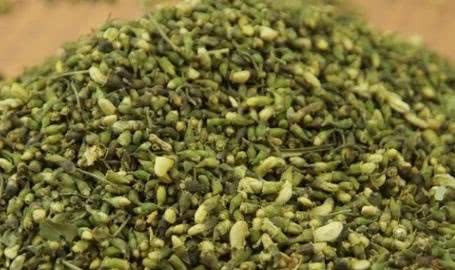
Many friends are surely familiar with the pagoda tree (Sophora japonica). When I was a child, rural courtyards always had a few pagoda trees planted in them. When I was little, our yard had two pagoda trees, plus elm trees and Chinese toon trees, all trees that could be eaten from. Thinking about it, it was probably because we were quite poor back then, and planting these trees meant we could eat the flowers that bloomed and the sprouts that came out in spring.
But when it comes to Huaimi, many people are probably not very familiar with it, because most people usually eat the pagoda tree flowers. What is Huaimi? Actually, Huaimi can also be considered pagoda tree flowers, it is just that the harvest times of the two are a bit different. Huaimi is what the pagoda tree flower looks like before it has opened. Once it has fully opened, it is the pagoda tree flower.
Seen this way, the pagoda tree really is remarkable; you could say every part of it is a treasure. I am also very fond of the pagoda tree leaves, especially on old pagoda trees, where they look like a stretch of tender green. The leaves are also very delicate. And they can be used as medicine, with a cooling and heat-clearing effect. The branches of the pagoda tree are also a Chinese herbal medicine, with the effects of dissipating blood stasis and stopping bleeding. The roots of the pagoda tree have the effects of reducing swelling and killing parasites. The fruit the pagoda tree bears, that is, the pagoda tree pod, can likewise be used as medicine, with the effects of cooling the blood, stopping bleeding, clearing the liver and improving eyesight. And the pagoda tree is also very good timber.
The most important part is the pagoda tree flower. Surely everyone knows that steamed pagoda tree flowers taste very good, and they also have a faint floral fragrance. Pagoda tree flowers are likewise a Chinese herbal medicine, with the effects of clearing heat, cooling the blood, stopping bleeding and lowering blood pressure. However, one thing to remind everyone of here is that we often see pagoda trees by the roadside with red flower buds; this kind of pagoda tree is the black locust (Robinia pseudoacacia), and its flowers cannot be eaten.
Then there is Huaimi. Although not many people specifically pick Huaimi, because many people do not understand it. Just like when I recently chatted about this topic with a friend, he thought Huaimi should be the fruit the pagoda tree bears. Actually, the fruit of the pagoda tree is the pagoda tree pod.
Natural dye
Although we are not very familiar with Huaimi, the working people of ancient China did discover its uses very early on. Leaving aside the eating aspect for now, let us first talk about the uses of Huaimi. The working people of ancient China used Huaimi for dyeing. That is right, Huaimi is a natural dye, and the color dyed from Huaimi is yellow. It can be used to dye not only various kinds of cloth, but also wooden board New Year pictures. And it can also be made into a coloring agent for food.
Huaimi tea, Huaimi porridge
Next, turning to the eating aspect, some friends who are more into health preservation should be fairly familiar with it, because the effects of Huaimi and pagoda tree flowers are somewhat similar, so it is also a Chinese herbal medicine. It has the effects of clearing heat, reducing internal heat, and anti-inflammatory and sterilizing effects. Many people often use Huaimi to make tea, and Huaimi tea is also divided into raw and cooked types. The difference between the two is that the production process is a bit different: raw Huaimi is Huaimi that has been picked and dried in the sun, while the cooked kind has been stir-fried.
Besides being brewed as tea, Huaimi can also be paired with various ingredients to make Huaimi porridge, and can also be made into Huaimi cakes. In short, there are many ways to eat it.
The above comes from Science Xingnong.